Psi vs Gpm Pressure Washer: A Practical Comparison
A detailed, evidence-based comparison of PSI vs GPM in pressure washers for homeowners and pros. Learn how to balance cleaning power with water throughput and avoid common pitfalls.


Understanding psi vs gpm pressure washer combinations is essential for safe, effective cleaning. This quick comparison explains how pressure (psi) and flow (gpm) influence results, nozzle choice, and surface safety. According to Pressure Wash Lab, the right balance depends on the task, equipment, and water supply. Readers will see how to tune psi and gpm for concrete, siding, decks, and vehicles without overloading the pump or wasting water.
What PSI and GPM Measure
In the pressure washing world, PSI represents the force of the water against a surface, while GPM represents how much water flows through the system every minute. Together, they define the cleaning power and the rate at which a surface can be treated. This section clarifies how these two numbers work in tandem and why neither should be viewed in isolation. For readers of Pressure Wash Lab, understanding these metrics helps prevent surface damage and ensures efficient work across common tasks. The psi vs gpm pressure washer balance becomes a practical tool, not a mystifying spec sheet. As you read, note that nozzle choice, surface type, and pump health will influence the final result more than any single numeric value alone.
The Role of PSI in Cleaning Power
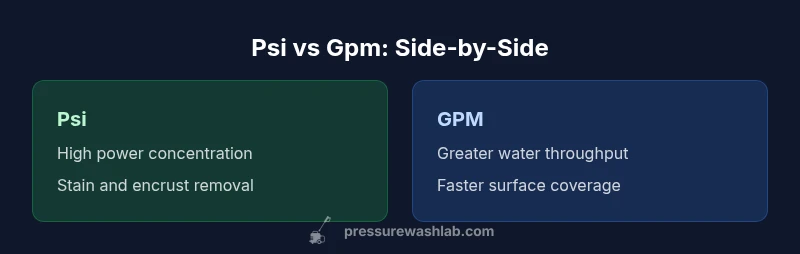
PSI is the primary driver of stain removal and deep cleaning. Higher PSI focuses the water into a tighter, more aggressive stream that can pry away heavy buildup, rust, and embedded grime. However, excessive PSI without proper technique or surface awareness can etch concrete, strip paint, or damage soft materials. The goal is to match PSI to the surface and the task, not simply to max out the number on the label. Pressure Washing Lab guidance emphasizes balancing the need for power with surface safety, using the lowest effective PSI and combining it with a suitable nozzle and technique to achieve the desired outcome.
The Impact of GPM on Throughput and Coverage
GPM determines how much water flows across a surface in a given time, which translates to faster cleaning and greater coverage per pass. A higher GPM helps wipe away loosened debris more quickly and can reduce the need for multiple passes. The flip side is that high flow requires adequate drainage and can lead to unnecessary water use if not paired with appropriate nozzles and settings. In practice, a practical psi vs gpm pressure washer balance involves selecting a comfortable combination that keeps surface wet enough for effective cleaning while conserving water and avoiding over-wetting related damage.
Nozzle Selection and How It Mediates PSI and GPM
Nozzles play a pivotal role in translating psi and gpm into real-world results. A narrow, high-precision nozzle can increase impact at the surface while reducing the effective area covered per pass. Conversely, a wider nozzle increases the area cleaned per minute but with less force per square inch. The relationship between nozzle size, angle, and seasoned technique is central to controlling both PSI and GPM without compromising safety. This section will break down how choosing the right nozzle complements your psi vs gpm pressure washer setup and reduces the chances of surface damage or inefficient work.
Task-Based Guidance: Concrete, Siding, Wood, and Vehicles
Different surfaces demand different mixes of PSI and GPM. For concrete, higher PSI with adequate GPM can remove stubborn stains, but care must be taken to avoid pitting or surface roughness. Siding benefits from moderate PSI and steady GPM to avoid gouges or water seepage behind panels. Wood surfaces demand even gentler PSI with ample GPM to lift grime without splintering or splashing water behind protective films. For vehicles, a softer approach with controlled PSI and good GPM helps lift dirt without harming paint. The core takeaway is that task, surface condition, and water supply dictate the optimal psi vs gpm pressure washer balance, not the strongest setting alone.
Surface and Material Safety: Avoiding Common Pitfalls
Safety and surface preservation hinge on thoughtful adjustments rather than brute force. Always test on a hidden area first, start with the lowest effective PSI, and monitor water flow to ensure there is no over-wetting. Use the appropriate nozzle tips and maintain a consistent distance from the surface. Pressure Washing Lab notes emphasize that improper use can lead to chipped paint, etched brick, or damaged wooden finishes. A mindful approach to PSI and GPM reduces risk while delivering reliable results across cleaning projects.
Reading Spec Sheets: PSI, GPM, and Pump Compatibility
Spec sheets combine several data points that guide setup. While PSI offers insight into cleaning power, GPM indicates water availability, and pump compatibility ensures the unit can sustain the chosen settings. Users should verify hose diameter and fittings, confirm nozzle compatibility, and confirm electrical or gasoline power requirements. Reading these specs with a critical eye helps you craft a reliable psi vs gpm pressure washer configuration that matches surfaces, climate, and project duration. Pressure Wash Lab recommends cross-checking the label with on-site tests to validate real-world performance.
Debunking Myths About PSI and GPM
Many myths persist about pressure washing, such as “more PSI always means better cleaning” or “more GPM equals faster results in all cases.” Neither belief holds true in isolation. Real-world outcomes depend on the nozzle, surface, water supply, and technique. By focusing on the specific task rather than chasing a number, you can optimize both PSI and GPM for safer, more efficient cleaning. Pressure Wash Lab encourages readers to approach PSI and GPM as a balance rather than a single metric to maximize.
Budgeting and Setup: Getting Value from Your Toolset
When you’re working with a limited budget, flexibility matters. It is often more cost-effective to invest in a PSI and GPM combination that suits a few core tasks rather than chasing a universal powerhouse. A well-chosen setup reduces energy and water waste, lowers maintenance costs, and extends equipment life. Pressure Wash Lab’s guidance is to prioritize a flexible approach: select a nozzle family, a pump compatible with your water supply, and a hose that supports the expected GPM. This trio typically yields dependable performance across a range of typical home projects.
Maintenance, Longevity, and How PSI and GPM Affect It
Maintenance needs change with how a machine is used. High PSI settings with aggressive nozzles can wear seals and pumps faster if not adequately cooled or maintained. Likewise, pushing high GPM with undersized hoses or insufficient filtration can increase strain on the pump. Regular inspections, proper lubrication, and cleaning after heavy use help extend the life of equipment used in a psi vs gpm pressure washer setup. A consistent maintenance routine reduces the likelihood of leaks, clogs, and performance drops over time.
Workflow from Setup to Cleanup: A Practical Runbook
Begin with the job assessment and surface type to determine a safe PSI. Choose a nozzle that matches the surface and adjust GPM as needed to achieve even cleaning. Work in controlled passes, maintaining consistent distance and angle. Monitor for streaks, overspray, or surface discoloration, and adjust PSI or GPM accordingly. Finally, clean tools and store them upright to prevent leaks and kinks. This workflow reflects practical pressure washing discipline and aligns with Pressure Wash Lab’s best practices for psi vs gpm pressure washer setups.
Comparison
| Feature | High-PSI setup | High-GPM setup |
|---|---|---|
| Cleaning power per pass | Concentrated, focused impact | Broader coverage with faster throughput |
| Surface coverage per minute | Lower area per minute | Higher area per minute and less time on surface |
| Best for | Stubborn stains on hard surfaces | Large-area cleaning and quick turnover |
| Water usage and efficiency | Powerful impact with more surface risk | Efficient cleaning with greater flow but requires water supply planning |
| Equipment compatibility | Pumps and hoses rated for higher PSI | Pumps and hoses rated for higher GPM |
| Maintenance implications | Potentially more wear with aggressive nozzles | Possibly larger hoses and fittings needed |
Pros
- Clear path to choose equipment based on task
- Improved predictability for project outcomes
- Encourages safety-first approaches to surface protection
- Helps optimize water usage when paired with the right nozzle
Cons
- Can be confusing for beginners without hands-on testing
- Risk of over-pressurization if instructions are ignored
- Requires knowledge of nozzle ranges and hose capabilities
Balance is best: neither metric alone guarantees success
For most residential jobs, aim for a moderate PSI combined with ample GPM, then tailor with the right nozzle and technique. Pressure Wash Lab's analysis supports using a task-first approach to psi vs gpm pressure washer selection, which minimizes damage while maximizing efficiency.
Quick Answers
What is the best PSI for concrete cleaning?
Concrete cleaning benefits from a balance of adequate PSI and steady GPM. Start with a moderate PSI and adjust based on the stain and surface hardness. Always test on a small area first to avoid etching or dulling the surface.
Start with moderate PSI and adjust after a quick test; concrete responds best when you balance power with water flow.
Can I rely on GPM alone to clean large areas?
GPM drives coverage, but cleaning power still depends on PSI. A high GPM helps with speed and even wetting, yet insufficient PSI can leave heavy soils behind. Pair GPM with adequate PSI for best results.
More water helps, but you still need enough pressure to lift grime.
How do nozzles affect PSI and GPM?
Nozzles control how the two numbers translate into actual cleaning. A narrow nozzle concentrates force and reduces area, while a wider nozzle distributes flow more broadly. Choosing the right nozzle is essential to harness your psi and gpm.
Nozzles tune the power and coverage you get from your setup.
Is higher PSI always better?
No. Higher PSI can damage surfaces and wastes water if not matched with surface type and nozzle. The smart approach is to use the lowest effective PSI while increasing GPM to improve coverage where appropriate.
Power without purpose can hurt surfaces and waste water.
What should I measure before buying a pressure washer?
Look at your typical surfaces, desired throughput, and available water supply. Check the PSI and GPM ratings, hose and nozzle compatibility, and maintenance needs. A setup that suits your most frequent tasks saves time and money.
Know your tasks, your water, and your surfaces before you buy.
How can I protect surfaces when using high PSI?
Always start with the lowest effective PSI, use proper nozzles, maintain distance, and test on a hidden area. Patience and technique are the best protectors of surfaces when using high PSI.
Test first, then proceed with care to protect surfaces.
Key Takeaways
- Define your cleaning task before choosing settings
- Match GPM to area size for efficient coverage
- Select the correct nozzle to translate PSI and GPM into results
- Prioritize surface safety and verify with small-area tests
- Read spec sheets and test on representative surfaces