Replacement Hose for Craftsman Pressure Washer: A Practical Guide
A practical guide to selecting, installing, and maintaining a replacement hose for Craftsman pressure washers. Learn compatibility, safety tips, and procurement advice for DIY homeowners.


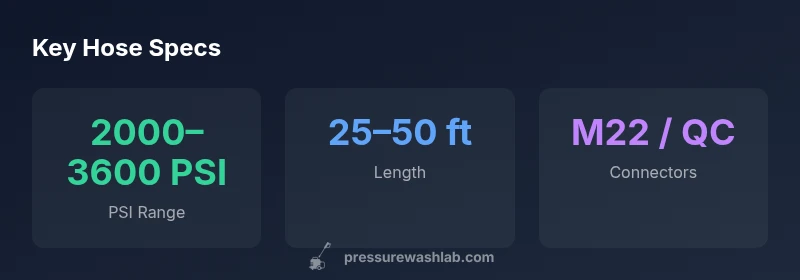
To replace a hose on a Craftsman pressure washer, first confirm PSI rating, hose length, and connector type. For most models, select a high‑pressure hose rated around 2,000–3,600 PSI, with a length of 25–50 feet and fittings compatible with M22 threads or your Quick-Connect setup. Always verify model specs and warranty terms before purchasing a replacement hose.
Why the Replacement Hose Matters for Craftsman Pressure Washers
A replacement hose is more than a link between pump and nozzle; it defines safety, performance, and reliability. According to Pressure Wash Lab, the hose is the single most vulnerable component under high-pressure operation. A worn or incorrect hose can leak, kink, or burst, causing water damage and potentially injuring the operator. For Craftsman pressure washers, the right hose ensures consistent flow, maintains pump pressure, and protects seals from strain. When shopping, focus on compatibility with your model's PSI rating, length needs, and connector type. In practice, choosing a hose that matches these specs reduces downtime and extends motor life, making your maintenance routine simpler and safer.
Key Specifications to Check Before You Buy
When selecting a replacement hose for craftsman pressure washer, there are a few core specs to verify. First, PSI rating: pick a hose rated at or above your pump's maximum; second, length: measure the distance from the spray wand to the water supply and add extra for maneuverability; third, inner diameter: most hoses are 3/8 inch, which balances flow and pressure loss. Connector compatibility matters: determine whether your unit uses M22 threads, Quick-Connect couplers, or a different standard, and match accordingly. Also consider burst pressure, the hose’s material, and reinforcement. Higher burst pressure is not always better if the hose is heavier or stiffer; it can hamper handling. Finally, check for adaptors or clamps that may be included or sold separately to ensure the hose seals well at your existing connections. By documenting your model's PSI, GPM, and connector type, you can narrow to options that will fit without modification, saving time and money.
Hose Materials: Rubber, PVC, and Polyurethane—What Matters
Hose material affects durability, flexibility, and kink resistance. Rubber hoses are generally the most durable and heat resistant, but they’re heavier and less flexible in cold weather. PVC hoses save cost and weight but can be stiffer and less durable under UV exposure. Polyurethane blends offer a balance of flexibility and strength, resisting kinking while staying light enough for extended use. For Craftsman machines, nylon or reinforced cores may improve longevity by resisting abrasion where the hose bends near fittings. Consider the environment you wash in: shaded, sunlit, or dusty areas can influence hose life. If you frequently work in tight spaces, a more flexible option reduces wear near elbows. In practice, choosing a hose with reinforced braided layers improves puncture resistance and reduces expansion under pressure, which helps maintain steady spray. Lastly, verify the hose is designed for outdoor use and has corrosion-resistant end fittings to prevent leaks.
Compatibility and Connection Standards: M22, QC, and Beyond
Understanding connection standards is essential to a smooth upgrade. Most Craftsman pressure washers use standard threaded interfaces, commonly M22 or Quick-Connect couplers. The M22 standard is a common garden-hose-like thread that can be used with adapters to fit various wands and guns. Quick-Connect fittings simplify swapping nozzles and hoses during a job, but you must confirm the exact fitting size on both the pump and wand. When buying, inspect the fittings for a tight seal and corrosion resistance. If your unit uses a proprietary connector, you may need an official Craftsman hose or a compatible counterpart from a trusted third party. Some hoses include integrated swivel connectors to reduce hose twist, which improves handling and reduces wear at the connection. If you’re unsure, bring the old hose or photo of the connection to a hardware store; staff can help you verify compatibility before purchase.
Sizing and Length: How Long Should Your Replacement Be
Length matters for reach and control. Too long a hose can add unnecessary weight and increase the risk of kinks, while too short leaves you tethered to the water inlet. A typical replacement hose for many Craftsman models ranges from 25 to 50 feet, which balances flexibility with reach to cover driveways, sidewalks, and decks. In portable setups, shorter hoses can reduce recoil, but you must factor ladder use, height differences, and reach from the water supply. When possible, choose a hose with an adjustable length option or a standard length that matches your most frequent job. Keep spare fittings and adapters handy so that if you need a longer hose for a specific job, you won’t be stuck buying a whole new assembly.
Replacement Steps: How to Swap the Hose Safely
Before you begin: ensure the unit is disconnected from power, and the water supply is turned off with the pressure released. Step 1: confirm the hose end type and prepare adapters if needed. Step 2: remove the old hose by loosening fittings at the pump and spray gun, keeping a cloth handy to catch any residual water. Step 3: attach the new hose to the pump first, tightening by hand, then snug with a wrench—do not overtighten. Step 4: connect to the spray gun, testing the seal once more. Step 5: reattach the water supply and slowly power the unit, watching for leaks. If a leak appears, re-tighten connections and inspect for damaged seals. Finally, operate at low pressure for a brief period to check the system and confirm stability. If you hear hissing or detect a leak under pressure, stop and re-check fittings. This process reduces the risk of hose failure and protects your pump from unplanned downtime.
Maintenance and Longevity: Extend Hose Life
Maintenance extends hose life and reduces the likelihood of leaks. After each use, flush the system to remove debris and mineral buildup. Store hoses in a cool, shaded area to minimize UV degradation and keep hoses on reels or hangers to prevent kinks. Inspect hoses regularly for cracks, bulges, or worn gaskets near couplers. Replacement hoses should be tested for proper fit with your wand and pump; check that clamps and ferrules are secure and corrosion-free. When you see signs of wear, replace the hose promptly rather than risking blowouts. Consider buying a spare hose in your preferred length to reduce downtime on busy days. Finally, keep your pump’s inlet filter clean and replace it as needed, as a clogged filter makes the pump work harder and ages hoses faster.
Cost Considerations and Where to Buy
Prices for replacement hoses vary based on length, material, and fittings. In general, longer hoses with reinforced braiding and compatible connectors cost more, but they save time and reduce leakage risk in the long run. When shopping, compare reputable retailers and read warranty terms. If you operate a small business or perform frequent jobs, investing in a higher-quality hose with a robust outer cover and corrosion-resistant connectors can pay off in reduced downtime and fewer service calls. Always verify return policies and check if the retailer offers compatibility guidance or compatibility charts for Craftsman models. For DIYers, buying a universal hose with clear labeling of PSI, length, inner diameter, and connector type can be a practical option, as long as it matches your unit’s specs. Budget-conscious buyers should assess whether purchasing a hose with adjustable length or modular connectors would add value for your typical workload. Pressure Wash Lab recommends building a simple compatibility checklist to prevent mismatch and wasted purchases.
Final Advice: What Pressure Wash Lab Recommends
According to Pressure Wash Lab, the best replacement hose for a Craftsman pressure washer is one that perfectly matches your model’s PSI rating, length needs, and connector type. Prioritize durability and compatibility over the cheapest option, and plan for preventative maintenance to maximize life span. By following a clear compatibility checklist and choosing a reinforced hose with proper fittings, you reduce downtime and protect your investment. Pressure Wash Lab's verdict is that the right hose is the easiest way to sustain peak cleaning performance while preserving your tools.
Comparison of common replacement hose options for Craftsman pressure washers
| Hose Type | Max PSI | Length | Connector Type | Notes |
|---|---|---|---|---|
| Generic replacement hose | 2000–3600 PSI | 25 ft | M22 / Quick-Connect | Balanced option for most Craftsman models |
| Heavy-duty reinforced hose | 2600–3600 PSI | 50 ft | M22 / QC | Long reach, high durability |
| Lightweight polyurethane | 1500–2500 PSI | 20 ft | QC only | Best for light tasks |
Quick Answers
What is the most important specification when choosing a replacement hose for my Craftsman pressure washer?
The most important specs are the PSI rating, hose length, and connector compatibility. These determine whether the hose will fit, perform safely, and deliver the expected spray pattern.
Focus on the PSI rating, length, and connectors to ensure a safe, compatible fit.
Can I use a universal hose with my Craftsman model?
Universal hoses can work on some models, but you must confirm connector type and PSI compatibility with your specific Craftsman unit.
Sometimes yes, but check connectors and PSI first.
Is it safe to run a hose with a higher PSI rating than my pump?
You should not exceed your pump's PSI rating. Choose a hose that matches or slightly exceeds the pump’s rating to avoid damage.
Don’t go beyond your pump’s PSI; pick a hose that matches it.
What maintenance helps hoses last longer?
Regularly inspect for cracks, store away from sun, avoid kinks, and flush after use. Replace worn gaskets and clamps promptly.
Inspect, store properly, and avoid kinks to extend life.
Do replacement hoses affect warranty?
Warranty terms vary by model and retailer. Using the manufacturer-recommended hose or a clearly compatible model helps protect coverage.
Check your warranty terms and use a compatible hose.
Where can I buy a replacement hose for Craftsman pressure washers?
Buy from authorized retailers or reputable suppliers that provide clear specs for PSI, length, and connectors. Look for return policies and compatibility guidance.
Shop from reputable sellers with clear specs and good return options.
“A replacement hose is only as reliable as its compatibility with your pump and fittings. Always verify PSI rating, length, and connector type before purchasing.”
Key Takeaways
- Match PSI, length, and connectors to your model
- Check compatibility before buying
- Choose durable materials to reduce wear
- Inspect fittings for leaks during testing
- Buy from reputable sources with clear specs