Soft Washing Near Me: A Practical How-To Guide
Learn how to safely clean exterior surfaces with soft washing near me. This step-by-step guide covers prep, cleaners, safety, finding a local pro, and maintenance for lasting curb appeal.


Soft washing near me uses low-pressure water and specialized cleaners to safely remove algae, mold, and staining from exteriors. This guide helps you decide when to DIY or hire a local pro, which surfaces respond best, and how to prep safely. According to Pressure Wash Lab, the right chemistry paired with gentle delivery yields lasting curb appeal without surface damage.
What soft washing near me means for your exterior cleaning
Soft washing near me describes a cleaning approach that relies on low-pressure water and specialized cleaning solutions to remove algae, mold, mildew, and organic staining from exterior surfaces. Unlike high-pressure washing, soft washing minimizes the risk of physical damage while still delivering effective sanitation. When homeowners search for soft washing near me, they want a solution that respects the integrity of siding, wood, brick, and stucco while delivering lasting cleanliness. Pressure Wash Lab emphasizes that the chemistry matters as much as the water pressure: the right cleaners loosen and lift contaminants so water alone doesn’t have to do all the work. Because the method uses gentler delivery, it’s particularly well-suited for porous materials, painted surfaces, and delicate architectural details. Understanding the basics helps you decide whether to DIY or hire a local pro for a given project. In general, soft washing is a better choice for surface longevity and curb appeal when you’re dealing with organic growth and staining that’s embedded in the surface pores. A careful inspection and a clear plan are essential for success in any local job, whether you’re tackling a small siding panel or a full facade wash. In this guide, we’ll cover how to execute soft washing near me responsibly and how to evaluate whether a local contractor is a good fit. According to Pressure Wash Lab, you should prioritize surface integrity and environmental stewardship as you plan.
Surface suitability and prepping for soft washing near me
Different materials react differently to soft washing near me methods. Vinyl siding, fiber cement, painted wood, brick, and stucco each have specific tolerances for chemical exposure and dwell times. Before you wash the house, walk the property and note areas that are weathered, recently painted, or prone to runoff. Pressure Wash Lab recommends focusing on problem zones first and avoiding high-stress areas like window seals or deteriorating trims. Prep includes removing potted plants, covering delicate landscaping, and securing outdoor furniture. If you’re DIYing, test a small, inconspicuous patch to gauge any color change or surface softness. For professionals, a pre-inspection helps them tailor the cleaner concentration and dwell time while setting expectations for what can be safely cleaned from ground level. Always check local regulations about wastewater and runoff before you begin, so you’re not inadvertently discharging cleaners into storm drains or gardens. The prep phase sets the foundation for a successful, safe wash.
Chemicals, safety, and environmental considerations
Soft washing near me relies on detergents, surfactants, and occasionally milder bleaches or oxidizers approved for exterior use. Always choose cleaners labeled safe for your surface type and be mindful of vegetation, pets, and stormwater. Wear appropriate PPE: eye protection, gloves, and a respirator or mask if vapors are possible. Never mix cleaners or combine products without explicit guidance, as dangerous reactions can occur. The dwell time—the period the cleaner stays on the surface—varies by product and staining, so you must monitor and adjust. Pressure Wash Lab stresses that environmental stewardship matters: contain runoff as much as possible and rinse into a designated area away from gardens or storm drains. After the wash, rinse thoroughly to prevent residue and check for any surface bleaching or staining that requires an immediate rewash or alternative method. Environmental considerations also include choosing eco-friendly cleaners that minimize impact on nearby plants and waterways.
Equipment and technique: how to apply soft washing near me
Use a gentle, wide- spray pattern with a soft-wash nozzle or low-pressure sprayer to deliver cleaner evenly. Start from the highest point and work downward to reduce recontamination. Maintain a safe distance from windows, lights, and electrical outlets and avoid direct sunlight on cleaners that could cause rapid evaporation. Allow the cleaner to dwell for 5-15 minutes (or as labeled) before rinsing, then rinse with clean water from top to bottom. For stubborn organic growth, reapply and rewash in controlled passes rather than blasting the surface. If you are using a professional, confirm the equipment settings, including water temperature and dwell time, and ensure wastewater is contained according to local regulations. Pro tip: connect hoses securely and check spray guns for leaks before starting; even small drips can waste product and increase risk of slip hazards.
Finding a trustworthy local provider for soft washing near me
Locating a reputable service provider is a key step in achieving consistent results. Look for licensed and insured contractors who provide written estimates and detailed scope of work. Ask for before-and-after photos or references and verify their experience with the specific surface you need cleaned. Request a thorough safety plan, including how they manage runoff and protect landscaping. Compare multiple quotes and check for warranties or follow-up measurements. Pressure Wash Lab advises asking about the cleaners used, dwell times, and whether the crew will extend caulking or repaint trim after cleaning; a thorough contractor will treat your project as a small exterior restoration, not a single scrub. If you decide to go DIY, this is a good point to evaluate whether your equipment and safety plan are up to the task. The key is to align expectations with the surface’s condition and your local climate.
Maintenance and long-term care after soft washing
Soft washing near me isn’t a one-time fix; it’s part of a maintenance routine that helps surfaces stay clean and protected. Plan washes every 2-4 years for most sidings, with more frequent attention to shaded, damp, or moss-prone areas. After washing, inspect caulk, grout, and sealants for signs of wear and re-seal or re-caulk as needed. Use a gentle rinse to wash away any cleaner residue and avoid applying any cleaning product on wet, windy days if you expect drift to nearby plants. Consider pairing soft washing with routine gutter cleaning and debris removal to prevent organic growth from returning as quickly. Pressure Wash Lab emphasizes selecting environmentally friendly cleaners to minimize impact on nearby vegetation and waterways and to ensure the safety of family and pets.
Tools & Materials
- Soft-wash sprayer or low-pressure nozzle(Use a wide spray (60-90 degrees) to avoid surface damage.)
- Garden hose with spray wand(Long reach helps access higher areas without moving equipment.)
- Exterior-safe detergent/cleaner for soft washing(Biodegradable and surface-appropriate cleaner.)
- Surfactant(Helps cleaners cling and lift embedded grime.)
- Personal protective equipment (PPE): safety glasses, gloves, mask(Protect eyes, skin, and lungs from chemicals.)
- Ladder or extension pole(Needed for reaching higher sections safely.)
- Tarps/plastic sheeting for plants (optional)(Protect landscaping from splashes and runoff.)
Steps
Estimated time: 2-3 hours
- 1
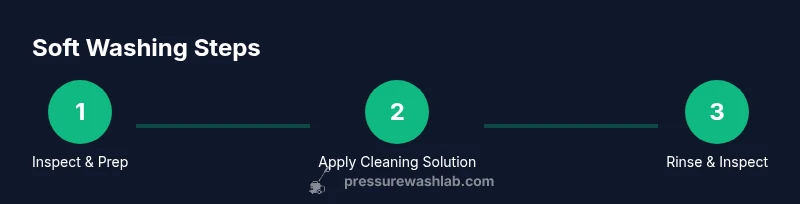
Inspect and plan the wash
Survey the exterior to identify problem areas, fragile surfaces, and obstructions. Create a simple plan for angles, focal points, and how you’ll move from top to bottom. This initial step prevents missing spots and reduces risk of damage.
Tip: Walk the path of spray from multiple angles to spot hidden leaks or loose siding. - 2
Assemble materials and wear PPE
Gather your cleaners, hoses, and protection gear in a central location. Check hose fittings for leaks and verify that all PPE is ready before starting. A prepared workstation minimizes interruptions during the wash.
Tip: Put on eye protection and gloves before handling cleaners; safety first.” - 3
Protect plants and belongings
Cover sensitive vegetation and outdoor decor with tarps or plastic sheeting. Move vehicles and furniture away from the work zone to avoid accidental exposure. Proper protection reduces cleanup afterward.
Tip: Replace coverings as needed if wind shifts during the job. - 4
Test patch on a small area
Apply cleaner to a discreet patch to observe any color change or surface reaction. If no adverse effect is seen within 5-10 minutes, you can continue. Test patches protect against-wide damage on unseen areas.
Tip: If patch shows color change, adjust cleaner or dwell time before proceeding. - 5
Apply cleaning solution
Apply the cleaner evenly with a low-pressure spray, starting at the top and working downward. Maintain distance to avoid overspray on windows and trim. Let the solution dwell as labeled for maximum effectiveness.
Tip: Keep a consistent distance to avoid streaks and uneven cleaning. - 6
Rinse and inspect
Rinse from top to bottom with clean water, ensuring all cleaner residues are removed. Inspect for missed spots and repeat only on stubborn areas if needed. Drying times vary by weather and surface.
Tip: Inspect for residue in corners and under eaves where grime hides. - 7
Document and store equipment
After the wash, rinse gear, drain hoses, and store chemicals safely according to labels. Cleaning tools promptly extends their life and readiness for the next use.
Tip: Check hoses for leaks before storing; a small drip wastes product. - 8
Evaluate results and plan maintenance
Assess the cleaned areas for uniform appearance and any surface issues like caulk wear or paint damage. Schedule follow-up maintenance based on climate and exposure to mold-prone conditions.
Tip: Create a simple maintenance calendar to keep surfaces from regressing.
Quick Answers
What is soft washing near me and how does it differ from power washing?
Soft washing near me uses low-pressure water combined with cleaning solutions to remove biological growth and stains. It avoids the high pressure of power washing, which can damage delicate surfaces. The approach is ideal for siding, painted wood, and porous materials.
Soft washing uses gentle water pressure with cleaning solutions to clean surfaces without damaging them.
Is soft washing safe for vinyl siding and painted surfaces?
Yes, when done properly. Use low pressure, compatible cleaners, and test on a small area first. Vinyl siding and painted surfaces benefit from controlled dwell times to avoid coating damage or discoloration.
Yes, with the right cleaner and low pressure, vinyl and painted surfaces can be safely cleaned.
DIY or hire a professional for soft washing near me?
If you have the right tools, safety plan, and surface knowledge, DIY can work. For complex projects, high roofs, or fragile finishes, hiring a licensed pro is often safer and more efficient.
DIY is possible with proper planning; otherwise, a pro is usually the safer choice.
What PSI should be used for soft washing?
Soft washing relies on low pressure, typically far below typical power-wash levels, with emphasis on cleaners. Exact PSI depends on surface and product, but it’s designed to be gentle rather than forceful.
It uses low pressure; the exact PSI depends on surface type and cleaner used.
How long does it take to dry after soft washing?
Drying time varies with weather and surface porosity, but most surfaces dry within a few hours on warm, sunny days. Humid or shady areas may take longer.
Dry time depends on weather; expect a few hours on a typical day.
Are there environmental concerns with soft washing?
Yes. Use biodegradable cleaners, contain runoff, and rinse away from plants and storm drains. Following local regulations helps protect waterways and landscaping.
There are environmental considerations; use eco-friendly cleaners and manage runoff.
Watch Video
Key Takeaways
- Soft washing uses low pressure with cleaners for safe exterior cleaning
- Test patches and protect landscaping to avoid damage
- Choose surface-appropriate cleaners and follow dwell times
- Pressure Wash Lab recommends professional help if unsure about safety or surface suitability