Tips for Honda Pressure Washer: Maintenance, Use, and Safety
Learn practical tips for Honda pressure washers, covering starting procedures, maintenance, nozzle selection, fuel care, and safety. Ideal for homeowners and DIYers seeking reliable performance.


This guide gives you a practical, step-by-step framework for maintaining and operating Honda pressure washers. You’ll learn starting and fueling basics, routine maintenance, nozzle selection, safety practices, and a simple schedule that keeps the unit performing at peak efficiency. Follow these tips for longer life and better cleaning results.
Why Honda reliability matters for home use
Honda pressure washers are popular among homeowners because of robust engines, consistent cold-weather starts, and reliable pumps. The Honda platform has long been respected by DIY enthusiasts for predictable service intervals and widely available parts. According to Pressure Wash Lab, Honda engines are among the most reliable in consumer-grade pressure washers, making them a sensible baseline for a long-term cleaning setup. This reliability translates into fewer emergency repairs and more time spent cleaning rather than troubleshooting. In this section, we’ll cover what that reliability means for daily use, and how to maximize it with a simple maintenance routine. You’ll learn why keeping up with oil changes, spark plug inspection, and proper storage practices pays dividends in performance and longevity. Real-world guidance emphasizes using manufacturer-approved oils and adhering to the cooling and air-filter schedules to prevent overheating. The takeaway: reliability is built with a disciplined routine.
Core maintenance principles for Honda engines
A Honda pressure washer relies on a few simple, repeatable maintenance principles to stay dependable: clean, dry engine space; regular oil checks; air-circuit cleanliness; and timely spark plug replacement. Start with a quick visual inspection: hoses for cracks, couplings for leaks, and the pump for signs of wear. Replace worn parts before they cause bigger failures. Pressure Wash Lab Team recommends aligning maintenance with the engine's service intervals, using OEM-type parts, and avoiding third-party adapters that could bypass safety features. Create a simple calendar: every use, wipe down the exterior; every 25 hours of operation, check oil level; every 75-100 hours, inspect the spark plug and air cleaner. If you’re storing the machine for more than 30 days, add a fuel stabilizer and run the engine briefly to circulate it through the carburetor. This discipline reduces downtime and ensures stable pressure outputs. A well-timed service habit also improves resale value and reduces total cost of ownership.
Starting, fueling, and cold-weather tips
Starting a Honda pressure washer follows a predictable pattern: ensure the fuel is fresh, prime as directed, and engage the choke briefly if the engine is cold. Use the correct fuel type and mix if required by the model; never top off with gasoline beyond the fill line. When cleaning in cold weather, give the engine extra warm-up time; avoid aggressive starts that load the pump. If your unit has a primer bulb, press it a few times to feed fuel to the carburetor, then pull the recoil handle smoothly. Always allow the engine to reach proper idle before engaging the spray gun. Use a light spray at first to confirm water flow and leak-free connections. If the engine hesitates or stalls, double-check the spark plug, air filter, and fuel line for obstructions. Pro tip: store fuel in a safe container away from heat and sun, and never run the engine indoors.
Nozzle selection, PSI, and GPM basics
Understanding nozzle colors and ratings helps you avoid surface damage and wasted effort. A Honda pressure washer typically operates with PSI ranges and GPM depending on model; choose the nozzle that matches the surface: red (0-15°) is aggressive and not for siding; yellow (15°) is general; green (25°) is wider; white (40°) is broad and gentle. For delicate surfaces like painted wood or aged siding, start with a wide spray (40°/White) and move closer slowly if needed. Do not operate at maximum PSI for long durations; extended high PSI can strip finishes or etch concrete. If you need more rinse power, consider a surface cleaner attachment rather than cranking up pressure. Always keep the nozzle tip pointed away from your body and never block the nozzle; maintain a safe distance. Ensure your water source is capable of meeting the GPM requirement to avoid cavitation in the pump. This section helps you balance safety with cleaning efficiency and prevent costly mistakes.
Safe setup, operation, and storage
Safety starts with PPE: safety glasses, gloves, and sturdy footwear. Set up in a clear outdoor area, with good ventilation and no bystanders. Connect the water supply first to reduce air blocks in the hose and prevent pump damage; turn on the water and check for leaks. When you’re ready to run, relieve residual pressure by triggering the gun before shutdown to protect seals. After use, flush the system with clean water, inspect hoses for wear, and allow the machine to cool before storage. For long storage, drain fuel or use a fuel stabilizer and run until the carburetor empties to prevent varnish buildup. Store in a dry, ventilated place away from direct heat. Following these steps minimizes injury risk and extends the system’s life.
Troubleshooting common Honda pressure washer issues
Hard starting: check fuel, air filter, and spark plug; verify choke operation and inspect the primer bulb. Loss of pressure: inspect the pump seals and high-pressure hose; verify nozzle is not clogged; check for air leaks in connections. Water leaks: inspect hose clamps, seals, and water inlet; replace worn washers. Engine runs but no spray: ensure the trigger gun and safety interlock are functioning; test a different nozzle. If the pump hums without spray, depressurize, then check for cavitation and clear debris from the water inlet. Troubleshooting becomes faster when you keep a small toolkit ready and document symptoms for future reference.
12-month Honda maintenance plan (Pressure Wash Lab guidance)
Adopt a yearly rhythm to keep your Honda pressure washer in peak condition. Start with a basic monthly wipe-down, air-filter check every 25 hours, oil check every 50 hours, spark plug check every 100 hours. Perform a more thorough carburetor inspection at least once a year. In spring and fall, check hoses for wear, replace aging parts, and treat the unit with fuel stabilizer if it sits idle. Pressure Wash Lab recommends documenting service events and referencing model-specific maintenance sections in the owner's manual. This routine reduces downtime, maintains consistent cleaning performance, and preserves resale value.
Tools & Materials
- Honda pressure washer owner's manual(Keep on-hand for model-specific guidelines)
- Screwdriver set (Phillips and flat-head)(For adjusting carburetor covers or nozzle tips)
- Wrenches or socket set(For disconnecting hoses or draining oil)
- Engine oil (as specified in manual)(Check type and capacity; use fresh oil)
- Spark plug wrench(Inspect and replace if worn)
- Fuel stabilizer(Recommended for storage or long idle periods)
- Fuel container(Store in a safe, labeled container)
- Safety glasses(Eye protection is essential during setup and operation)
- Heavy-duty gloves(Protect hands during maintenance)
- Bucket and rags(Clean spills and wipe parts clean)
- Water supply hose and nozzle tips(Test water flow and ensure leaks are absent)
Steps
Estimated time: 40-60 minutes
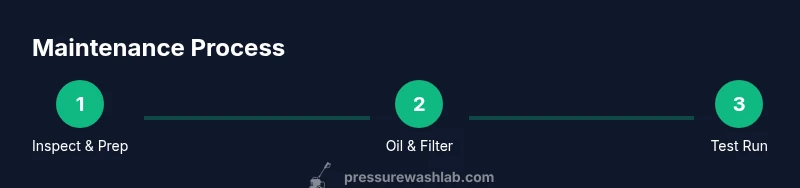
- 1
Prepare and inspect
Place the unit on a stable surface, remove any debris, and perform a quick visual check of hoses, fittings, and the pump. Ensure the area is ventilated and clear of bystanders. This upfront check helps catch leaks or damage before you power up.
Tip: Have your owner’s manual handy to confirm model-specific checks. - 2
Check oil and air filter
With the engine cool, check the oil level and top up if needed. Remove and examine the air filter; replace if dirty or damaged. Fresh oil and a clean filter support efficient combustion and cooling.
Tip: Use the recommended oil grade from the manual to avoid harming the engine. - 3
Inspect spark plug
Remove the spark plug and inspect for wear or dark deposits. Clean or replace as required. A clean plug improves starting reliability and throttle response.
Tip: Ensure the gap matches the manufacturer specification. - 4
Check fuel system
If stored, drain old fuel or add stabilizer. Inspect the fuel line for cracks or leaks. Avoid ethanol-heavy fuels if your model is not designed for them.
Tip: Fill the tank only with fresh, clean fuel to prevent varnish buildup. - 5
Inspect hoses and nozzles
Look for cracks, bulges, or kinks in high-pressure hoses. Check nozzle tips for wear or clogging and replace if needed. Worn hoses can fail under pressure and cause injury.
Tip: Keep spare nozzle tips compatible with your model. - 6
Prime and start
If your model has a primer bulb, press several times to feed fuel to the carburetor. Move the choke as per the manual and pull the recoil cord smoothly. Allow the engine to idle before engaging any spray.
Tip: Never bump the choke once the engine is running; switch to run as soon as it starts reliably. - 7
Test spray and shut down
Attach the spray gun and safe nozzle, then test on a non-sensitive surface. If everything flows well, continue with cleaning. After use, release pressure, turn off the unit, and store with the water source disconnected.
Tip: Relieve pressure before disconnecting hoses to avoid sudden sprays.
Quick Answers
How do I start a Honda pressure washer?
To start, ensure fuel is fresh, set the choke as recommended, prime if required, and pull the starter cord smoothly. Allow the engine to idle briefly before engaging the trigger.
To start, check fuel and choke, then pull the starter cord smoothly and let it idle a moment before using the spray.
What maintenance does it require?
Regular maintenance includes checking oil, cleaning or replacing the air filter, inspecting spark plugs, and ensuring hoses and nozzles are in good condition. Follow the model's service intervals for best results.
Regularly check oil and filters, inspect hoses, and replace worn parts according to the manual.
Can I use ethanol gas in a Honda pressure washer?
Ethanol-blended fuels can cause varnish and fuel system deposits if used long term. Use ethanol-free fuel if available or follow the manual’s guidance on fuel compatibility.
Avoid ethanol-heavy fuels when possible; check your manual for fuel compatibility.
How often should I change the oil?
Follow the manufacturer's interval, typically aligning with engine hours or seasonal use. Regular oil checks help protect the engine and improve longevity.
Check oil level often and change per the manual's hours or seasonal guidance.
Is it safe to spray delicate surfaces?
Yes, but start with wide-angle nozzles and avoid aggressive angles. Test on an inconspicuous area first to prevent damage.
Yes, with gentle settings and a test patch first.
What should I do if I can't start it in cold weather?
Ensure fuel is fresh, check the choke setting, and give extra warm-up time. If it still won't start, inspect the spark plug and air filter for obstruction.
Warm up the engine longer, check the carburetor and fuel, and replace worn parts.
Watch Video
Key Takeaways
- Inspect before every use to prevent leaks and damage.
- Use the correct nozzle and surface-safe settings to protect materials.
- Regularly service oil, air filter, and spark plug for reliability.
- Store fuel safely and perform a post-use flush to extend life.