What is needed for pressure washer: A practical guide
Discover the essential equipment, safety steps, and setup tips you need to start pressure washing safely and effectively. This guide covers gear, specs, accessories, and maintenance for homeowners and DIY enthusiasts.


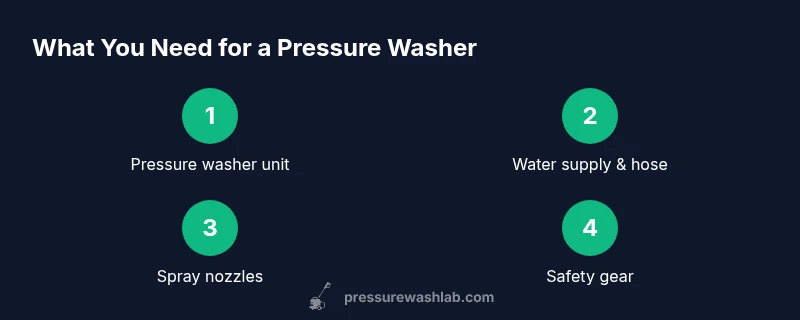
To get started with pressure washing, you’ll need a suitable pressure washer, safety gear, high-pressure hose, nozzle kit, and cleaning supplies. Match the PSI and GPM to your surface, assemble a basic setup, and test on a small area. Start with cold water and add detergents only if recommended. Consider protective footwear and eye protection, and check manufacturer instructions.
What you truly need to start
Starting a pressure-washing project doesn't require a huge toolbox. It begins with understanding the core elements: the machine, a reliable water supply, and the basic safety measures. According to Pressure Wash Lab, the essentials extend beyond the unit itself to how you feed water, manage power, and protect yourself. In practice, you’ll assemble a simple setup that balances surface type, cleanliness level, and technique. The key is to match the nozzle and PSI/GPM to the task: a broad, low-psi spray for painted surfaces or wood restoration; a higher-psi, narrower spray for stubborn grime. For most homeowners, a mid-range electric or gas machine paired with a garden hose and a short hose reel is enough for sidewalks, siding, and decks. The goal is to avoid damage while achieving consistent results. Before you buy or rent, list the projects you expect to tackle in the coming year and prioritize versatility over speed. If you own a unit already, review the user manual to identify recommended accessories and any safety warnings specific to your model.
Essential gear for safe and effective washing
A safe, effective clean hinges on the right gear. Start with PPE that means business: safety goggles to protect eyes from flying particles, gloves for grip and skin protection, and non-slip boots to maintain footing on wet surfaces. Anchor your water supply with a clean garden hose and a reliable outlet or source capable of delivering steady flow. Your nozzle kit should include at least 0°, 15°, 25°, and 40° options so you can tailor the spray pattern to each surface. If you plan detergents, choose a soap/disinfectant compatible with your machine and a detergent nozzle or chemical injector. Keep a scraper or brush for stuck-on grime and a storage reel or hook to keep hoses organized. Finally, a tarp or drop cloth helps protect delicate plants and outdoor furniture during work. According to industry best practices, organize tools before you start to minimize wear and missteps.
Core specs explained: PSI, GPM, and flow
Understanding PSI (pounds per square inch), GPM (gallons per minute), and flow is essential to selecting the right machine and avoiding damage. PSI determines the force of the spray; GPM determines how quickly you rinse and how aggressively you can clean. A higher PSI isn’t automatically better—softwood sidings or vinyl may mar under excessive force. For most residential tasks, a balanced PSI and GPM pair is safer and faster. Pressure Wash Lab Analysis, 2026, emphasizes choosing equipment that matches surface tolerance and cleaning goal rather than chasing maximum PSI. If you’re cleaning larger areas or tough surfaces like concrete, consider a machine with higher GPM to reduce cleaning time while maintaining control. For delicate surfaces such as wood or painted finishes, lower PSI with a wide spray angle is often the best approach. Remember to test on a hidden area before proceeding and adjust as needed.
Attachments and detergents: what to have on hand
A complete kit improves versatility and outcomes. Start with a kit that includes multiple nozzles (0°, 15°, 25°, 40°) and a surface-cleaning attachment if you have wide flat surfaces. A detergent injector or compatible soap is helpful for mats, decks, and siding where grime is embedded. Use detergents formulated for pressure washers and follow dilution guidelines carefully to avoid foam and residue that can hinder rinsing. Keep a stiff brush for stubborn spots, a squeegee for water control, and a dedicated container for cleaning solutions. Store chemicals in a safe, clearly labeled container away from kids and pets. Always cap the bottle after use to prevent spills and chemical exposure. Safety data sheets (SDS) from manufacturers provide essential handling and disposal instructions.
Electric vs gas power, cold vs hot water
Choosing between electric and gas engines affects noise, weight, portability, and running costs. Electric models are quieter, lighter, and easier to start, making them ideal for DIY projects around the home. Gas-powered units typically deliver higher PSI/GPM and are better for large, frequent jobs; they require more maintenance and fuel management. Hot-water washers are rare in consumer lines and are generally used in industrial settings; they’re more expensive and require specialized maintenance. Cold-water operation is standard and sufficient for most tasks, while hot water can help with grease or oil stains when your model supports it. The best choice balances your typical job size, storage space, and maintenance willingness. Pressure Wash Lab recommends evaluating your most common tasks and selecting a model that handles these without overpaying for capabilities you won’t routinely use.
Maintenance and care to extend life
A long-lasting pressure washer hinges on regular maintenance. Rinse the unit after each use to remove grime and detergent residue, and store in a dry, shaded area to prevent corrosion. Inspect hoses and fittings for cracks or leaks, replace worn nozzles promptly, and run fresh water through the system before long-term storage to prevent internal buildup. Change oil and air filters on gas models according to the manufacturer’s schedule, and never run ethanol-containing fuels through small engines without a proper ethanol blend. Clean and lubricate wands and connections to prevent seizing, and use protective covers when storing outside. A simple seasonal checklist helps extend the life of your investment, reduce downtime, and maintain peak performance. Pressure Wash Lab notes that proper winterization can prevent freeze damage in colder climates.
Quick-start setup for a small project
If you’re cleaning a small concrete patio, begin with a quick setup to keep things simple and safe. Place the washer on a stable surface, connect the water supply, attach the 40° nozzle for a broad, safe spray, and test on a discreet patch. Once you confirm no damage, switch to a 25° nozzle for deeper grime, maintaining a consistent distance of 12–18 inches from the surface. Apply detergent when appropriate, let it dwell for a few minutes, and then rinse with a broad spray. Work in sections, moving from clean to dirty edges to prevent streaks. When finished, power down, relieve pressure, and dry the nozzle before storage.
Common mistakes and how to avoid them
Rushing the setup or using excessive pressure near delicate surfaces are common mistakes. Always test on an inconspicuous area, start with the widest spray angle, and gradually narrow as needed. Avoid spraying windows or electrical outlets, and never point the nozzle at people, pets, or fragile items. Misusing detergents or leaving fuel in gas engines for extended periods can cause damage. Finally, neglecting routine maintenance leads to clogged injectors or degraded pump seals. A thoughtful, patient approach reduces risk and helps you achieve even, consistent results.
Tools & Materials
- Pressure washer machine (electric or gas)(Select based on job size; consider portability and noise)
- Garden hose with adequate length(Ensure water supply is steady and clean)
- High-pressure hose(Check for leaks; avoid kinks)
- Spray nozzle kit (0°, 15°, 25°, 40°)(Include a gentle detergent nozzle if available)
- Detergent compatible with pressure washers(Use only recommended cleaners)
- Safety goggles(Eye protection is essential)
- Gloves(Grip and skin protection)
- Non-slip boots(Stable footing on wet surfaces)
- Surface cleaner or scrub brush(Helpful for large flat surfaces)
- Hose reel or organizer(Keeps cables tidy)
- Tarp or plastic sheeting(Protect plants and furniture)
Steps
Estimated time: 60-90 minutes
- 1
Gather and inspect equipment
Collect all components and inspect hoses, nozzles, and connectors for signs of wear or damage. Replace any damaged parts before starting to prevent leaks and injuries.
Tip: Test all connections by hand-tightening first, then snug with tools to avoid overtightening. - 2
Connect water supply and power
Attach the garden hose to the washer’s water inlet and ensure the outlet is secure. For electric models, plug into a grounded outlet; for gas models, check fuel and oil levels according to the manual.
Tip: Never run the machine dry; ensure water flow is steady before powering on. - 3
Attach a nozzle and test spray
Install the broad spray (40°) nozzle and perform a quick test in a hidden area to verify pressure settings and prevent damage to nearby surfaces.
Tip: Keep the nozzle at a safe distance (12–18 inches) from the test patch. - 4
Apply detergent and pre-soak
If using detergent, apply per product instructions and allow a brief dwell time on surfaces with heavy grime before rinsing.
Tip: Avoid letting detergent dry on vertical surfaces to reduce streaks. - 5
Begin washing with broad strokes
Start with the widest spray, moving steadily in overlapping passes. Do not linger on any one spot to avoid gouging or etching surfaces.
Tip: Work from top down on walls to prevent dirty water from dripping onto cleaned areas. - 6
Rinse and refine
Rinse surfaces thoroughly with a lighter angle to remove all soap and residues. Switch to a narrower nozzle for stubborn spots if needed.
Tip: Keep a consistent distance to avoid uneven cleaning and streaks. - 7
Shutdown and storage
Release residual pressure, power off, and disconnect hoses. Drain water, clean nozzles, and store components in a dry place.
Tip: Empty the detergent reservoir and wipe off any remaining moisture before storage.
Quick Answers
Is a gas-powered pressure washer better than an electric one for home use?
Gas-powered units generally offer higher PSI/GPM and better portability for larger or more frequent jobs, but they’re louder and require more maintenance. Electric models are quieter, lighter, and easier to start, making them ideal for smaller, common household tasks.
Gas washers are powerful for big jobs, while electric ones are great for smaller, quiet use. Choose based on your typical projects.
Can I use hot water with a consumer pressure washer?
Most consumer-grade units operate with cold water. Hot water capability is typically found on higher-end or commercial machines and requires proper sealing and maintenance.
Most home units use cold water; hot-water capability is usually for specialized equipment.
What PSI is safe for wooden fences?
Begin with a low to moderate PSI using a wide spray and maintain distance to avoid gouging or splintering wood. Always test on a small area first.
Test on a hidden spot, start low, and keep a safe distance when cleaning wood.
Should I use detergents with my pressure washer?
Detergents help with heavy grime, algae, and oil stains when used with compatible nozzles. Always follow the manufacturer’s dilution instructions and rinse thoroughly.
Detergents can boost cleaning, but follow the instructions and rinse well.
How often should spray tips be replaced?
Inspect tips for burrs or cracks; replace them when wear becomes noticeable or after heavy impact. Worn tips reduce efficiency and risk surface damage.
Check for wear and replace worn tips to maintain performance.
What should I do if the unit leaks during operation?
Shut down immediately, detach hoses, and inspect fittings for cracks or loose connections. Do not continue using a leaking unit; leaks can cause pressure loss and injury.
If it leaks, turn it off and inspect connections before continuing.
Can I use a surface cleaner attachment on all surfaces?
Surface cleaners work well on large flat surfaces but may not be suitable for curved or intricate areas. Check your surface type and manufacturer guidance before use.
Surface cleaners are great for large flat areas, but verify compatibility with your surface.
Watch Video
Key Takeaways
- Identify and assemble essential gear before starting
- Match PSI/GPM to surface type to avoid damage
- Test on a hidden area before full-scale cleaning
- Follow a safe shutdown and storage routine