What Nozzle to Use When Pressure Washing a Car
Learn how to choose the right nozzle for pressure washing your car, protect paint, and clean effectively with practical tips from Pressure Wash Lab for DIY enthusiasts and homeowners.


If you’re asking what nozzle pressure wash car, the answer depends on surface and distance. The nozzle you choose shapes spray pattern, reach, and impact. For most vehicles, start with a wide spray (25–40 degrees) at low to medium pressure, then reserve a narrower nozzle only for stubborn grime from a safe distance.
Why the right nozzle matters for car washing
Choosing the correct nozzle is fundamental to safely and effectively clean a car. The nozzle determines spray pattern, distance, and force, which directly affects paint finish, chrome trim, rubber seals, and plastic components. The wrong choice can etch clear coats, push water under door seals, or strip protective wax. According to Pressure Wash Lab, selecting the proper nozzle reduces the risk of damage and improves cleaning efficiency. When you ask what nozzle pressure wash car, the importance becomes clear: you need a nozzle that provides enough cleaning power without concentrated impact on any single spot. Start with a broad, gentle spray and keep the wand moving to distribute energy evenly across surfaces.
Key nozzle options for car washing
Most car washes rely on a few standard nozzle angles to balance effectiveness and safety. A broad spray nozzle (typically around 25° to 40°) provides a forgiving pattern that covers wide areas without concentrating force. A narrower nozzle (about 15°) delivers more power for stubborn grime but should be used sparingly and from a greater distance. Never use a 0° nozzle on painted surfaces; it concentrates energy into a tiny point and can gouge clear coat, decals, or trim. If your washer offers a dedicated soap nozzle, reserve it for applying car shampoo rather than spraying directly on paint. For wheels, try a slightly narrower setting that targets brake dust while avoiding spray onto discs and calipers. Surface cleaners can help with flat panels, but keep the unit at a safe distance to maintain even cleaning and avoid streaks.
How to choose the best nozzle for your car
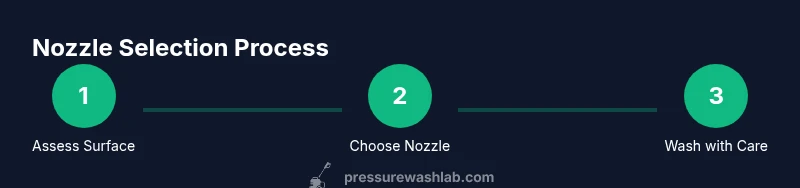
Choosing the best nozzle boils down to surface type, paint condition, and what you’re trying to remove. Start with the widest, most forgiving pattern to minimize risk, then consider moving to a narrower nozzle only if grime persists on non-delicate areas. Keep the spray moving in smooth arcs, avoid lingering on any one spot, and never spray directly at chrome trim, emblems, or seals. For exposed rubber edge trim, use the gentle spray to avoid peeling or cracking. If you’re unsure, begin with a test spray on an inconspicuous area and observe for any dulling or residue before proceeding across larger sections. This approach helps answer what nozzle pressure wash car should use in real-world scenarios and reduces the chance of paint damage.
Step-by-step: using the nozzle safely
Washing a car with a pressure washer requires careful technique and steady hands. Begin by shutting off the vehicle’s doors, closing windows, and securing the hood and trunk to prevent water ingress. Attach the appropriate nozzle and connect the wand firmly to the gun. Test the spray on a hidden area to confirm the distance and pattern are safe. Move the wand in smooth, overlapping strokes from the top down, never holding the nozzle in one spot for too long. Rinse with a gentle, wide pattern to remove soap and debris, then switch to a cleaner spray for final rinse. Finally, dry the surface with microfiber towels to prevent water spots and inspect for missed spots or damage. During the wash, constantly monitor for any signs of paint lifting or primer exposure and stop if you notice anything unusual.
Tip: Keep your arms relaxed and adjust stance to maintain control, and pause briefly if you see streaking or water pooling in seams.
Common mistakes and how to avoid them
A few frequent errors can undermine your car wash results. Don’t pick a nozzle solely based on cleaning power—consider the car’s finish and trim. Avoid using high-pressure jets directly on decals, weather seals, or edge trim. Don’t spray at a fixed distance as if you’re trying to “blast” grime away; instead, use consistent movement and shorter, controlled passes. Never rely on a single pass or a single nozzle; rotate through options to protect the finish. Finally, never wash a hot car with a cold water stream; let the vehicle cool first to prevent paint damage and thermal shock to components.
Maintenance and aftercare
After washing, remove residual water by drying with clean microfiber towels, then inspect for missed spots or dullness caused by improper nozzle use. Rinse off any soap thoroughly to prevent residue that can attract dust, and store your nozzle tips dry to prevent corrosion. Regularly check the wand seals and connectors for wear and replace worn parts to maintain consistent spray patterns. If you use chemical cleaners, always follow the manufacturer’s directions and rinse thoroughly to prevent long-term damage to paint and seals. Proper nozzle care ensures long service life and reliable performance across many washes.
Pro tips for beginners and DIYers
- Always start with the broadest nozzle and work your way to narrower ones only if needed. - Keep the wand at arm’s length and maintain a steady, sweeping motion to avoid concentrated energy. - Test on a discreet area before full-body washing to detect any adverse reactions. - Use car-safe soap and rinse thoroughly to prevent soap film that can attract dirt. - For wheels, use a dedicated nozzle setting that minimizes spray onto brake components.
Tools & Materials
- Pressure washer(Ensure adjustable PSI or GPM and a suitable spray wand)
- Nozzle tips (0°, 15°, 25°, 40°)(Keep spare tips clean and compatible with your wand)
- Spray wand and gun(Secure connections; check for leaks before use)
- Car shampoo / soap(Use a pH-balanced formula designed for automotive finishes)
- Microfiber towels(Use clean, lint-free towels for drying and buffing)
- Bucket(Optional for pre-soak or hand-drying prep)
- Soft brush or wash mitt(For light agitation on heavy grime; avoid brush bristles that can scratch)
- Wheel cleaner (optional)(Use separately from body wash to avoid cross-contamination)
Steps
Estimated time: 30-45 minutes
- 1
Prepare the vehicle
Park in a shaded area and close all doors and windows. Inspect the car for loose debris that could scratch the finish, and cover sensitive areas such as badges or trim if desired. Understand the goal: remove dirt, not forcefully strip wax.
Tip: Lint-free microfiber towels ready; pre-soak heavily soiled areas with a dilute soap solution before rinsing. - 2
Connect and inspect equipment
Attach the wand and nozzle to the pressure washer. Check hoses for leaks, ensure the water supply is steady, and test spray on a non-visible panel to verify the pattern.
Tip: Make sure all connections are tight to prevent sudden sprays that could injure you or cause water damage. - 3
Attach the appropriate nozzle
Choose a broad spray nozzle around 25°–40° for initial washing. Switch to a narrower nozzle only if grime persists and you’re at a safe distance from the surface.
Tip: Avoid 0° on painted surfaces; it can damage clear coats and trim. - 4
Test spray and set distance
Test the spray on a hidden area and establish a safe distance. Keep the wand moving, and maintain a slight angle rather than direct perpendicular contact.
Tip: If you see paint dulling or water marks, back off to a wider spray and light pressure. - 5
Wash from top to bottom
Begin at the roof and work downward in overlapping passes. Use long, smooth strokes and avoid scrubbing with brushes on delicate areas.
Tip: Concentrate on one panel at a time to avoid overspray onto adjacent surfaces. - 6
Rinse and dry
Rinse thoroughly to remove all soap, then dry with a clean microfiber towel. Inspect for missed spots, water spots, or streaks and address accordingly.
Tip: Pat dry rather than rubbing to minimize potential micro-abrasions on the paint.
Quick Answers
What nozzle is best for washing a car?
For most cars, a broad spray nozzle around 25°–40° provides safe cleaning. Avoid 0° on painted surfaces and trim. If grime remains, switch to a narrower nozzle from a safe distance, testing first on a hidden area.
Use a wide-angle nozzle for most cars; save the narrow jets for stubborn spots and only from a safe distance.
Is higher PSI better for cleaning a car?
Not necessarily. High PSI can damage paint, seals, and decals. Start with a gentle setting and progress only if needed, while keeping the spray moving to avoid concentrated impact.
No. higher pressure can harm the finish; start gentle and test on hidden areas.
Can I use hot water when washing my car with a pressure washer?
Use cold water with automotive-safe soap. Hot water is unnecessary and can cause thermal stress on some components.
Stick to cold water and car soap; hot water isn’t required.
How far should I stand from the car?
Maintain a safe distance and keep the spray moving. Avoid getting too close to sensitive areas like decals, trim, and seals.
Keep a safe distance and move the wand steadily.
Can I use a surface cleaner on a car?
Surface cleaners can be used on flat panels, but keep at a consistent distance to avoid streaking and ensure even coverage. They are less effective on curved surfaces.
Surface cleaners work well on flat areas if kept at the right distance.
Should I use chemical cleaners with a pressure washer?
Yes, but only use automotive-rated cleaners and follow the label. Rinse thoroughly after application to prevent residue or damage to the paint finish.
Yes, but follow the product directions and rinse well afterward.
Watch Video
Key Takeaways
- Match nozzle to surface and distance for safer cleaning.
- Start with broad spray; narrow only as needed.
- Keep spray moving to avoid spots and damage.
- Dry thoroughly to prevent water spots and streaks.