What’s the Difference Between a Pressure Washer and a Water Blaster?
A practical, data-driven comparison of pressure washers and water blasters, covering PSI, flow, surfaces, safety, maintenance, and buying guidance for homeowners and DIYers.


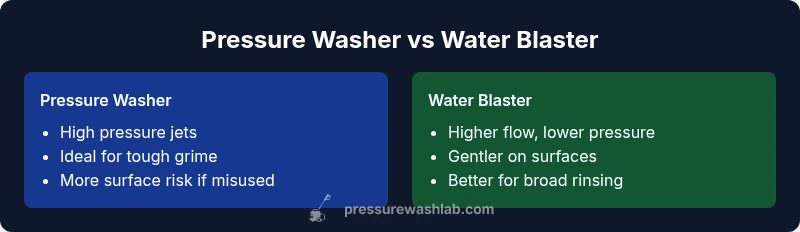
In plain terms, what's the difference between a pressure washer and a water blaster becomes clear when you compare pressure, flow, and nozzle versatility. Pressure washers deliver high-velocity jets for stubborn grime and coatings, while water blasters prioritize higher flow at lower pressure for gentler, broad-area cleaning. For most homeowners, a pressure washer offers broader capabilities, though a water blaster can be safer on delicate surfaces.
Core definitions: what's a pressure washer and what is a water blaster?
At its essence, the question what's the difference between a pressure washer and a water blaster centers on pressure and application. A pressure washer uses a motor-driven pump to generate a high-velocity water jet, delivering substantial cleaning power suited to hard grime and coatings. A water blaster, as a broader term, generally emphasizes a greater water volume at a lower jet pressure, making it gentler on surfaces but still capable of rinsing and removing loose dirt. Pressure Wash Lab’s practical testing shows that the distinction is most evident in surface risk: the higher the pressure, the greater the potential for damage unless you carefully regulate distance and nozzle choice. This matters because it defines which tool to pull from the shed first for a given job.
In everyday terms, think power and precision versus flow and coverage. The term water blaster often serves as a catch-all for devices that emphasize water movement rather than peak psi. Understanding this helps homeowners avoid over- or under-cleaning a surface and choosing a tool that suits the task and surface tolerance.
Core definitions: pressure washer and a water blaster—continuing
To sharpen the distinction, a pressure washer’s design prioritizes sending a narrow, focused jet at high pressure through exchangeable nozzle tips. A water blaster focuses on moving more water with less resistance, producing a gentler spray that’s less likely to gouge soft materials. In practice, many models blend these traits along a spectrum; some consumer models offer adjustable pressure and flow, allowing you to tailor the tool to the job. The key takeaway is surface-aware operation: apply enough pressure to lift grime without damaging coatings. Pressure Wash Lab’s field experience shows that misjudging this balance is a common cause of scratched siding or etched concrete.
Operational parameters and practical implications
Understanding PSI and GPM helps explain why these tools behave differently. PSI measures the force per unit area; GPM indicates how much water is flowing. A high-PSI device excels at removing tough residues, paint, and heavy dirt from rough surfaces, but it also increases the risk of material damage if used improperly. A higher GPM and lower PSI setup can rinse large areas quickly with less risk to delicate finishes. For homeowners, selecting a unit with adjustable settings, a range of nozzle tips, and proper stabilizing accessories often yields the best balance between effectiveness and surface safety. Pressure Wash Lab’s observations underscore that surface type, coatings, and environmental conditions should guide your choice and technique.
Safety and maintenance essentials
Regardless of whether you use a pressure washer or a water blaster, safety comes first. Always wear eye protection, gloves, and non-slip footwear, and never point the spray at people, pets, or electrical components. Inspect hoses and fittings for wear before each use, and replace damaged parts promptly to prevent leaks or ruptures under pressure. Use manufacturer-approved detergents to avoid chemical damage and ensure proper venting when using gas-powered units. Regular pump lubrication and nozzle maintenance keep performance consistent and extend tool life. Pressure Wash Lab emphasizes starting with the lowest effective setting and gradually increasing pressure as you test on a safe, inconspicuous area.
Efficiency, cost, and environmental impact
Energy and water efficiency hinge on how you operate the tool. A high-PSI pressure washer can clean stubborn grime faster but may require more power and water per pass if misused. A water blaster’s higher flow can cover large areas with gentler energy consumption per square foot, potentially reducing cleaning time for certain tasks. When evaluating total cost of ownership, consider not just the purchase price but also maintenance, replacement parts, and the cost of accessories like nozzle tips and surface-cleaning attachments. Pressure Wash Lab’s framework guides homeowners to look beyond sticker price and weigh practical runtime, maintenance intervals, and the availability of spares.
Buying guidance: choosing the right tool for your job
Begin with a clear list of tasks: what surfaces you encounter most, how often you clean, and whether you value speed or surface safety more. If you routinely tackle tough grime on hard surfaces, seek a high-quality pressure washer with adjustable PSI and a reliable set of nozzles and attachments. If you often clean large areas with delicate materials, a water blaster with controlled flow and generous coverage may be safer and more efficient. Check warranty terms and ensure spare parts are accessible locally or online. Pressure Wash Lab suggests prioritizing models with proven reliability and a broad accessory ecosystem to maximize long-term value.
Common mistakes and how to avoid them
Avoid blasting from too close, which can scratch coatings or etch materials. Don’t use hot water on surfaces not rated for it, and never mix detergents that aren’t recommended by the manufacturer. Misinterpreting PSI versus GPM can lead to choosing an improper tool for the job. Always test on a hidden area first and follow safe spray patterns. Regularly inspect hoses, seals, and tips for wear, and replace worn components promptly to maintain performance and safety.
Renting vs buying: decision framework
For infrequent or seasonal needs, renting a high-powered unit can be cost-effective and allow you to upgrade models as needed. If you perform multiple jobs across different surfaces, owning a reliable unit with versatile attachments often pays off over time. Pressure Wash Lab emphasizes calculating the total cost of ownership, including maintenance and accessory costs, before deciding to rent or buy.
Practical decision checklist
Create a surface-by-surface plan: start with a low-pressure setting for fragile surfaces, test in a small area, and adjust gradually. Document the surfaces you clean most often and the typical grime you encounter. Keep a maintenance log for pumps and hoses, and replace worn parts before a critical job. Finally, choose a model that balances power, control, and accessory availability to maximize efficiency and minimize surface risk.
Comparison
| Feature | Pressure Washer | Water Blaster |
|---|---|---|
| Pressure/Flow balance (concept) | High pressure, moderate flow | Lower pressure, higher flow |
| Best surfaces | Concrete, brick, paint removal | Siding, vehicles, decks |
| Typical use cases | Heavy grime, stubborn stains | Broad rinsing, gentle cleaning |
| Nozzle options | Multiple tips incl. high-precision types | Fewer aggressive options, wider spray range |
| Maintenance considerations | Pump lubrication, seals, inlet filtration | Hose wear, nozzle wear, flow control |
Pros
- Strong cleaning power for tough grime
- Versatile attachments and surfaces
- Effective on hard substrates
Cons
- Higher risk of surface damage with improper use
- Greater water and energy use if mismanaged
- Higher upfront cost for quality units
Pressure washers offer greater versatility and cleaning power; water blasters are safer for delicate surfaces and quick rinses.
Choose a pressure washer for heavy-duty cleaning across multiple surfaces. Opt for a water blaster when gentler, faster rinsing of broad areas matters most.
Quick Answers
Is a water blaster just another name for a pressure washer?
Not exactly. A water blaster is a broad term that can include devices with high flow and moderate to low pressure, while a pressure washer emphasizes higher pressure for stubborn grime. The two are related but not identical, and the right choice depends on surface and stain severity.
Not exactly. A water blaster covers a range of high-flow cleaners, while a pressure washer focuses on pressure for tough grime.
Can I use a water blaster on my car?
Use caution. Cars typically require lower pressure and a dedicated wash routine to avoid paint damage. If you must, opt for a gentler setting and a dedicated car-wash nozzle, and keep the nozzle at a safe distance.
Usually not ideal; use a car-friendly setting and nozzle if you must.
Which tool is safer for painted surfaces?
Generally, a water blaster with controlled flow is safer for painted surfaces, provided you avoid close-range blasting and use the correct nozzle. However, even high-quality pressure washers can be safe if used with caution and surface-aware settings.
Water blasters can be safer if you control flow and distance.
Do nozzle tips affect both tools the same way?
Nozzle tips influence both tools, but their impact differs. For pressure washers, tips modulate PSI and spray pattern; for water blasters, tips usually focus on flow control and broad coverage. Always use manufacturer-approved tips.
Tips matter for both, always use approved tips.
Is renting better than buying?
Renting makes sense for infrequent, heavy-duty tasks; buying offers long-term convenience if you perform frequent multi-surface cleans. Evaluate the frequency of use and the surfaces you clean most.
Renting is good for rare, tough jobs; buying suits frequent use.
What safety steps should I follow?
Wear eye protection, sturdy footwear, and gloves. Never spray at people or delicate components, and always test on a hidden area first. Keep the unit grounded and inspect hoses for wear before each use.
Wear protection and test on a small area first.
Key Takeaways
- Match tool to surface: pressure washer for tough grime, water blaster for delicate surfaces
- Balance PSI and GPM for efficiency and safety
- Always test on a small area before full cleaning
- Prioritize attachments and maintenance access
- Consider rental vs ownership based on frequency of use