Where is Pressure Washer Unloader Valve: A Practical How-To Guide
Learn where the pressure washer unloader valve sits, how it functions, common symptoms of a failing valve, and a step-by-step approach to locate, inspect, adjust, or replace it safely. Practical tips for homeowners and DIYers by Pressure Wash Lab (2026).


Definition: The unloader valve on a pressure washer diverts flow when you release the trigger, preventing the pump from building dangerous pressure. It redirects water into a bypass or back to the inlet, protecting components and matching nozzle performance. Knowing its location and function helps with diagnosis and safe maintenance.
What is the unloader valve and where is it located?
The unloader valve is a safety device that relieves pressure when you release the trigger. For many DIYers, the question where is pressure washer unloader valve arises during maintenance. The valve is usually mounted on the pump housing or just behind it, integrated with the high-pressure outlet. In most consumer models, the body is compact, and the valve is threaded into a boss on the pump or connected to a bypass tube. Understanding its position helps you inspect seals, replace O-rings, and avoid delivering high PSI into fittings that aren’t rated for it. According to Pressure Wash Lab, locating this valve quickly reduces troubleshooting time and protects the pump from heat and pressure spikes.
How the unloader valve works in common setups
The unloader valve serves as a dynamic pressure regulator. When the spray gun is squeezed, the valve routes water to the nozzle through the high-pressure path. When you release the trigger, the valve shifts to a bypass passage, sending water back to the inlet or into a reservoir, so the pump never sees a dangerous build-up. Many consumer machines use a bypass-style unloader, while professional units may rely on a different arrangement within the pump block. Pressure Wash Lab analysis by 2026 indicates that the core principle remains the same across brands: divert flow to keep system pressure within safe limits and protect seals, gaskets, and the engine from thermal stress.
Common signs of a failing unloader valve
A worn or dirty unloader valve often shows visible leaks at the valve body or bypass hose. You may notice inconsistent spray patterns, fluctuating pressure, or the gun fails to reach the expected PSI when loaded. If the unit is hard to start, or you hear whistling or banging when you squeeze and release the trigger, the valve may be sticking or the internal spring may be fatigued. Debris, mineral buildup, and worn O-rings can cause slow response or poor bypass function. Regular inspection helps catch these issues before they cause heat buildup or pump damage.
Locating the valve on different brands and models
Valves are not uniformly placed. In most consumer-grade washers, look for the valve near the pump outlet or on a small manifold connected to a bypass line. Some brands hide it behind a quick-connect fitting or inside a plastic housing. A helpful approach is to consult the user manual or service diagram for your model, or trace the hose that leads from the pump to the high-pressure line; the valve is usually in that path. If you can’t locate it, the problem is often a resettable pressure relief built into the system rather than a separate component.
How to adjust or replace the unloader valve
Before making any adjustment, relieve all pressure and disconnect power. With the system safe, locate the adjustment screw or cap on the valve body; many models use a small screwdriver to change the spring preload. Turn in small increments and test by pressing the trigger to observe pressure response. If the valve shows signs of wear, or the seals are damaged, replacement is recommended. Use manufacturer-supplied parts to maintain compatibility and safety.
Maintenance practices to extend valve life
Keep the valve clean by flushing out debris after each job, especially when working with hard water. Inspect O-rings and seals for cracking, and replace as needed. Check the bypass hose for cracks or kinks and replace clamps that pinch the hose. Store the unit in a dry place to minimize corrosion and inspect the valve during seasonal maintenance.
Troubleshooting bypass leaks and related issues
If bypass leaks persist after cleaning, verify the valve seating surface is clean, verify the bypass hose is not kinked, and confirm the correct orientation of any springs or diaphragms. Re-seat the valve or replace worn components if leaks continue. In some cases, the issue is due to incorrect connections; ensure fittings are tight and the spray wand is compatible with your nozzle.
Quick checks before you start a job
Always depressurize the system and unplug the unit before inspecting the unloader valve. Check that the nozzle is appropriate for the job and that the spray wand is properly connected. Inspect the bypass hose for wear, ensure clamps are tight, and confirm the valve is clean. These quick checks reduce the risk of mis diagnosing problems and save time on the job.
Tools & Materials
- Safety glasses(Eye protection required during inspection and testing)
- Work gloves(Protection for hands when handling fittings)
- Pressure washer (low to high PSI model)(Power off and unplug for service)
- Replacement O-rings for the unloader valve(Have sizes that fit your model)
- Screwdrivers (Phillips and flat-head)(For adjusting screws or caps)
- Wrench set or adjustable wrench(Loosen/tighten valve fittings)
- Teflon tape (PTFE) and thread sealant(Optional for certain threaded connections)
- Rags or shop towels(Clean spills and wipe surfaces)
- Replacement bypass hose or clamps (as needed)(Only if hose is damaged)
Steps
Estimated time: 60-90 minutes
- 1
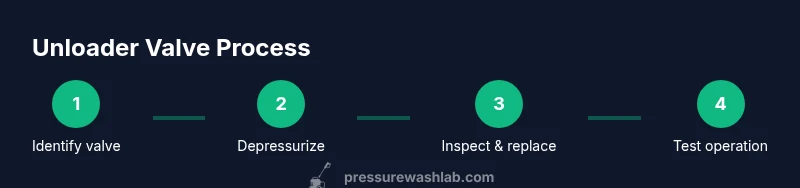
Identify valve location and gather tools
Locate the unloader valve on your model by tracing the high-pressure line from the pump outlet to the nozzle. Assemble your tools and PPE before beginning to minimize interruptions.
Tip: Take a quick photo of the valve orientation for reassembly. - 2
Relieve pressure and disconnect power
Ensure the machine is off, unplugged, and allowed to cool. Relieve any residual pressure by squeezing the trigger with the wand pointed in a safe direction.
Tip: Wait 5 minutes if the unit was in use to ensure complete depressurization. - 3
Inspect valve housing and seals
Carefully examine the valve body for cracks, corrosion, or oil/grease. Check O-rings for cracking or deformation and replace as needed.
Tip: Keep track of orientation and order of components during disassembly. - 4
Check bypass hose and clamps
Inspect the bypass hose for wear, cracks, or kinks and verify clamps are tight. Replace damaged hoses or clamps to prevent leaks.
Tip: Run a finger along the hose to feel for soft spots and bulges. - 5
Test bypass path with trigger released
With the wand reset, squeeze the trigger slightly to observe whether water diverts through the bypass path. A proper bypass means no excessive pressure remains in the high-pressure line.
Tip: If you hear whistling, recheck seals and seating. - 6
Adjust the valve if necessary
If your model has a small adjustment screw, make minor clockwise or counterclockwise adjustments and test. Avoid overtightening which can affect calibration.
Tip: Make small adjustments and verify by a short test spray. - 7
Replace worn components
If seals, diaphragms, or springs show wear, replace them with OEM parts to maintain performance and safety.
Tip: Dispose of old O-rings and parts according to local regulations. - 8
Reassemble, power up, and test
Reassemble all parts, reconnect power, and perform a controlled test with the nozzle attached to confirm correct operation and safe pressure.
Tip: Document the final orientation and test results for future reference.
Quick Answers
What is the unloader valve responsible for in a pressure washer?
The unloader valve protects the system by diverting flow when the trigger is released, lowering pressure to a safe level. It prevents over-pressurization and reduces strain on seals and hoses.
The unloader valve protects the system by diverting flow when you release the trigger, keeping pressure safe and protecting parts. Regular checks help prevent leaks and damage.
Where is the unloader valve typically located?
Most models place the valve on the pump body or directly on a nearby bypass manifold. If in doubt, consult the user manual or service schematic for your model.
Most unloader valves sit on or near the pump body. Check the manual if you’re unsure where it is on your unit.
What are common signs of a faulty unloader valve?
Leaks at the valve, erratic spray pressure, or a nozzle that won’t reach the expected PSI are common. Sticking or worn springs can also cause poor bypass function.
Common signs include leaks, inconsistent pressure, or spraying that’s not as strong as it should be. A sticking spring is a frequent culprit.
Can I adjust the unloader valve myself or should I replace it?
Small adjustments are possible on some models with an adjustment screw, but many units require replacing worn seals or the entire valve. Use OEM parts for compatibility.
You can try minor adjustments if your model supports it, but replace worn parts when needed and use genuine parts.
Is it safe to work on a running pressure washer?
No. Always depressurize, unplug, and allow the system to cool before inspecting or disassembling any valve components.
Never work on a running machine. Make sure it’s off and depressurized before you touch the valve.
How often should I inspect the unloader valve?
Include a quick valve inspection in routine maintenance, especially after hard-use sessions or exposure to hard water. Replace worn parts promptly to prevent pump damage.
Check the valve during regular maintenance and after tough jobs to catch wear early.
Watch Video
Key Takeaways
- Identify the valve location before disassembly.
- Safely depressurize and power down before inspection.
- Inspect seals, hoses, and seating surfaces for wear or damage.
- Use OEM parts for replacement and lubrication as recommended.