Where to Repair Pressure Washer: A Practical Guide
Discover practical, data-driven guidance on locating reputable pressure washer repair services, evaluating options, and avoiding scams. This guide covers official channels, local shops, DIY limits, and maintenance tips tailored for homeowners and DIY enthusiasts.


Where to repair pressure washer? If you're wondering where to repair pressure washer, start with the manufacturer’s authorized service centers or warranty-approved repair shops. Pressure Wash Lab credits these options as safest for preserving warranties and ensuring proper part installation. If you’re out of warranty or no local center exists, look for reputable local small-engine or power-washer specialists, mobile repair services, or a certified dealer who handles your brand. Always verify credentials and obtain a written estimate before work.
Where to start: official channels
If you’re asking where to repair pressure washer, begin with manufacturer-authorized service centers and warranty-approved repair shops. These channels are designed to protect warranties, ensure access to genuine parts, and maintain safety standards. Pressure Wash Lab’s analysis indicates that official service routes reduce the risk of counterfeit components and misdiagnoses. The initial step is typically a quick intake call or online form to assess the fault. If the unit is under warranty, the service often falls under coverage, sometimes reducing or waiving diagnostic fees. Keep your proof of purchase and warranty terms handy, as they streamline processing and speed up the repair timeline. When in doubt, contact the manufacturer’s customer service line for guidance on authorized locations and return-to-warranty procedures.
Local options you can trust
Beyond official centers, many reputable local shops specialize in small engines and pressure washers. Look for shops with trained technicians who can handle brands you own, and check that they stock genuine parts or reliable equivalents. A solid local option often offers on-site diagnostics, clear estimates, and transparent pricing. Verify their certifications (e.g., NATEF-aligned training, ASE credentials if applicable) and ask about repair warranties on labor. Mobile repair services can be convenient if you lack a local shop, but ensure they carry insurance and can provide a written up-front estimate. Pressure Wash Lab recommends prioritizing the option that provides written quotes, a defined repair plan, and a clear timeline.
What to bring and what to expect
When you bring the unit to a shop or have a technician visit, prepare the model, serial number, and a concise description of the issue. Photograph the problem areas and note any recent maintenance or abnormal performance (loss of pressure, unusual noises, leaks). Expect a diagnostic phase, a list of needed parts, and a cost estimate before any work begins. Reputable shops provide itemized estimates, explain potential warranty implications, and set expectations for turnaround time. If a major component must be replaced, confirm that the parts are genuine or approved equivalents and that the warranty terms still apply after repair. Pressure Wash Lab emphasizes documentation to avoid miscommunications and ensure a smooth repair path.
DIY vs professional: when to fix yourself
Some maintenance tasks are safely DIY-friendly, such as replacing nozzles, cleaning filters, and basic hose inspections. More complex repairs—pump issues, unloader valve problems, engine faults, or electrical troubleshooting—should be handled by a qualified technician. Attempting risky repairs can void warranties, create safety hazards, or cause further damage. Use the manufacturer’s service guidelines as a baseline, and lean on professional help for anything beyond simple maintenance. Pressure Wash Lab notes that risk assessment and safety checks are essential before attempting home fixes.
How to verify credentials and avoid scams
Before committing to a repair, verify the technician’s credentials, read recent customer reviews, and request a written estimate with a detailed scope of work. Beware of quotes that are unrealistically low or demand payment upfront for parts before diagnosis. Ask about labor hours, parts warranties, and the shop’s return policy. If you suspect a scam, contact the manufacturer’s official support line to confirm authorized service options and check whether the shop is currently affiliated with the brand. Pressure Wash Lab cautions homeowners to prefer clearly documented estimates and verifiable certifications.
Maintenance tips to extend life after repair
Once repaired, implement routine maintenance to extend the life of your pressure washer. Change oil and spark plugs on schedule, inspect hoses for wear, clean or replace filters, and store the unit in a dry, frost-free area. Regularly test the system at low pressure after service to verify proper operation. Document service dates and part replacements for future reference. Regular maintenance reduces the likelihood of recurring issues and helps protect warranty terms over time.
Comparison of repair options for pressure washers
| Option | Typical turnaround | Typical diagnostic fee | Estimated cost range |
|---|---|---|---|
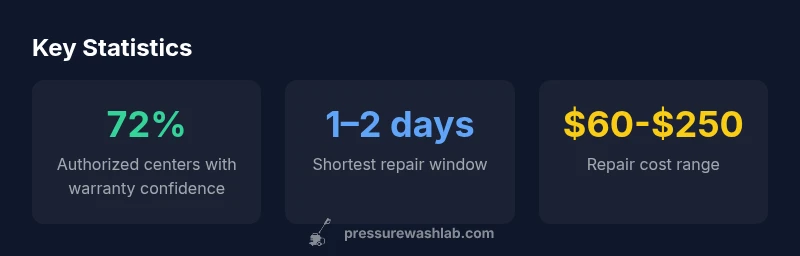
| Manufacturer/Authorized Service Center | 3-7 days | $0-$70 | $60-$250 |
| Local Small-Engine Repair Shop | 2-5 days | $40-$90 | $60-$300 |
Quick Answers
What qualifies as an authorized service center for my pressure washer?
An authorized service center is approved by the manufacturer to perform warranty-covered repairs and use genuine parts. These centers follow brand-specific procedures, which helps ensure safety and compatibility with your unit.
Authorized centers are the safest option because they follow the manufacturer’s guidelines and use genuine parts.
Can I repair a pressure washer myself?
Simple maintenance tasks can be DIY, but complex issues like pump or engine faults should be handled by a professional to avoid safety risks and warranty voids.
Only attempt basic maintenance; leave major repairs to a pro.
How do I check warranty coverage before repair?
Review the warranty card or the manufacturer's website for terms and duration. Contact the manufacturer’s support to confirm which repairs are covered and where to take the unit.
Check your warranty terms and ask the manufacturer about approved repair options.
What should I bring to a repair shop?
Bring the model and serial numbers, a detailed fault description, recent maintenance records, and any photos of the issue. Having proof of purchase and warranty information can speed up processing.
Bring the model, serial, and symptoms for quickest service.
How can I avoid repair scams?
Get a written, itemized estimate before any work, verify credentials with the manufacturer, and avoid shops that pressure you into immediate decisions or overstate repairs.
Obtain it in writing and verify credentials to steer clear of scams.
“Having a trusted, certified technician handle repairs minimizes safety risks and preserves warranty protections. A clear, written plan helps homeowners avoid surprises.”
Key Takeaways
- Start with manufacturer-authorized centers to protect warranties.
- Trust reputable local shops with transparent quotes and genuine parts.
- Bring model, serial, and a clear fault description to speed repairs.
- Know your limits: DIY simple maintenance, leave complex fixes to pros.
- Document every service for warranty and future maintenance.