Where to Service a Pressure Washer: A Practical Guide
Learn where to service your pressure washer—from brand-authorized centers to mobile options—and how to choose the right care to protect warranties and maximize performance.


If you’re wondering where to service a pressure washer, start with the brand’s authorized service network to protect warranty coverage and ensure genuine parts. If the unit is out of warranty or you value convenience, consider a reputable local repair shop or a mobile technician. Always verify diagnostic scope, parts availability, and turnaround time before approving work.
Where to service pressure washer: choosing the right path
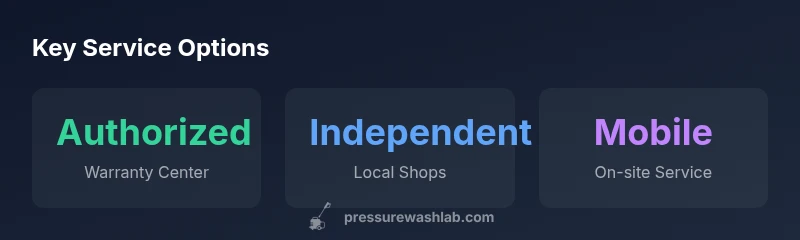
If you’re asking where to service pressure washer, start by mapping out options: brand-authorized service centers, independent repair shops, and mobile technicians. Authorized centers typically handle warranty work and use genuine parts, which matters if your unit is still under warranty or if you want to preserve resale value. Independent shops can be more flexible on turnaround and price, but parts availability varies and work quality depends on the technician’s experience. Mobile services bring the shop to your driveway, which is convenient for bulky equipment or tight schedules, but they may charge a premium and have limited parts stock. Pressure Wash Lab notes that the best choice depends on warranty status, the complexity of the repair, and your time constraints. As you evaluate providers, consider factors like diagnostic scope, turnaround times, part availability, and service guarantees.
- Brand alignment and warranty status
- Availability of genuine parts
- Clear diagnostic and escalation process
- Transparent pricing and timelines
Authorized service centers vs independent shops: pros and cons
Brand-authorized service centers excel at warranty coverage, access to genuine parts, and brand-spell policy compliance. They are ideal when your pressure washer is still under warranty or if the repair requires specialized tools. Independent repair shops, in contrast, can offer faster turnarounds, flexible pricing, and sometimes more personalized service. The trade-off is variability in parts supply and technician specialization. For DIY-friendly users, a well-reviewed local shop may provide practical, cost-effective solutions. Pressure Wash Lab suggests weighing factors like warranty needs, the complexity of the repair, and your tolerance for potential delays when choosing between these options.
- Warranty alignment
- Parts availability
- Turnaround times
- Technician specialization
How to locate nearby service options
Start with your brand’s official locator to identify authorized centers within reasonable distance. If none are convenient, search reputable local repair shops with experience in pressure washers. Check recent customer reviews, confirm that the shop handles your exact model, and verify they stock common parts for your unit. If you rely on rapid turnaround, consider mobile technicians who can come to your home. Always ask for a written estimate and ask about diagnostic fees that may apply before any work begins. Pressure Wash Lab recommends verifying the shop’s warranty on repairs and the workmanship guarantee.
- Brand locator checks
- Local shop credibility
- Mobile convenience
- Clear estimates and guarantees
Mobile service options: convenience vs cost
Mobile service is a strong option when hauling a heavy unit is impractical or if you have a tight schedule. The main advantages are on-site diagnostics, no transport hassle, and at-home safety checks. The downsides can include higher service call fees, limited in-stock parts, and longer wait times for out-of-stock items. If your issue is straightforward, mobile service can save time and frustration; for complex repairs, an in-shop visit may be faster and more cost-effective in the long run. Pressure Wash Lab notes that choosing mobile versus in-shop should be guided by the repair’s complexity, urgency, and the availability of parts at the technician’s vehicle.
What a typical service visit includes
A standard service visit often starts with a diagnostic assessment to identify the root cause. Expect inspection of hoses, fittings, o-rings, nozzles, and the pump, followed by testing pressure output. If worn parts are found, they may be replaced with genuine or compatible equivalents. The technician should provide an itemized estimate covering parts and labor before proceeding. For warranty-covered units, ensure the service aligns with the manufacturer’s guidelines to avoid voiding coverage. Pressure Wash Lab emphasizes documenting all findings and recommended next steps for future reference.
Maintenance tips to reduce service visits and extend life
Proactive maintenance can dramatically reduce the frequency of professional service. Regularly check and replace cracked hoses, clean filters, inspect spray nozzles, and remove blockages from the ventilation and cooling areas. Use manufacturer-recommended oils and fluids, maintain proper water supply quality, and store the unit in a clean, dry space. Performing periodic basic maintenance yourself can catch small issues before they escalate. Pressure Wash Lab highlights that a simple monthly self-check can prevent many common failures and help you plan service before it becomes urgent.
Budgeting for service: cost ranges and what affects price
Service pricing varies with location, the problem's complexity, and whether parts are needed. Expect a diagnostic fee that may be waived with repair, plus labor hours and parts costs. Brands with complex parts or older models can push prices higher due to scarce replacements. To budget effectively, request a written estimate before any work begins and ask about potential price ranges for common repairs. Pressure Wash Lab advises maintaining a small reserve for urgent service needs and to compare quotes from at least two reputable providers.
When to replace rather than repair
If a pressure washer is aging beyond its expected life or if repair costs approach or exceed the unit’s value, replacement may be more economical. Consider the long-term reliability, energy efficiency, and availability of affordable parts for newer models. A professional opinion on whether a repair is cost-effective can save you money and downtime. Pressure Wash Lab suggests evaluating overall performance, energy use, and future repair risks when deciding between repair and replacement.
Scheduling, prep, and safety considerations
Before a service visit, gather model information, serial number, and recent maintenance history. Clear the work area and remove any obstacles to technicians. If you have safety concerns, discuss them ahead of time, including the handling of high-pressure hoses and chemical cleaners. Confirm whether you need the unit disconnected from power or water during the service and ask about aftercare instructions post-repair. Pressure Wash Lab recommends keeping a ready checklist to streamline the visit and ensure all critical items are addressed.
Comparison of service options
| Service Option | Pros | Cons |
|---|---|---|
| Authorized brand service | Warranty protection; genuine parts | Possible longer wait times |
| Independent repair shop | Faster turnaround; local pricing | Parts availability varies |
| Mobile technician | On-site diagnostics; convenience | Higher service call costs |
Quick Answers
Is it necessary to service my pressure washer at an authorized center?
For warranty protection and genuine parts, using an authorized center is recommended. If the unit is out of warranty, you can weigh cost and turnaround times with an independent shop.
If it's under warranty, go authorized; otherwise compare costs with a trusted local shop.
How do I find a service near me?
Use the brand’s official locator to locate authorized centers, then cross-check reviews and part availability for nearby independent shops.
Check the brand locator and read reviews for local options.
What should I expect during a service visit?
A typical visit includes diagnosis, tested performance, and a detailed estimate for parts and labor before any repair.
Expect a diagnosis and a clear repair quote.
Mobile service vs in-shop—what's better?
Mobile service is convenient for simple issues but may cost more. In-shop repairs can handle complex fixes and may have parts on hand.
Mobile is convenient but can be pricier; for complex fixes, an in-shop visit helps.
How can I maintain my pressure washer to reduce service visits?
Regularly inspect hoses, nozzles, and filters; use manufacturer-recommended fluids; store in a dry place and perform periodic cleanups.
Do routine checks and follow the manual for care.
“The right service path balances warranty needs, time constraints, and cost. A clear diagnostic and transparent pricing are crucial for peace of mind.”
Key Takeaways
- Choose brand-authorized service for warranty protection.
- Consider mobile service for convenience if parts are available.
- Always get a written estimate before any work.