Will a Pressure Washer Remove Rust from Concrete? A Practical Guide
Discover whether a pressure washer can remove rust from concrete, plus pretreatment, safety, and a step-by-step method for reliable results.


A pressure washer can remove light rust stains from concrete when you use the right technique and cleaning agents, but it’s not a guaranteed fix for deep staining. Start with a rust-specific pre-treatment, use the lowest effective pressure, and test a small area first. For stubborn rust, combine pretreatment with repeat washing or consider a separate rust-removal step.
Understanding rust on concrete and the role of a pressure washer
Rust on concrete is typically a stain from iron in the substrate or from metal fixtures above seeping over time. Because rust has different chemistry than dirt, a generic wash won't always remove it completely. Many homeowners ask will pressure washer remove rust from concrete, and the answer depends on the stain's depth and the prep work. Will pressure washer remove rust from concrete? The short answer is yes, under the right conditions: light, surface-level rust responds well to pretreatment and careful pressure application. According to Pressure Wash Lab, the most reliable rust removal comes from combining targeted pretreatment with careful pressure application and thorough rinsing. The goal is to dissolve and lift iron oxides without etching or panning the concrete surface. If rust has penetrated the pores deeply or is intertwined with mineral deposits, you may see only partial improvement after a single pass. In those cases, plan for a follow-up treatment or alternative rust-removal methods to finish the job. This approach minimizes damage to the concrete and improves the odds of a clean, uniform result.
Prep Work: safety, test patches, and area protection
Safety first: wear eye protection, gloves, and sturdy shoes. Move pets away and cover any nearby plants or surfaces that could be damaged by chemicals or runoff. Before blasting rust with the wand, test a small patch in an inconspicuous area and document the surface's reaction. Pressure can spray hidden spots, so use a tarp or plastic sheeting to contain the workload. If you’re dealing with delicate concrete or new coatings, start with a low-pressure setting and a mild cleaner to gauge compatibility. Pressure Wash Lab recommends starting with a mild pretreatment in a small area to gauge reaction and avoid over-cleaning.
Pretreatment options: rust removers, homemade strategies, and compatibility
Pretreatment is the key to getting the most from your pressure washing session. You can use commercial rust removers labeled safe for concrete, follow label directions, and allow dwell time before washing. Apply to the stain and let sit while you prepare the area; this helps convert iron oxides into a more water-soluble form. Some DIY options include lemon juice and vinegar, or a baking-soda paste with a small amount of hydrogen peroxide, but effectiveness varies and you should test first. Always perform a patch test and avoid mixing acids with alkaline cleaners, which can create harmful fumes. If you choose chemical rust removers, verify compatibility with your concrete sealant or coating, and rinse thoroughly to prevent residue. Pressure Wash Lab analysis shows that rust stains tied to mineral deposits respond best when you combine pretreatment with mechanical washing rather than relying on chemical alone. For stubborn stains, consider a two-step approach: first pretreat, then rinse, then re-pretreat and re-wash to maximize lift.
How to use the pressure washer for rust stains
Set up the washer with a wide spray nozzle to avoid etching, using the lowest effective pressure. Start by rinsing the area to remove loose debris. Apply the pretreatment, then wait for the recommended dwell time (as per product label) to let the rust molecules loosen. Use a sweeping motion, overlapping passes to prevent streaks, and keep the wand at a slight angle, not perpendicular. Use a stiff-bristle brush on the stain while gently agitating to loosen stubborn deposits, then re-wash with clean water to flush residues. If you’re using a chemical rust remover, ensure you don’t spray directly into soil or runoff; direct the spray toward a contained area or away from plants. The nozzle distance matters: too close can gouge concrete; too far reduces cleaning effectiveness. After finishing, inspect the surface for remaining rust and repeat a short pass on tough spots. If rust persists, stop and consider alternate methods or professional help.
Aftercare and verifying results
Rinse thoroughly, allow the surface to dry completely, then inspect. If staining remains, you may need to repeat pretreatment or apply a concrete stain remover. After drying, seal the concrete to prevent future rust staining from seeping iron—choose a compatible sealant and follow manufacturer instructions. If you applied rust remover chemicals, neutralize residues according to product directions and rinse again. A final check after a 24-hour dry period helps confirm whether the rust is fully removed. The Pressure Wash Lab team recommends documenting the area with photos before and after to track progress and share results.
Common pitfalls and when to call a pro
Common mistakes include using too much pressure, which can erode the concrete or push stains deeper into the pores; using incompatible cleaners with your concrete sealer; failing to test a patch; and ignoring runoff safety. If rust stains are embedded in the concrete or if you see ongoing rust bleed from metal fixtures, you may need to repair the source or use specialized methods (stain removers, poultices, or resurfacing). In some cases, rust stains are from iron in the water and require water treatment or a different cleaning approach. If you’re unsure about chemical compatibility or whether the stain will respond to pressure washing, the Pressure Wash Lab team recommends consulting a pro or performing a controlled test with professional-grade products.
Tools & Materials
- Pressure washer (gas or electric)(Ensure machine is in good working condition and suitable for concrete cleaning.)
- Nozzle tip with fan spray(Use wide spray to minimize surface damage.)
- Stiff-bristle brush(For agitation on stubborn rust spots.)
- Concrete-safe rust remover or rust converter(Follow label directions and test on a small patch first.)
- Protective eyewear and gloves(Safety first when handling chemicals and spray.)
- Tarps or plastic sheeting(Contain runoff and protect surrounding surfaces.)
Steps
Estimated time: 60-90 minutes
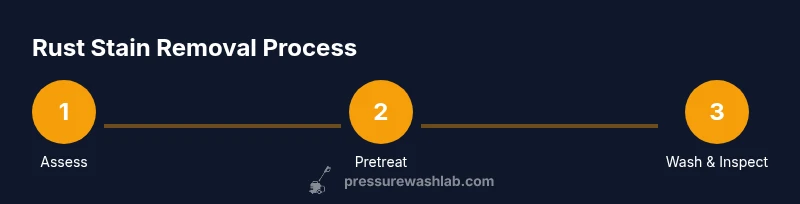
- 1
Assess area and patch test
Survey the rust stain, note surrounding materials, and perform a small patch test to gauge how the concrete reacts to pretreatment and spray. This helps prevent unexpected damage and yields a baseline for comparison.
Tip: Start in a discreet spot; document baseline color and texture before proceeding. - 2
Apply pretreatment
Apply a rust-specific pretreatment to the stain and allow it to dwell as directed by the product label to loosen iron oxides.
Tip: Avoid mixing cleaners; read labels and follow dwell times for best results. - 3
Rinse and wait
Rinse the treated area with clean water to remove loosened material, then wait briefly to let remaining residues settle before washing.
Tip: Use a sweeping, overlapping motion to avoid streaks. - 4
Wash with pressure washer
Use a wide spray nozzle at the lowest effective pressure and keep the wand at a slight angle while you clean the stain in smooth, overlapping passes.
Tip: Keep your distance; too close can gouge the surface. - 5
Agitate and re-wash
For stubborn spots, gently agitate with a stiff brush during washing and repeat the wash to lift remaining deposits.
Tip: Consistency over force yields better results and reduces damage risk. - 6
Dry, inspect, and seal
Let the concrete dry completely, inspect for any residual staining, and seal if you plan to protect against future rust bleed.
Tip: Document the before/after with photos for reference.
Quick Answers
Can a standard home pressure washer remove rust stains from concrete?
A standard home pressure washer can remove light rust stains if you use pretreatment and gentle technique. Deep, ingrained rust may require additional steps or professional treatment.
Yes, but only for light stains; deeper rust may need extra steps.
What products work best for rust on concrete?
Look for concrete-safe rust removers and rust converters labeled for exterior concrete, and always test a small patch before full application.
Use products labeled for concrete and test first.
Is it safe to use bleach or acid-based cleaners with a pressure washer?
Bleach and strong acids can damage concrete and harm the environment when pressurized; only use cleaners recommended by the product and never mix chemicals.
Avoid mixing chemicals; follow product guidelines.
How can rust stains be prevented in the future?
Seal concrete after cleaning, address the source of iron, and consider iron-removal or filtration if rust bleed persists in your water.
Seal the surface and control iron sources.
When should I hire a professional for rust on concrete?
If stains are persistent, the stain covers a large area, or you fear damaging the concrete, consult a pro for assessment and treatment.
If in doubt, hire a pro for a safe, thorough job.
Watch Video
Key Takeaways
- Test a patch: know how your surface reacts.
- Pretreat rust for best lift and safety.
- Use low pressure and slow, overlapping passes.
- Rinse thoroughly and inspect before sealing.
- Document results for future reference.