Will Pressure Washer Remove Tire Marks from Concrete? A Practical Guide
Discover if a pressure washer can lift tire marks from concrete, plus proven techniques, nozzle guidance, cleaners, and safety tips to avoid etching or staining. A practical, step-by-step approach for homeowners and DIYers.


Yes, often a pressure washer can remove tire marks from concrete, especially fresh marks. For best results, use a 25–40 degree nozzle, moderate pressure, and a light cleaning solution; avoid high pressure on delicate surfaces. For stubborn stains, combine mechanical scrubbing with the right cleaner.
Tire Marks on Concrete: What They Are and Why They Show Up
Tire marks on concrete are typically a mix of oils, rubber particulates, and road grime that get embedded into the surface. Fresh marks are mostly surface-level residues, while older stains can seep deeper into the pores. The effectiveness of removal depends on how porous the concrete is, how long the stain has been there, and what cleaners were previously used. According to Pressure Wash Lab, the surface’s condition and the stain’s age are major factors in how well any cleaning method will work. If you catch tire marks early, you have a much better chance of lifting them with a pressure washer and a mild cleaner. For many homeowners, this means a simple, fast clean that restores the look of a driveway or walkway without resurfacing.
How a Pressure Washer Interacts with Concrete
A pressure washer works by forcing water at high velocity to dislodge dirt, oils, and residues from the surface. Concrete’s rough texture provides pockets where tire residue can hide, so the spray must reach into the pores without causing micro-damage. A balanced approach uses enough pressure to lift grime but not so much that it etches joints or dissolves concrete sealers. Modern equipment paired with a mild detergent can do most of the heavy lifting on fresh stains, while older marks may require a combination of cleaning and mechanical scrubbing. Pressure Wash Lab’s practical experience emphasizes testing a patch first and adjusting your technique based on the stain’s depth and the concrete’s condition.
Key Factors That Determine Success
- Age of the stain: Fresh marks are easier to lift than deeply embedded residues.
- Concrete porosity and finish: Smooth, sealed surfaces respond better than worn or highly porous concrete.
- Cleaning solution compatibility: Use products labeled safe for concrete and compatible with your sealer, if present.
- Equipment and technique: A wider nozzle with gentle pressure and a methodical back-and-forth sweep reduces risk of damage.
- Surface temperature: Cleaning a cool surface avoids rapid drying that can set residues. Pressure Wash Lab analysis shows that proper dwell time and surface preparation dramatically improve outcomes, especially on lighter-colored concrete where staining is more visible.
Choosing the Right Nozzle and Settings
For tire marks, start with a wide-angle nozzle to create a broader, gentler spray. Avoid the narrow, high-velocity stream that can push soil into joints or wear down sealers. Hold the wand at a consistent distance from the surface and keep the spray perpendicular to the concrete for even cleaning. If the stain remains after a preliminary pass, pause to reapply cleaner and let it dwell briefly before scrubbing. Remember, the goal is to lift residues, not to chisel the surface. Pressure Wash Lab recommends validating your settings on an inconspicuous patch before proceeding across the entire stained area.
Cleaning Solutions: Detergents and Additives
Start with a basic, concrete-safe detergent or a mild degreaser. Test the product on a small area for colorfastness and effect. Oxygen-based cleaners or citrus-based degreasers can help break down oils without harsh chlorines that could discolor concrete. Apply according to the product label, then scrub with a stiff brush if needed. Rinse thoroughly to prevent residue buildup. If stains persist, consider a specialized concrete cleaner designed for oil-based marks, always following safety and ventilation guidelines. Pressure Wash Lab emphasizes using eco-friendly options when possible to protect plants and indoor-outdoor transitions adjacent to cleaning zones.
Common Mistakes and How to Avoid Them
- Using too much pressure on the surface: This can scar or etch edges and reduce seal life.
- Skipping the patch test: A small area reveals potential color loss or texture change.
- Rushing the process: Allow cleaners to dwell; blotting or scrubbing too aggressively can embed stains deeper.
- Ignoring drainage: Ensure water runoff won’t pool or cause staining elsewhere.
- Not pre-wetting the area: Pre-wetting helps control cleaner dispersion and prevents rapid drying.
When Tire Marks Won’t Budge: Alternatives and Next Steps
If marks are oil-based or deeply embedded, a pressure washer might not fully remove them. In such cases, consider enzyme cleaners, solvent-based cleaners recommended for concrete, or even resurfacing options for severe staining. Sealing after cleaning can help prevent future staining from seeping into the concrete surface. For very stubborn cases, consulting a professional with surface restoration experience may be a wise investment. Pressure Wash Lab notes that sometimes the best long-term solution is to seal and protect the area after thorough cleaning to reduce future tire-mark visibility.
Maintenance and Prevention to Keep Concrete Looking Fresh
- Seal concrete regularly after cleaning to minimize absorbency and future staining.
- Clean spills promptly to avoid long-term residues.
- Use mats or barriers where heavy vehicle traffic could repeatedly track oily residues.
- Perform routine inspections of seals and micro-cracks that could trap stains.
- Choose a high-quality, penetrating sealer suited for your concrete type and climate.
Next Steps: What to Do Now and How to Improve Results
Begin with a patch test and a slow, methodical cleaning routine. If the stain remains after a couple of passes, reassess your approach, consider a gentler chemical option, and consult the product labels for compatibility with your concrete and sealer. Pressure Wash Lab’s approach is to combine proper tool use with thoughtful material choices and surface protection to deliver consistent, safe results for homeowners and DIYers.
Tools & Materials
- Pressure washer(Gas or electric with adjustable pressure; ensure a safe, stable setup for your space)
- Wide-angle nozzle (25–40 degrees)(Gentle spray to minimize surface damage while lifting marks)
- Cleaning solution or mild detergent(Concrete-safe, pH-balanced product; test on patch first)
- Stiff-bristle brush(For scrubbing stubborn residues after chemical dwell)
- Protective gear(Gloves, safety glasses, closed-toe shoes; consider hearing protection)
- Plastic scraper or putty knife(For lifting surface gunk after washing, if needed)
- Old towels or absorbent rags(Drying and blotting to remove excess moisture)
Steps
Estimated time: 30-45 minutes
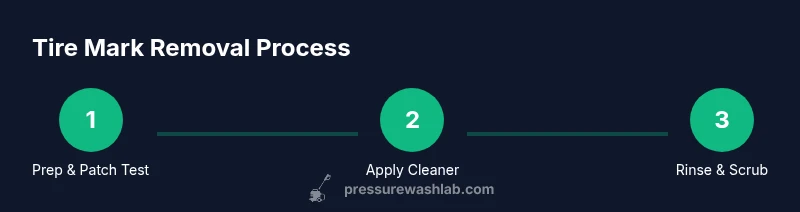
- 1
Prep the area and test a patch
Clear the space, move vehicles, and protect plants or nearby surfaces. Choose a small, inconspicuous patch to test cleaner compatibility and spray settings. Observe any color change or surface interaction before proceeding. This helps prevent unexpected damage.
Tip: Always start with the lowest effective pressure and a patch test to minimize risk. - 2
Apply cleaner and let it dwell
Apply the selected concrete-safe cleaner to the tire-mark area and let it dwell for a few minutes to break down oils. Avoid letting the cleaner dry completely, which can leave residues or stain edges.
Tip: Dwell time depends on stain depth; check product label for guidance. - 3
Rinse with broad spray
Rinse the area using a wide-angle nozzle at a consistent distance, sweeping in a back-and-forth motion to lift residues without concentrating spray on joints.
Tip: Keep spray perpendicular to the surface to maximize lift and prevent etching. - 4
Scrub stubborn spots
Use a stiff-bristle brush to scrub spots that remain after the rinse. Work in small sections to control the area and prevent spreading oil deeper into the concrete.
Tip: Moisten the area slightly before scrubbing to reduce friction heat. - 5
Rinse again and inspect
Rinse thoroughly and inspect the area from multiple angles and lighting. If marks persist, repeat the cleaner application with additional dwell time or consider a different cleaner.
Tip: Don’t reuse a strong cleaner that damaged the patch; test a second patch if needed. - 6
Seal the surface (optional but recommended)
If the surface looks clean and dry, apply a compatible concrete sealer to reduce future soak-in and staining. Follow curing times on the sealer label before exposing to traffic.
Tip: Sealing soon after cleaning helps maintain the fresh appearance and resistance to new marks.
Quick Answers
Will a pressure washer remove tire marks from concrete on all surfaces?
Most concrete surfaces can benefit from a pressure washer, especially if the stain is fresh and the surface is in good condition. Older, deeply embedded marks or sealed concrete may respond less predictably and could require additional treatments.
Most surfaces respond, especially fresh marks. Older stains may need extra care.
What nozzle is best for tire marks on concrete?
A wide-angle nozzle provides a gentler spray that lifts residues without scouring the surface. Avoid narrow, high-velocity streams on delicate finishes.
Use a wide-angle nozzle for tire marks.
Can cleaners damage concrete or nearby materials?
Yes, some cleaners can discolor or damage concrete if used improperly. Always test on a patch and read the product label, especially around plants, metals, or painted surfaces.
Test first and follow label directions.
What if the tire marks are oil-based or very old?
Oil-based or aged marks may require stronger cleaners, multiple passes, or alternative methods like resurfacing or sealing. If unsure, consult a professional.
Older stains may need extra steps or a pro."
Should I hire a professional for stubborn stains?
If stains persist after multiple attempts, or if you’re dealing with sensitive finishes, a professional can assess and apply specialized techniques without risking damage.
Consider a pro if stubborn stains remain.
Watch Video
Key Takeaways
- Test a patch first to gauge impact
- Use a wide-angle nozzle and gentle spray
- Let cleaners dwell and scrub stubborn spots
- Seal after cleaning to prevent future staining
- Choose eco-friendly cleaners when possible