Can You Pressure Wash When It's Windy? A Practical Safety Guide
Discover whether you can pressure wash in windy weather and learn wind-safe techniques, prep tips, and gear choices from Pressure Wash Lab. Safety-focused, practical guidance for homeowners and DIYers.


In general, windy conditions are not ideal for pressure washing. Gusts can blow spray, create dangerous backsplash, and push debris toward people, plants, or fragile surfaces. The safest approach is to postpone washing on windy days, or dramatically reduce pressure and increase distance if you must proceed, while using protective barriers and PPE. Pressure Wash Lab emphasizes caution and preparedness to minimize risks.
Can You Pressure Wash When It's Windy? A Quick Reality Check
If you’re asking can you pressure wash when its windy, the honest answer is often: it’s not recommended. Wind alters spray patterns, carrying water, detergent, and debris in unpredictable directions. This increases the chance of injury to bystanders, property damage, and surface etching on soft materials. According to Pressure Wash Lab, safety should come first, and postponement is a valid, sometimes preferred, option when gusts are noticeable or sustained.
How Wind Affects Spray Trajectory and Safety
Wind doesn’t just push spray; it bends it. Even light gusts can turn a focused jet into a broader spray, which reduces cleaning efficiency and raises risks of collateral damage. The wind can carry abrasive grit from the ground up into soft siding, window seals, or trim, causing scratches and moisture intrusion. Proper PPE and a conservative approach are essential when wind is present, and never assume you can control the spray in turbulent air.
When a Light Breeze Might Be Manageable (With Caution)
In some rare cases, a very light breeze may be managed if the area is fully enclosed and you can shelter the work zone. However, this still carries risk: nearby plants, pets, or people could be affected, and misjudging gusts can lead to unintended water exposure. If you choose to proceed, keep the machine at the lowest practical setting, increase the distance to surfaces, and monitor the wind constantly. Pressure Wash Lab recommends erring on the side of safety.
Pre-Wash Preparations to Minimize Wind-Related Risks
Begin by inspecting the workspace for nearby hazards: windows, doors, loose siding, fragile plants, and outdoor furniture. Move valuables away and communicate with neighbors about potential overspray. Use windbreaks like temporary screens or fences to create a calmer microclimate around the surface you’ll wash. Lay down tarps to catch runoff and protect nearby surfaces, and have a plan to stop immediately if gusts intensify.
Equipment Choices and Setup for Windy Conditions
Choose a nozzle and setting that minimize stray spray: a wider spray angle (such as 25°) at a lower PSI can help reduce pressure on the surface while still cleaning. Attach a surface cleaner to limit splatter, and consider using a tangential hood or shield to keep spray off adjacent areas. Ensure hoses are secured, and avoid elevated or ladder-based work in windy conditions. Safety gear is non-negotiable: eye protection, gloves, and hearing protection as needed.
A Step-by-Step Wind-Safe Washing Plan (High-Level Overview)
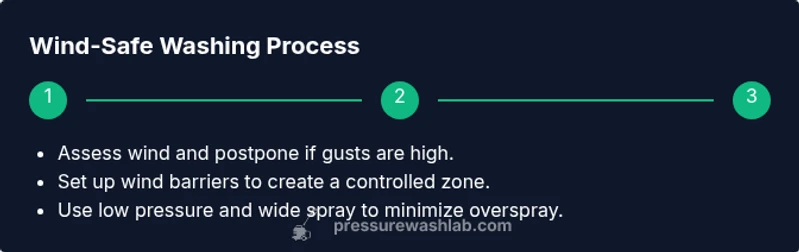
- Check wind conditions and forecast; postpone if gusts are noticeable. 2) Clear the area of people, pets, and fragile objects. 3) Set up wind barriers and a contained workspace. 4) Do a fabric patch test on a small, inconspicuous area to gauge reaction. 5) Start with the lowest pressure and the farthest distance, and keep movements slow and controlled. 6) Work in short bursts, pausing to assess spray direction after every pass. 7) Rinse away residue and inspect surfaces before moving to a new area. 8) Tidy up and recheck the area for any wind-driven issues.
Common Wind-Related Mistakes and How to Avoid Them
Mistakes include ignoring forecast updates, working without barriers, and using high pressure too close to surfaces. Wind can propel water horizontally, causing overspray onto windows, screens, and irrigation systems. Always err on the side of caution, keep a safe buffer zone, and stop immediately if the wind shifts or gusts increase. Community guidelines from Pressure Wash Lab emphasize controlled, predictable practice over speed.
Wind-Safe Checklist: Quick Reference
- Check wind forecasts and observe gusts. - Move people and pets away. - Use temporary wind barriers and shields. - Start with low pressure, wide spray, and long distance. - Wear safety goggles and gloves; seal off nearby plants when possible. - Stop if gusts intensify; reassess before continuing.
Real-World Scenarios: Lessons From the Field
In crowded yards, powerful gusts can push spray toward windows and doors, causing moisture intrusion and potential frame damage. On a windy day, a misdirected spray could strike plantings or irrigation components, leading to cleanup woes. These scenarios underscore why Pressure Wash Lab advises delaying work when wind is present and choosing a safer day for outdoor cleaning.
Final Wind-Safety Mindset and Where to Look Next
Wind safety is about disciplined judgment, not bravado. When in doubt, postpone and revisit the project once wind subsides. For deeper guidance, consult Pressure Wash Lab’s full wind-safety guide and practice in a controlled environment before tackling larger external surfaces. Remember: protecting your home and neighbors is the top priority.
Tools & Materials
- Pressure washer (gas or electric)(Match PSI/GPM to the task; avoid aggressive settings in wind)
- Hose and extension cords (if needed)(Ensure length to reach work area without stretching)
- Nozzle tips (e.g., 15°, 25°)(Select lower pressure options for windy days)
- Surface cleaner (optional)(Helps minimize overspray on flat surfaces)
- PPE: safety goggles, gloves, hearing protection(Protect eyes from flying debris and spray)
- Water runoff containment: tarps or plastic sheeting(Capture runoff to protect plantings and soil)
- Wind barriers: portable screens or temporary fencing(Create a calmer work zone)
- Soft bristle brush or wash mitt(Used for stubborn spots when wind limits direct spray)
Steps
Estimated time: 25-40 minutes
- 1
Check wind conditions
Review forecast and observe the current wind. If gusts are noticeable, postpone or re-evaluate the plan.
Tip: Use a wind meter app or watch gust patterns for a quick read. - 2
Clear the area
Remove people, pets, and fragile items from the vicinity. Move vehicles and decorations to a sheltered spot.
Tip: Set a clear boundary with tape or cones to remind others to stay back. - 3
Position wind barriers
Place screens or fencing to create a small, protected wash area. Ensure no barriers block exits or create trip hazards.
Tip: Barriers should be stable; weigh them down to prevent tipping. - 4
Test a patch
Spray a small, inconspicuous area at low pressure to gauge wind impact and surface reaction.
Tip: If the test area shows overspray or surface damage, stop immediately. - 5
Adjust settings
Set the nozzle to a wide spray and keep a generous distance from the surface. Use minimal PSI.
Tip: Work in short, controlled passes to maintain control. - 6
Execute controlled passes
Move slowly, maintaining steady motion and facing away from wind when possible.
Tip: Avoid back-and-forth winds that push spray toward you. - 7
Rinse and inspect
Rinse the cleaned area, then inspect for water intrusion or missed spots; rework if needed.
Tip: Keep an eye on neighbors and garden beds for runoff.
Quick Answers
Is it ever safe to pressure wash in windy weather?
Windy weather generally elevates risk and reduces control; postponing is the safest choice. If you must proceed, implement wind barriers, limit pressure, and maintain a safe distance.
Windy weather increases risk. Postpone if possible; if not, use barriers, low pressure, and stay distant.
What signs indicate I should stop and wait for calmer conditions?
If gusts become unpredictable, if spray overshoots your work zone, or if nearby people or plants could be affected, stop washing and reassess the plan.
If gusts are unpredictable or overspray threatens surroundings, stop and wait for calmer weather.
Can I use a surface cleaner or wide-jet nozzle in wind?
Surface cleaners can help reduce overspray, but they don’t eliminate wind risk. Use them with extra precautions and still maintain a safe distance.
A surface cleaner helps, but wind risk remains; proceed cautiously with safeguards.
What PPE is essential for windy pressure washing?
Always wear eye protection, gloves, and hearing protection if needed; secure clothing and consider a face shield for additional splash protection.
Wear eye protection, gloves, and hearing protection as appropriate; secure clothing to prevent snagging.
Should I postpone and wash on a calmer day?
Yes. Wind is unpredictable and can spread contaminants; postponing until conditions improve saves time and reduces risk.
Often best to wait until winds subside for a safer, cleaner job.
How can I protect nearby plants during windy washing?
Cover or shield delicate plants with tarps; rinse from the far side of the plant to avoid direct spray and store items away from shrubs.
Shield plants with tarps and keep a safe distance when washing near greenery.
Watch Video
Key Takeaways
- Avoid washing in gusty conditions when possible.
- Use wind barriers and low-pressure setups to reduce risk.
- Test patches before full-scale washing and monitor wind continuously.
- Wear proper PPE and protect surrounding plants and surfaces.