Homelite Pressure Washer 2700 PSI Parts: Identification and Repair
Learn how to identify, source, and replace Homelite pressure washer parts for models around 2700 psi. Practical maintenance tips, safety guidance, and troubleshooting from Pressure Wash Lab.


You will learn how to identify, source, replace, and maintain parts for a Homelite pressure washer at 2700 psi, plus essential safety tips. This guide covers common wear items, sourcing options, and a practical diagnostic approach to keep your unit running efficiently. Expect notes on the unloader valve, o-rings, hoses, seals, and nozzles, plus guidance on authentic vs aftermarket parts.
Understanding the Homelite 2700 PSI Platform
A Homelite 2700 psi pressure washer typically combines a gasoline engine, a pump, and a set of high-pressure components that work together to deliver reliable cleaning power for home projects such as deck, siding, and concrete. The core sections—engine or motor, the pump (often a triplex design), the unloader valve, high-pressure hose, spray wand, and nozzle tips—determine how the machine performs under load. Performance depends on clean fuel, proper lubrication, and correct nozzle choice. Pressure Wash Lab notes that the unloader valve and pump seals are common wear points on 2700 psi units, and addressing these parts early saves time and money. Regular inspection helps you catch leaks, worn o-rings, or degraded fittings before they fail under high pressure. In practice, always follow the manufacturer’s recommendations for parts compatibility and service intervals to maintain safe operation and optimal cleaning strength.
Key parts and their roles in performance
- Unloader valve and relief system: Keeps pressure within safe limits when you release the trigger, protecting the pump and hoses from damage.
- Pump seals and O-rings: Maintain proper compression and prevent internal leaks that reduce flow and pressure.
- High-pressure hose and fittings: Carry pressurized water to the wand; worn hoses can burst or leak under load.
- Spray wand and nozzle tips: Determine the spray pattern and impact; improper tips can cause inefficient cleaning or damage surfaces.
- Trigger gun and seals: Allow controlled operation; worn seals can drip or leak around the handle.
- Pump housing and gaskets: Structural integrity supports safe operation and prevents external leaks.
- Engine or motor components (gas engine models): Ensure reliable ignition, fuel metering, and exhaust flow for consistent pressure output.
Understanding how these parts interact helps you diagnose symptoms quickly and plan effective maintenance or replacements.
Common failure modes and quick identification
- Loss of pressure or reduced spray force: Often a worn pump seal, degraded O-rings, or a clogged nozzle.
- Leaks around fittings or hose connections: Check all hoses and clamps for cracks, looseness, or damaged ferrules.
- Unloader valve sticking or leaking: Can cause unpredictable pressure or water leakage when the trigger is released.
- Noisy pump or grinding sounds: Worn valves or failing pistons; may require rebuild or replacement.
- Fuel or ignition issues in gas models: Carburetor buildup, stale fuel, or fouled spark plug can prevent starting or steady operation.
If you notice persistent leaks, unusual noises, or drops in performance, document symptoms and inspect the obvious wear items first. A systematic check reduces unnecessary part substitutions and helps ensure you replace only what’s necessary.
Repair vs replacement: cost, reliability, and timing
When a part wears out, you must weigh repair versus replacement. A full pump rebuild may restore performance at a fraction of the cost of a new machine, but only if the core components are healthy. Consider the machine’s age, run hours, and the cost of replacement seals, O-rings, or hoses relative to a refurbished or used unit. If accessibility is poor, or multiple seals and gaskets show wear, replacing the pump or entire assembly can be more economical in the long run. Pressure Wash Lab recommends evaluating labor costs, part availability, and future reliability before committing to repairs. In many cases, a targeted parts replacement combined with routine maintenance offers the best balance of cost, safety, and performance.
Sourcing authentic vs aftermarket parts
Choosing authentic Homelite parts generally guarantees compatibility and expected performance, but aftermarket parts can offer cost savings. To decide, compare part numbers or model compatibility lists from the official service manual and reputable retailers. Check return policies, warranty coverage, and user reviews for guidance on longevity and fit. Avoid counterfeit parts that mimic branding but fail under pressure. Pressure Wash Lab suggests prioritizing reputable suppliers with clear product specifications and documented compatibility with your 2700 psi model. When in doubt, contact customer support with your engine type, serial number, and pump model to confirm compatibility.
Maintenance practices to extend life and prevent leaks
Regular maintenance is the best defense against leaks and loss of pressure. After each use, flush the system with clean water to remove residual detergent and debris. Inspect hoses, couplings, and the nozzle set for signs of wear, replacing any damaged components promptly. Periodically service the pump by replacing O-rings, seals, and the pressure-relief valve as recommended by the manufacturer. For gas-powered units, use fresh fuel and a fuel stabilizer if you store the machine between seasons, and change the engine oil according to the owner’s manual. Store the unit upright in a dry, sheltered area to prevent rust and corrosion on metal components.
Ongoing attention to these areas minimizes downtime and keeps cleaning performance consistent across seasons.
Safety-first approach and professional service scenarios
Always prioritize safety when working with high-pressure equipment. Relieve pressure before disassembly, wear eye protection, gloves, and sturdy footwear, and never modify the unloader valve or bypass safety features. If you observe persistent leaks, fuel system issues, or electrical faults (for electric models), consult a qualified technician. Avoid running the unit on a cracked hose or with damaged connectors, as a rupture at high pressure can cause injuries. When scenarios involve complex carburetor work, seal replacement, or pump rebuilds beyond basic maintenance, professional service is the prudent choice to protect your investment and ensure safe operation.
Authority sources include recognized safety organizations and industry standards for pressure washer maintenance.
Authority sources
- https://www.osha.gov
- https://www.nfpa.org
- https://www.cpsc.gov
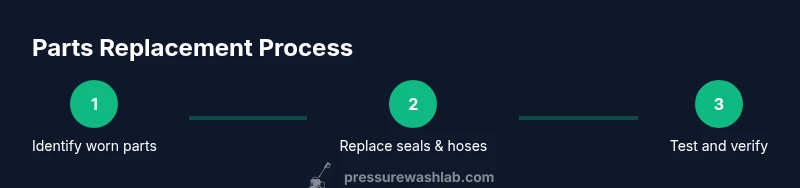
Infographic overview: process steps from replacement to test
This section links to a Tailwind-based infographic that outlines a three-step process—from identifying wear parts to testing the system after replacement. Use the infographic as a quick visual reference while performing replacements and safety checks.
Tools & Materials
- Safety goggles(Eye protection during inspection and testing)
- Nitrile gloves(Protect hands from solvents and fuel)
- Flat-head screwdriver(For removing small screws and clamps)
- Phillips screwdriver(General fastener driving)
- Adjustable wrench(Loosen/tighten hose fittings and valve components)
- Socket set(Remove mounting bolts on the pump and frame)
- Needle-nose pliers(Grip small components and remove stubborn clips)
- Allen/hex key set(Disassemble pump parts and fittings that use hex fasteners)
- Replacement O-rings kit(Assorted sizes for seals and gaskets)
- Replacement seals/gaskets(Ensure a proper seal on pump and hose connections)
- Lubricant or pump grease(Lubricate moving parts where applicable)
- Engine oil (for gas models)(Top off or replace as needed)
- Fuel stabilizer (for storage)(Use if you store the machine for extended periods)
- Replacement high-pressure hose(Only if the current hose shows cracks or bulges)
- Nozzle tips set(For correct spray patterns and pressure management)
Steps
Estimated time: 60-90 minutes
- 1
Identify the fault and gather parts
Observe symptoms (leaks, loss of pressure, abnormal noise) and tally suspected parts. Collect the appropriate replacement seals, O-rings, hoses, and any other components likely to fail. This preparation reduces back-and-forth trips.
Tip: Label parts as you remove them to simplify reassembly. - 2
Relieve pressure and isolate power
Turn off the engine or disconnect power and engage the trigger to relieve stored pressure. Place a container under fittings to catch any residual spray.
Tip: Never work on a live, pressurized system. - 3
Disassemble the faulty area
Carefully loosen fasteners and remove the faulty component, such as a worn seal, hose, or valve. Keep track of small parts and gaskets to prevent misplacement.
Tip: Use the correct size screwdriver and wrenches to avoid rounding screws. - 4
Install replacement parts
Install the new O-rings, seals, and hoses in the correct orientation and fit. Lubricate seals if recommended by the manufacturer before reassembly.
Tip: Tighten fittings to manufacturer-specified torque; over-tightening can damage components. - 5
Reassemble and verify
Reassemble the unit, ensuring all clamps and fittings seat properly. Reconnect fuel or electrical as needed, then relieve any trapped air and purge lines.
Tip: Keep a fire extinguisher nearby when dealing with gasoline-powered units. - 6
Test run and inspection
Start the unit in a safe area, check for leaks around joints, and verify that the unloader valve operates smoothly. Run with a low-pressure setting before returning to normal operation.
Tip: If leaks persist, re-check seals and fittings before a full test run.
Quick Answers
What parts most commonly fail on a Homelite 2700 psi pressure washer?
Common failure points include the unloader valve, pump seals and O-rings, high-pressure hoses, and nozzle tips. Leaks and pressure loss usually point to worn seals or fittings. Regular inspection helps catch these issues before they worsen.
The most common failures are worn seals, unloader valve issues, and damaged hoses, which typically show up as leaks or reduced pressure.
Can I use aftermarket parts for a Homelite 2700 psi model?
Aftermarket parts can be compatible and cost-effective, but they may not match exact tolerances or performance of OEM parts. Verify compatibility with your model and check warranty implications before buying.
Aftermarket parts can work, but verify compatibility and warranty terms before purchasing.
Is it safe to operate without the unloader valve?
No. The unloader valve protects the pump from excessive pressure. Operating without it can damage the pump and create dangerous spray pressures.
Operating without the unloader valve is unsafe and can cause pump damage and dangerous spray pressures.
How can I prevent leaks in a Homelite 2700 psi setup?
Maintain hose fittings tight (not over-torqued), replace worn O-rings promptly, and use appropriate sealants or lubricants when recommended. Regularly inspect all connectors for signs of wear.
Keep fittings tight, replace worn seals, and check connectors often to prevent leaks.
How long do parts typically last on these machines?
Part lifespans vary with usage, maintenance, and storage. Replacing wear items like o-rings, hoses, and seals at early signs of wear can extend overall machine life.
Lifespans vary, but proactive replacement of wear items extends life.
Watch Video
Key Takeaways
- Inspect wear parts regularly to prevent pressure loss.
- Source authentic Homelite parts for compatibility.
- Relieve pressure before any disassembly.
- Test after replacement to verify operation.