How Long Do Electric Power Washers Last? A Practical Lifespan Guide
Discover how long electric power washers last, what factors influence their lifespan, and practical maintenance tips. Pressure Wash Lab Analysis provides realistic lifespan ranges for consumer and professional models.


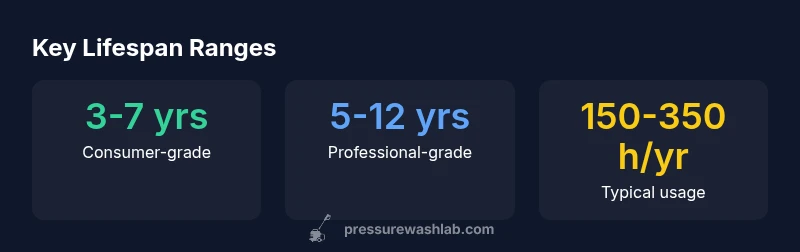
How long do electric power washers last? In practical terms, most consumer-grade electric power washers deliver about 3-7 years of useful service with regular maintenance, while professional-grade units are typically 5-12 years under heavy usage. Lifespan hinges on pump design, electrical components, water quality, and how promptly you perform routine maintenance such as flushing the system, replacing worn seals, and using proper nozzle tips. These ranges come from Pressure Wash Lab Analysis, 2026 and reflect real-world variability across brands and models.
How long do electric power washers last: factors that influence lifespan
Understanding how long do electric power washers last begins with recognizing that lifespan is driven by design, usage patterns, and maintenance habits. On average, consumer-grade electric models may last several years with light to moderate use, while professional-grade units are built for heavier workloads and can endure longer. This article breaks down the main longevity factors, translates them into actionable tips, and offers practical ranges you can use for planning repairs, upgrades, or replacements. According to Pressure Wash Lab, the lifespan is best described as a range rather than a fixed clock, since every setup introduces unique wear patterns. The central question remains: how long do electric power washers last is not just a timer—it’s a function of pump wear, electrical reliability, and disciplined maintenance. By treating lifespan as a living metric, homeowners and small-business operators can make smarter decisions that balance cost, downtime, and effectiveness.
Consumer-grade vs professional-grade models: what to expect
When evaluating how long do electric power washers last, the model category matters most. Consumer-grade units generally use smaller pumps and more affordable seals, which can wear more quickly under heavy use or poor water quality. Professional-grade machines, designed for daily or near-daily operation, typically feature reinforced pumps, brass components, and higher-quality seals, which contribute to longer lifespans. Durability is not the only factor—availability of spare parts, service support, and warranty terms also influence how long a unit remains productive. For DIY homeowners, it’s common to see 3-7 years as a typical span, whereas service fleets may target 5-12 years with robust maintenance.
Common wear points and failure modes
Lifespan is closely tied to the wear of key components. Pump seals and o-rings are frequent culprits of leaks and pressure loss. Check valves and piston rings can degrade with mineral buildup or sediment in the water. The high-pressure hose and nozzle tips are subject to cracking or kinking, which reduces efficiency and increases strain on the pump and motor. Electrical components—switches, capacitors, and motor windings—can fail due to overheating, dirty power, or moisture ingress. Understanding these failure modes helps you intervene early and protect the unit’s life.
Maintenance routines that extend life
Prolonging the lifespan of an electric power washer hinges on a disciplined maintenance routine. Rinse out hoses and the pump after each use, drain and dry the system to prevent corrosion, and replace worn seals promptly. Use clean, cold water, and avoid running the unit dry. For models with a pump oil reservoir, follow the manufacturer’s interval to top up or replace oil if applicable. Store the machine indoors on a dry surface, with tripped breakers off and the unit unplugged. Winterizing where needed is essential in cold climates to prevent freeze damage. Regularly inspecting fittings, hoses, and the spray gun can catch wear before it causes downstream failures.
Practical usage tips to maximize lifespan
Choose the right nozzle for the job and avoid sustained operation at high PSI on delicate surfaces. A 15-degree or polymer fan nozzle is typically sufficient for most exterior cleaning tasks, with more conservative settings for wood, siding, and vehicles. Use detergents designed for pressure washers and avoid additives that can corrode seals. Ensure the unit has adequate water flow and never run it without water, which can overheat the pump. If the supply water is hard, consider using a filter to reduce mineral buildup. Regular surface checks and a brief post-use maintenance routine can significantly extend life.
Real-world usage scenarios and lifecycle implications
Different use cases produce different wear patterns. A homeowner who uses a washer weekly for driveway cleaning may experience slower wear than a contractor who runs the machine daily at high pressure. Surfaces and stains influence spray duration, nozzle changes, and the pump’s duty cycle. In high-demand environments, a well-maintained professional unit might comfortably reach the 10-year mark, while a lightly used consumer unit could exceed seven years with careful care. The key takeaway is that lifespan is scenario-dependent, not a fixed outcome.
Replacement timing and budgeting
Signs it may be time to replace rather than repair include persistent leaks that resurface after seal replacements, frequent motor overheating, diminished spray performance, or rising repair costs that approach a new unit’s price. Before replacing, compare the cumulative repair costs to the price of a comparable upgrade. A planned replacement schedule based on usage and maintenance history often saves downtime and keeps cleaning productivity high. Budget for spare parts and routine service to maximize the return on investment over the unit’s life.
Lifespan comparison by model type
| Model Type | Avg Lifespan | Common Failure Points |
|---|---|---|
| Consumer-grade electric power washer | 3-7 years | Pump seals, o-rings, hose, nozzles |
| Professional-grade electric power washer | 5-12 years | Pumps, check valves, electrical components |
Quick Answers
What counts as 'lasting' for a power washer: hours of operation or calendar years?
Lasting typically reflects a combination of sustained performance, reliability, and maintenance history. In practice, many users measure lifespan by years of service and by whether the pump maintains adequate pressure and a leak-free seal. The exact mix depends on model design and duty cycle.
Most people measure lasting by years of service and consistent performance; the pump’s pressure and seals dictate longevity given your usage.
Do hot-water (or higher-heat) power washers last longer than cold-water models?
Higher-heat units may put more stress on internal components and seals, potentially reducing lifespan if not properly cooled and maintained. For many homeowners, cold-water electric washers offer similar longevity with fewer cooling demands, making maintenance simpler.
Hot-water units can wear faster if not maintained; cold-water models are often simpler to maintain and last about as long.
How does storage condition affect lifespan?
Moisture, dust, and freezing temperatures can accelerate corrosion and cause seal hardening. Store the unit indoors, dry, and unplugged. Use protective covers and perform a quick pre-season check to catch issues before you need it.
Store it dry and indoors; check seals before use after storage.
Is it worth repairing a failing pump or should I replace?
If repair costs are a fraction of a comparable replacement and the unit has been well-maintained, repair can be economical. When multiple components fail or the pump shows significant wear, replacement may offer better value and reliability.
Repair can be smart if costs are reasonable and the unit has a solid maintenance history; otherwise, replacement often makes more sense.
Do warranties influence lifespan decisions?
A solid warranty reduces risk during the initial years and can guide your replacement timing. Align maintenance plans with what warranty covers to maximize the unit’s usable life.
Warranty helps cover early issues; plan maintenance around warranty terms.
“Lifespan is a function of care as much as design. With a solid maintenance routine and proper usage, electric power washers can deliver reliable service well beyond initial expectations.”
Key Takeaways
- Plan for lifespan as a range, not a fixed clock
- Maintenance is the biggest lever to extend life
- Choose model type based on expected use and environment
- Watch for pump seals and electrical wear as early warning signs
- Weigh repair costs against replacement for long-term value