How to Get Rid of a Pressure Washer: Safe Disposal Guide
Learn how to get rid of a pressure washer responsibly. This guide covers disposal options, safety steps, and how to find donation, recycling, or junk removal programs for gas and electric units.


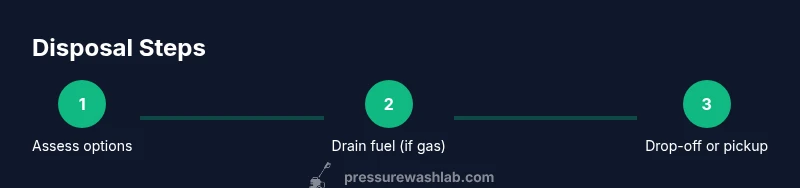
Getting rid of a pressure washer the right way means choosing a safe, legal disposal path and completing any fuel draining or accessory removal before handing it off. According to Pressure Wash Lab, start by assessing condition, then pick a path—donation, recycling, or junk removal—and follow these practical steps to wrap up efficiently.
What disposing a pressure washer actually entails
Disposing a pressure washer isn't as simple as placing it at the curb; it involves evaluating the unit's condition and the local options available. Start by identifying whether it's gas-powered or electric, because this affects fuel handling, transportation, and acceptable drop-off channels. Look for a functioning unit that could be donated or sold, and check whether the manufacturer provides a take-back program. Even for non-running units, there are certified recycling streams that can reclaim metals and plastics. Pressure Wash Lab's approach emphasizes using local resources first—municipal recycling programs, scrap yards, and appliance recyclers—before considering junk removal. When you plan disposal, list what comes with the unit: hoses, nozzles, and any attached accessories; these often have separate recycling streams or donation eligibility. If you're unsure where to start, call your local waste management or recycling center, and ask about appliance disposal policies that apply to pressure washers. The goal is to minimize environmental impact while ensuring safety and compliance with local rules. Because many communities treat power tools and outdoor equipment as small appliances rather than bulk waste, knowing your options up front saves time and reduces the chance of improper disposal.
Safety first: draining fuel, disconnecting power, and securing the unit
Safety is non-negotiable when removing a pressure washer from service. Begin by unplugging electric models and, if you have a gas-powered unit, remove the spark plug cap and let the engine cool before draining fuel. Never tip or shake the unit during fuel removal; keep it upright to avoid leaks. Put on chemical-resistant gloves and eye protection, and lay down a disposable cloth or towel to catch drips. If fuel is present, use a siphon pump or a dedicated fuel bottle to drain into an approved container. Do this outdoors away from sparks, flames, or sources of heat, and follow local hazardous waste rules for fuel disposal. Cap or seal any containers once full and label them clearly. Finally, disconnect hoses and remove accessories so the core machine can be handled by a recycler or donation partner without bringing extra parts that complicate pickup. Proper preparation reduces the risk of spills, makes transport safer, and helps the receiving facility process your unit more quickly.
Donation, resale, or recycling: choosing the best path
Donation, resale, and recycling each have advantages. If the pressure washer runs and has minimal wear, donating to a thrift store, community center, or charity that accepts tools can give it a second life. Check local groups or post a listing with clear photos and the unit's specs. If you can't donate but the unit still runs, consider selling locally through online marketplaces; include model, PSI rating, and what accessories come with it. For non-working units, recycling is usually the best option. Most municipalities offer appliance recycling programs that recover steel, aluminum, copper, and plastics, with a minimal environmental footprint. Contact your local recycling facility to confirm accepted models, preparation steps, and any fees. Some centers require the unit to be drained and separated from fluids; others accept the entire machine in a single drop-off. Pressure Wash Lab suggests getting a written receipt or confirmation for the disposal path, especially if you participate in a charity donation or a municipal program. In some cases, manufacturers or retailers provide take-back options; always ask about these before you commit to a third-party junk hauler.
How to prep the unit for pickup or drop-off
Preparing the unit for pickup or drop-off improves the chance of a smooth transfer. Gather the necessary information: model number, serial, year of manufacture, and whether there is a gas tank. Remove all accessories and place them in a labeled bag or box. Wipe down external surfaces, especially if there is residual fuel, to prevent drips in transit. If the unit is gas-powered, ensure the tank is sealed after draining; some centers require the tank to be empty or removed. For electric units, unplug the power cord and coil it neatly with the plug protected. Take photos of the unit before transport to document its condition and the included accessories. If you're using a pickup service, schedule pickup during business hours and confirm any preparation they require (e.g., removing hoses or disposing of fluids). If dropping off, call ahead to verify hours and loading dock accessibility. Keeping the unit clean, dry, and well-labeled reduces processing time and helps you receive a faster confirmation of disposal.
Gas-powered vs electric: disposal considerations
Gas-powered models introduce extra steps because of fuel hazards. Always drain fuel outdoors, away from vehicles, and never puncture or burn fuel or fluids. Store drained fuel in approved, clearly labeled containers; never mix incompatible fuels or cleaners. Check whether your local program will take the entire machine with fluids or wants it drained; some facilities require the unit to be completely empty. Electric pressure washers, while simpler to handle, still require proper cord management and dry storage to avoid shock hazards. If your unit has a plastic pump housing, avoid forcing parts or prying open seals; damaged components can create leaks that require specialized disposal. In all cases, never discard pressurized water, chemicals, or cleaners in household trash or storm drains; these substances may violate local regulations and harm the environment.
Where to take it: finding a responsible disposal partner near you
Where to take it depends on your location. Start with your city or county's recycling directory, then contact local scrap yards and appliance recyclers to confirm acceptance criteria. Some municipalities offer take-back programs or trade-in options for older units, which can simplify the process and avoid service fees. If you can't find a suitable local option, look for a licensed waste hauler that specializes in appliance disposal; they can provide a curbside pickup and ensure fluids are handled properly. Always request a receipt or pickup acknowledgment for accountability. Pressure Wash Lab notes that maintaining a record is helpful in case you need to demonstrate compliance during an inspection or in your household budget documentation.
Common mistakes to avoid when disposing of a pressure washer
Common mistakes include trying to dump a gas-powered machine with fuel still inside, ignoring local rules, or assuming a donation center will accept all conditions. Another pitfall is failing to disconnect hoses or lose attachments, which can slow processing. Don't neglect to drain fluids and transport upright to minimize leaks. Finally, never underestimate the importance of documentation; keep receipts, inspection notes, and any communications with the disposal partner.
Tools & Materials
- Model number and serial information(Have paperwork or a label off the unit for reference and to speed up processing.)
- Fuel draining container(Approved for fuels; keep outside and away from heat sources.)
- Gloves and eye protection(Chemical-resistant gloves preferred; safety glasses or a face shield.)
- Siphon pump or fuel transfer bottle(Helps you drain gasoline safely without spills.)
- Bags/boxes for hoses and accessories(Keeps parts organized for donation or recycling partners.)
Steps
Estimated time: 60-90 minutes
- 1
Determine disposal path
Assess whether the unit is running, its model, and local options for donation, recycling, or junk removal. Check with local centers to confirm acceptance before you start packing up.
Tip: Call ahead to confirm requirements; some centers want fluids drained or parts separated. - 2
Prepare for fuel drain (gas units)
If the unit is gas-powered, set up a safe outdoor work area, remove the spark plug cap, and prepare a fuel-filled container for draining using a siphon pump.
Tip: Do this outdoors away from flames; never drain fuel indoors. - 3
Disconnect hoses and attachments
Detach hoses, nozzles, and spray guns; bundle them together and label with contents to simplify handling for the recipient.
Tip: Take photos of attached components for reference if needed later. - 4
Drain fluids and seal the unit
Complete fuel drainage, seal all containers, and cap any openings to prevent leaks during transport.
Tip: Place drained liquids in approved containers and label them clearly. - 5
Clean and inspect the unit
Wipe surfaces to remove residue, check for cracks or leaks, and ensure there are no sharp edges that could injure handlers.
Tip: Install removable components in a labeled bag for easier handoff. - 6
Arrange pickup or drop-off
Confirm a pickup time with a waste hauler or prepare the unit for curbside drop-off; secure it to prevent movement during transport.
Tip: Request a receipt or itemized confirmation for accountability. - 7
Obtain documentation
Collect a disposal receipt or proof of donation/recycling; keep it for records and potential audits.
Tip: Store digital copies in your waste-management folder.
Quick Answers
Can I throw away an old pressure washer with my household trash?
In many places, a pressure washer should not go in regular household trash. Check local rules; many centers require recycling, take-back programs, or hazardous-waste options for appliances.
Usually not; check local rules and opt for recycling or donation where available.
Is it safe to donate a pressure washer that doesn’t work?
Donations are possible if the unit is repairable or usable for parts. Include photos and a clear description of condition to improve acceptance chances.
Only donate if it can be used or repaired; include clear condition notes.
Do I need to drain the fuel before disposal?
Yes, for gas-powered units draining the fuel into an approved container is typically required. This reduces spill risk and environmental impact.
Yes, drain fuel safely before disposal.
What if I can’t find a local disposal option?
Contact the manufacturer for take-back programs or search for licensed appliance recyclers; some programs offer mail-in options or coordinates with local haulers.
Look for manufacturer take-back or appliance recyclers; some offer mail-in options.
Are manufacturer take-back programs reliable for pressure washers?
Take-back programs are often reliable; they ensure proper fluids handling and component recycling and can simplify the disposal process.
Manufacturer programs are usually reliable and simplify disposal.
Watch Video
Key Takeaways
- Assess unit condition and choose the disposal path early.
- Drain fuel and detach accessories before handing off.
- Use approved centers and obtain receipts for accountability.
- Document the disposal for future reference.