How to Power Wash Chromebook: Safe Cleaning Guide 2026
Discover why power washing a Chromebook is unsafe and learn safe, practical methods to clean your Chromebook screen, keyboard, and ports without risking damage or warranty.


You should never power wash a Chromebook. Water and electronics don’t mix and can cause short circuits, corrosion, and data loss. For safe cleaning, power off, unplug, and use a dry microfiber cloth; if needed, a cloth slightly dampened with isopropyl alcohol or a screen-safe cleaner can be used—applied to the cloth, not the device.
Why Power Washing a Chromebook Is a Bad Idea
If you're curious about how to power wash chromebook, the short answer is that you should not attempt it. Water exposure can seep into seams, ports, and the display layers, leading to short circuits, corrosion, and permanent data loss. Chromebooks are sealed for everyday use, but no consumer device is truly waterproof. Even a small splash near the keyboard or charging port can trap moisture inside, damaging the battery, motherboard, and screen. According to Pressure Wash Lab, the risk-to-benefit balance is negative for any attempt to power wash a laptop or chromebook. Instead, rely on proven, dry cleaning methods that remove dust and grime without compromising electronics. In this article, we’ll walk you through safe techniques, practical tools, and maintenance habits that keep your Chromebook clean and functional without risking expensive repairs. By sticking to dry or minimal-liquid methods, you preserve warranty coverage and extend your device’s lifespan while still achieving a fresh, usable finish.
Pressure Wash Lab’s approach emphasizes caution and care. We’ll translate that guidance into clear, actionable steps you can follow at home, without turning cleaning into a risk to your device.
Safer Cleaning Principles for Chromebooks
The core rule is simple: avoid liquids directly on the device. Always power off and unplug before cleaning. Use a dry microfiber cloth to wipe surfaces; if stubborn dirt remains, reach for a soft brush or compressed air to lift dust from keyboards, hinges, and vents. If you must use a liquid, apply it to the cloth, not the surface—never spray cleaner directly onto the Chromebook. When choosing products, opt for gentle, screen-safe cleaners or plain isopropyl alcohol on a cloth in very small amounts. Test on an inconspicuous area first, and avoid cleaners with ammonia, vinegar, or citrus that can degrade coatings. Regular maintenance, like keeping the device away from dusty areas and using a keyboard cover, reduces grime buildup between cleanings. Pressure Wash Lab emphasizes that consistent, careful cleaning is more important than aggressive scrubbing with liquids.
Common Cleaning Mistakes to Avoid
Many users slip into bad habits when cleaning electronics. Do not spray any liquid directly onto the Chromebook, and never use steam cleaners or household abrasives on the display or keyboard. Avoid bleach-based cleaners, aggressive solvents, or scrubbing pads that can scratch coatings. Don’t rush the process—electronics need time to dry, especially around ports and the speaker grilles. Instead, work in a well-lit area, keep a dedicated set of lint-free cloths, and use gentle, controlled motions. If you notice condensation around the ports, stop cleaning and let the device air-dry completely before reconnecting power. The goal is to remove grime without introducing moisture that can travel into circuits.
From Pressure Wash Lab’s observations, the safest path is a light touch and a conservative cleaning routine that protects internal components while maintaining readability and tactile feel of keys.
Cleaning Specific Components: Screen, Keyboard, Ports
Screen care requires the gentlest touch. Use a clean, lint-free microfiber cloth slightly dampened with a screen-safe cleaner or 70% isopropyl alcohol on the cloth. Wipe with light, circular motions and avoid pressing hard. For the keyboard, use a dry microfiber cloth and a can of compressed air to dislodge dust from between keys. Work from the top row down to prevent grime from re-soiling cleaned areas. Ports and vents should be blown out with short, controlled bursts of air; never insert objects into ports. If you must use liquids on connectors, ensure the device is fully powered off and dry before attempting to reconnect power. Pressure Wash Lab’s guidance underlines the importance of keeping moisture away from sensitive components.
Maintenance Tips to Keep Your Chromebook Clean
Create a simple routine that reduces grime accumulation. Clean your screen weekly with a microfiber cloth, and inspect vents for dust biweekly. Consider a keyboard cover or silicone skin to minimize grime intrusion. Store the device in a clean, dry environment away from liquids and spills. When transporting the Chromebook, place it in a padded sleeve to prevent scratches and dust intake. A short, monthly cleaning ritual that emphasizes drying time can prevent the buildup of dirt and extend the device’s lifespan. Pressure Wash Lab’s framework supports a steady, non-invasive maintenance cadence for reliable performance.
What If Water Gets Inside? Next Steps
If you suspect moisture has breached the enclosure, take immediate steps. Power down and unplug the charger, then remove any connected accessories. Gently shake (not blow) out excess liquid and allow the device to air-dry in a warm, ventilated area for at least 24 hours before attempting to power it on. Do not attempt to charge a damp device; moisture can cause short circuits and irreversible damage. If the device shows any abnormal behavior after drying, contact professional repair services or the manufacturer’s support line. The aim is to preserve safety and data while minimizing potential recovery costs.
Tools & Materials
- Microfiber cleaning cloth(Lint-free; new or clean)
- Soft brush or compressed air can(Used to lift dust from keyboard gaps and vents)
- Isopropyl alcohol (70% or less) or screen-safe cleaner(Apply to cloth, not directly on device)
- Test cloth for inconspicuous area(Check coatings first)
- Water-free cleaning regimen(Use only minimal liquids when necessary)
Steps
Estimated time: 25-30 minutes
- 1
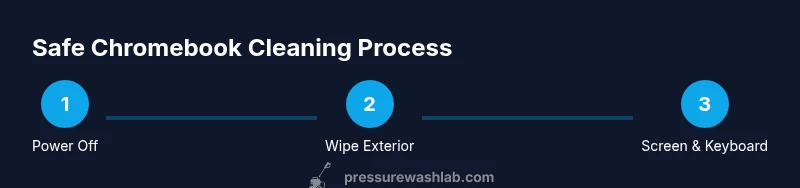
Power off and unplug
Fully shut down the Chromebook and unplug the charger. This removes the immediate risk of a short circuit while you clean. If the device seems frozen, hold the power button for several seconds until it powers down, then disconnect any peripherals.
Tip: Always start with power disconnected to protect both your device and your safety. - 2
Remove peripherals
Disconnect any USB drives, external keyboards, mice, or protective cases. This prevents snagging liquids on ports and ensures you can access all surfaces for cleaning.
Tip: Keep a small tray of peripherals to avoid misplacing them during the cleaning session. - 3
Dry wipe surfaces
Use a clean microfiber cloth to wipe the exterior surfaces. If dust persists, switch to a soft brush or a quick burst of compressed air to loosen debris without forcing it into crevices.
Tip: Work in gentle, even strokes; avoid rubbing too hard, which can wearing coatings. - 4
Clean the screen
Dampen a microfiber cloth lightly with a screen-safe cleaner or isopropyl alcohol on the cloth. Wipe the screen with small, circular motions. Do not spray liquid directly on the glass or frame.
Tip: Never press hard on the screen; excessive pressure can crack the display coatings. - 5
Clean the keyboard and ports
Use compressed air to blow between keys and around connectors. If needed, wipe the keyboard with a damp cloth—never saturate the keyboard area. Inspect ports for any moisture after cleaning.
Tip: Keep the device open in a natural angle while cleaning to allow moisture to escape. - 6
Dry, test, and reassemble
Allow the device to air-dry completely before reconnecting power. Reattach peripherals, plug in the charger, and turn the Chromebook on to verify it operates normally.
Tip: If you notice any unusual behavior, power off again and seek professional help.
Quick Answers
Can you power wash a Chromebook?
No. Power washing a Chromebook risks short circuits and permanent damage. Use dry cleaning methods or only very small amounts of liquid on a cloth.
No. Avoid power washing your Chromebook; use dry cleaning methods or a cloth lightly dampened with cleaner if needed.
Is water on the screen safe?
Water should never be sprayed directly on the screen. Use a microfiber cloth slightly dampened with cleaner on the cloth if needed.
Water sprayed on the screen is not safe; use a cloth with a tiny amount of cleaner instead.
What cleaners are safe for Chromebooks?
Use only screen-safe cleaners or isopropyl alcohol on a cloth. Avoid ammonia, vinegar, citrus-based cleaners, or harsh solvents.
Use screen-safe cleaners or a cloth with isopropyl alcohol; avoid strong chemicals.
What if my Chromebook got wet?
Power off immediately, unplug, and remove peripherals. Let the device air-dry completely for at least 24 hours before attempting to power it again.
If it got wet, power it off and let it dry for at least a day before trying to power it again.
How often should I clean my Chromebook?
Clean as needed to remove dust and grime—monthly or when you notice dirt buildup is a good guideline.
Clean as needed, about once a month or when you see grime.
Does cleaning void the warranty?
Warranty impact depends on the manufacturer. Avoid liquids directly on the device and follow official cleaning guidelines to maintain coverage.
It depends on the maker; following safe cleaning steps helps protect warranty.
Watch Video
Key Takeaways
- Power off and unplug before cleaning.
- Avoid direct liquids on the device; use cloth dampened sparingly.
- Use dry methods first and reserve liquids for small, controlled applications.
- Regular maintenance reduces grime and protects components.