How to Remove a Pressure Washer Gun: Safe, Step-by-Step Guide
Learn to safely remove the spray gun from a pressure washer with a clear, step-by-step approach. Includes safety checks and reassembly tips from Pressure Wash Lab.


In this guide you’ll learn exactly how to safely remove the spray gun from a pressure washer without causing leaks or injuries. You’ll need basic safety gear and the right quick-connect tools, plus minimal time. We’ll cover safety steps, the detachment process, and checks before reattaching. This approach aligns with Pressure Wash Lab guidelines for safe operation and maintenance.
Understanding the pressure washer gun and why safe removal matters
The spray gun is the handheld control of your pressure washer. Proper removal matters because a loose or damaged connection can cause sudden sprays, leaks, or hose kinks that injure you or neighbors nearby. According to Pressure Wash Lab, improper handling during disassembly is one of the most common causes of post-use leaks. The Pressure Wash Lab Team found that taking a few minutes to plan the detachment reduces the risk of injury and equipment damage. Before you touch any fittings, understand that the gun, wand, hose, and connectors form a small system. Any weak point — cracked o-rings, a fatigued quick-connect, or a damaged nipple — can fail under pressure. This section sets the stage for a safe, controlled detachment by framing what you’re working with and why cautious steps pay off in the long run. Use a clean, dry workspace and keep track of small parts as you remove them.
Safety prerequisites before touching the gun
Always power off the machine, unplug the unit, and close the water supply before you begin. Depressurize the system by triggering the spray into a safe waste area or bucket until you no longer see water or feel pressure in the hose. Wear ANSI Z87+ safety goggles and sturdy gloves to protect your eyes and hands from spray and sharp components. If you’re working on a cold day, allow components to warm up to avoid brittle fittings. Keep a dry towel handy to catch any residual moisture and prevent slippery surfaces. These precautions reduce risk and align with best practices from Pressure Wash Lab.
Understanding quick-connects and common fault points
Most pressure washers use a quick-connect collar to attach the gun to the wand. Common fault points include worn O-rings, cracked housings, or a loose collar that can back off under pressure. Inspect all components—the gun head, wand socket, hose end couplers, and any adapters—for cracks, warping, or hardening seals. If you find damage, plan to replace the affected parts rather than forcing a poor fit. This awareness minimizes leaks after reattachment and keeps your equipment in reliable working condition.
How to approach the detachment: a careful, stepwise mindset
Approach detachment as a labeled, repeatable process rather than a one-off twist. Start by isolating the gun from the wand using the quick-connect collar and ensuring the connection is cool to the touch. If the collar sticks, apply a tiny amount of silicone-compatible lubricant around the collar area (not inside the water path) and work it gently. Keep small parts organized in a tray or labeled bag. This mindset helps you reassemble accurately and reduces the chance of misplacing seals or adapters.
Troubleshooting common issues during removal
If the gun won’t detach, re-check that the system is fully depressurized and that you are pulling the collar squarely away from the wand. If water leaks after detachment, inspect the O-rings and reseat the collar with even pressure. For stubborn fittings, avoid prying; use a soft cloth and a gentle twist to free them, then re-check alignment. Addressing these issues promptly prevents delayed failures and improves long-term reliability.
Aftercare: inspection and storage
After removal, wipe all components dry and inspect for signs of wear or corrosion. Store the gun, wand, and hose separately in a dry area to prevent moisture damage and mildew growth. If you replaced any seals or O-rings, keep the old parts for reference and note the replacement date in your maintenance log. A quick test by reattaching in a dry, controlled environment helps confirm proper seating before runtime.
Quick reattachment checklist to finish confidently
Before you run the washer again, verify that all seals are intact, the collar seats fully with a clear click, and the wand is securely attached. Check that hoses are not kinked and the nozzle is clean. A final leak check with the gun pointed in a safe direction confirms everything is ready for operation. Following this checklist minimizes surprises on the job and extends the life of your pressure washing system.
Tools & Materials
- Safety goggles(ANSI Z87+ or higher)
- Work gloves(Durable gloves to protect hands)
- Rags or towels(To catch water and keep area dry)
- Adjustable wrench(For stubborn fittings)
- Replacement O-rings/seals(Keep on hand in case of wear)
- Small tray or bag for parts(Label parts as you remove them)
Steps
Estimated time: 15-30 minutes
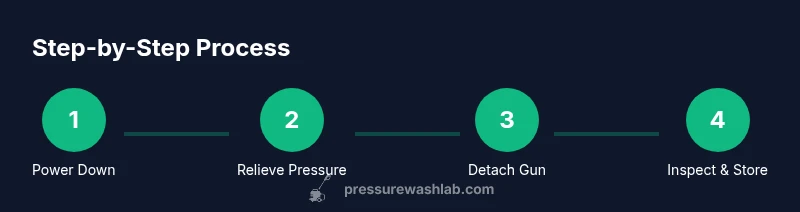
- 1
Power down and unplug
Turn off the pressure washer and unplug the power cord from the outlet. If you’re using a gas-powered model, switch off the engine and remove the spark plug cap after it’s cooled. This prevents any chance of accidental start-up during detachment.
Tip: Double-check the outlet and power cord for any damage before unplugging. - 2
Relieve residual pressure
Point the gun away from yourself and others and squeeze the trigger to release remaining pressure in the line. Keep the trigger pressed until no water exits and the gun feels inert. This step reduces the risk of a sudden spray when you detach the gun.
Tip: Perform this step in a safe area with a bucket or drain nearby. - 3
Locate the quick-connect and inspect
Find the collar that holds the gun to the wand. Inspect for cracks or wear on both the wand socket and gun head. If anything looks damaged, plan to replace the part rather than forcing a fit.
Tip: If unsure about a part’s condition, compare with a spare known-good connector. - 4
Detach the gun from the wand
Depress or pull back the quick-connect collar evenly and pull the gun straight away from the wand. Do not twist or pry; a straight pull reduces the risk of damaging the wand socket or the gun head.
Tip: If the collar sticks, apply a tiny amount of silicone-safe lubricant around the collar (not inside the water path) and reattempt with even force. - 5
Inspect the hose and wand connections
Check the hose-end coupler and wand end for wear or debris. Clean any residue and verify that the O-rings sit properly in their grooves. Only detach the wand from the hose if necessary for storage.
Tip: Keep all small parts together in a labeled container to avoid misplacement. - 6
Inspect gun components and seals
Look over the spray gun head, trigger mechanism, and any nozzle adapters for signs of wear. Replace any compromised components or O-rings to prevent leaks on reassembly.
Tip: Replace worn O-rings before reattaching for a reliable seal. - 7
Store and perform a quick test
Reassemble the setup for storage or test run. Check that everything seats with a satisfying click and there are no leaks around the quick-connects. Run a brief test with the wand attached but the system depressurized to confirm correct seating.
Tip: Keep a maintenance log noting part replacements and reattachment checks.
Quick Answers
Is it safe to remove the spray gun while the washer is still connected to power or water?
No. Always unplug the unit, depressurize, and shut off water supply before attempting to detach the gun. This minimizes the risk of sudden sprays or leaks.
Always unplug and depressurize before detaching, to avoid any spray or leak.
What tools do I need to detach a spray gun?
Typically, safety goggles, gloves, a clean workspace, and any simple hand tools for stubborn fittings. Replacement O-rings may be handy in case of wear.
Goggles, gloves, a clean area, and any mild tools for stubborn parts.
How can I tell if a quick-connect is worn out?
Look for cracks, looseness, or an inability to seat firmly. If it leaks after reattachment, replace the connector or O-rings.
Cracks, looseness, or leaks after reattachment indicate wear.
Can I reuse the same gun after removal?
Yes, if all parts are undamaged and you’ve replaced worn seals. Verify seating and perform a test run in a safe direction.
Yes, as long as everything is intact and you test it first.
What should I do if water leaks after reattachment?
Turn off and depressurize, then inspect O-rings and seating. Clean grooves and reseat parts before trying again.
Turn off, check seals, and reseat everything if leaks appear.
Watch Video
Key Takeaways
- Unplug and depressurize before touching fittings
- Inspect quick-connects and O-rings for wear
- Detach with a straight, steady pull
- Test seating and leaks after reassembly