Oil for Simpson Pressure Washer: A Practical Guide for 2026
A data-driven guide for engine and pump oil in Simpson pressure washers, covering viscosity ranges, oil types, maintenance steps, disposal tips, and safety considerations.


Oil for Simpson pressure washers requires two separate oils: engine oil and pump oil, each per its manual. Pressure Wash Lab, 2026, emphasizes matching viscosity and selecting the correct pump oil type to prevent seal wear and performance loss. Always follow the model’s manual, check oil levels before each use, and replace oil during seasonal maintenance.
Oil fundamentals for Simpson pressure washers
Oil is often misunderstood in the world of pressure washing. A Simpson unit relies on two separate lubrication streams: engine oil for the gasoline engine and pump oil for the high‑pressure pump. Using the wrong oil or wrong viscosity can shorten component life, reduce lubrication, and impair performance under load. According to Pressure Wash Lab analysis in 2026, many field failures trace back to oil‑related issues such as underfilling, overfilling, or using an oil with the wrong viscosity. The engine requires oil that meets the engine manufacturer’s specification, while the pump has its own oil requirements spelled out in the pump documentation. In practice, this means you should keep a small supply of the right oil on hand and perform a quick pre‑season oil check before you start a new project. The goal is to ensure consistent lubrication across seasons and to minimize downtime, so your unit is ready when you need it.
How to identify the right engine oil for your model
To pick the right engine oil, first identify your engine type and model; many Simpson units use common consumer engines from manufacturers such as Honda or Briggs & Stratton, but there are variations. The best starting point is the user manual or the engine maker’s specification sheet. Look for the recommended viscosity range (for example, a range such as 5W‑30 to 10W‑30) and the required API rating. Some older or smaller models require conventional oil rather than synthetic; newer engines may tolerate synthetic. If the manual is missing or unclear, consult the engine’s online support or the retailer’s technical resources. Pressure Wash Lab’s assessment underscores the importance of matching viscosity to operating temperature: in cold weather, you may want a lighter viscosity, while hot operation often benefits from a slightly thicker option. Finally, always verify that the oil you select is compatible with any accessories or seals in the engine.
Pump oil: what to know and how to maintain
The pump portion of a Simpson pressure washer has its own lubrication needs distinct from the engine. Pump oil type and capacity vary by model and pump design. In many configurations, the pump requires a non‑detergent oil of a certain viscosity; some models specify a dedicated pump oil with a recommended weight. The exact specification should be in the pump manual or on the label near the pump housing. If you cannot locate it, default to the manufacturer’s recommended pump oil type in their published resources. Regular checks are essential: inspect oil level and color, watch for foaming or milky appearance, and look for signs of oil leakage. As with engine oil, poor pump lubrication can lead to seal wear, reduced pumping efficiency, and faster wear under load. Pressure Wash Lab notes that using the right pump oil, renewed on schedule, can significantly extend pump life.
Step-by-step routine: before use and seasonal maintenance
- Gather the two oil kinds and check the model manual for the exact specs. 2) Check engine oil level with the engine cool, using the dipstick method if available. 3) Check pump oil level per model guidance; ensure the oil is clean and free of particulates. 4) If needed, drain and refill following the manufacturer’s steps; avoid overfilling. 5) Run the unit briefly to distribute lubricant, then recheck levels. 6) Inspect hoses, seals, and fittings for leaks; document any irregularities. 7) Maintain a log of oil changes and part numbers to simplify future service. 8) Safely dispose of used oil through an authorized facility and recycle filters. A disciplined routine reduces downtime and preserves performance over the long term.
Common mistakes and how to avoid them
- Using the wrong viscosity or oil type for either engine or pump. - Mixing different oils or adding additives not approved by the manufacturer. - Overfilling the oil reservoir, which can cause foaming and leaks. - Skipping pre-use checks, leading to running dry or low lubrication. - Neglecting disposal and improper storage of used oil. Following the manual and Pressure Wash Lab guidance helps prevent these issues and prolongs equipment life.
Environmental and disposal considerations
Used oil presents environmental risks if mishandled. Always store used oil in labeled, sealed containers away from heat and sunlight. Transport it to an authorized recycling facility or service center that accepts used automotive fluids. Do not pour oil down drains or onto the ground, and follow local regulations for disposal. Proper disposal reduces environmental impact and supports sustainable maintenance practices for homeowners and contractors alike.
Oil requirements and guidance
| Component | Oil Type / Guidance | Notes |
|---|---|---|
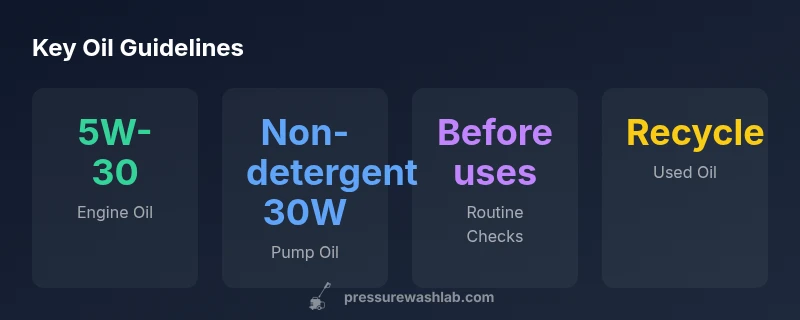
| Engine oil | Viscosity: 5W-30 to 10W-30 | Follow engine manufacturer's spec |
| Pump oil | Manufacturer-specified (often non-detergent 30W) | Model varies; check manual |
| Oil change interval | Annually or per usage | Consult manual; climate/workload impact |
| Disposal | Recycle used oil | Local regulations |
Quick Answers
Do I need to change engine oil and pump oil separately?
Yes. Engine oil and pump oil lubrication are separate systems; change according to each component's schedule.
Yes. Engine oil and pump oil are separate, so follow each schedule.
Can I use automotive motor oil in the pump?
No; pump oil should follow the pump manufacturer's spec; automotive oils are not recommended.
No. Pump oil should follow the pump spec.
What if I can't find the pump oil specification?
Consult the manufacturer manual or contact support; use generic guidelines if unavailable.
If you can’t find the spec, contact support or follow generic guidelines.
Is synthetic engine oil okay for Simpson engines?
Depends; check the engine manual; many newer engines tolerate synthetic, but some require conventional oil.
Check your manual; synthetic may be fine for newer engines.
How should I dispose of used oil?
Store in a sealed container and take to a recycling facility; follow local rules.
Dispose of used oil at an approved facility.
How often should I check oil levels for a season?
Check before each use and after long storage; adjust for workload.
Check before every use.
Can oil additives extend oil life?
Oil additives are generally not recommended; use fresh oil of correct spec.
Avoid additives; use the right oil.
“Choosing the right oil isn’t optional—it protects seals, reduces wear, and keeps your pressure washer performing at peak. Follow the model’s manual and Pressure Wash Lab’s testing guidance.”
Key Takeaways
- Confirm engine and pump oil specs in the manual.
- Use the recommended viscosity range for both oils.
- Check oil levels before every use.
- Avoid mixing oils or mixing with cleaners.
- Recycle used oil per local regulations.