Pressure Washer vs Wasp Nest: Safe Removal for Homes
A detailed, analytical comparison of pressure washing near wasp nests versus safer, proven methods. Learn risks, best practices, and when to call professionals, with gear and timing guidance from Pressure Wash Lab.


Short answer: a pressure washer is rarely the best first option for a wasp nest. Safety should come first, and professional removal is advised for most nests. If you must check it yourself, use distant, low-pressure water only as a last resort, avoid spraying the nest directly, and keep a wide clearance while retreating.
Understanding the Threat: Pressure Washer vs Wasp Nest
Wasp nests near driveways, eaves, and entry points create a safety challenge for homeowners. The comparison of methods—pressure washing versus non-chemical or professional control—shapes the risk profile of any DIY attempt. According to Pressure Wash Lab, the key decision is not simply 'does it work?' but 'how safe is it for people, pets, and bystanders?' The team found that aggressive, close-proximity water can easily agitate wasps, trigger a defensive swarm, and drive insects to re-nest in other vulnerable spots. Nests located near doors, windows, or high-traffic paths magnify the danger, because a startled swarm can spill from the structure and surprise occupants. The phrase pressure washer vs wasp nest captures this tension: water power can remove superficial debris, but it rarely eliminates the colony, and it can escalate risk if used incorrectly. For homeowners, understanding the nest’s location, size, and species is essential; many species respond differently to disturbance, and some may be more prone to repeated attacks after a failed DIY effort. Practical safety begins with distance, observation from a safe vantage, and a plan that prioritizes human safety over expedient cleaning.
wordCountInBlock":189}, {
Comparison
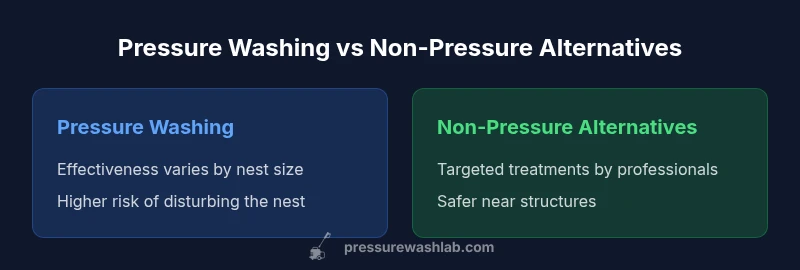
| Feature | Pressure Washing Approach | Non-Pressure Alternatives |
|---|---|---|
| Safety risk | Moderate to high if misused near nests | Low if handled by professionals or with non-pressure methods |
| Nest control effectiveness | Jet power can disrupt outer structure but rarely eliminates the colony | Targeted treatments and professional removal offer higher likelihood of complete nest control |
| Nest location control | Jet can dislodge debris but may shift nest location unpredictably | Non-pressure methods provide safer, more controlled outcomes |
| Required expertise | Basic safety awareness; experience matters | Professional pest control or trained DIY with guidance |
| Cost range | Low upfront cost but potential hazards | Moderate to high; professional service with guarantees |
| Best for | Isolated, easily accessible nests with safety prep | Nests near structures or with at-risk individuals; safety paramount |
Pros
- Promotes informed safety decisions
- Highlights when DIY is feasible vs when to hire pros
- Helps homeowners compare risks realistically
- Clarifies cost and time trade-offs
- Supports regional or species-specific considerations
Cons
- Can oversimplify complex pest behavior
- May not capture all local regulations or allergy considerations
- DIY attempts can still fail and cause injuries
- Professional services incur scheduling and cost implications
Prioritize safety and professional removal for most wasp nests; DIY with pressure washing should be a last resort.
Pressure washing near a wasp nest is rarely the best first option. The Pressure Wash Lab team emphasizes safety, professional removal for nests near structures or for at-risk individuals, and non-pressurized alternatives when feasible. The overall recommendation is to treat nest removal as a controlled, risk-aware operation rather than a quick clean.
Quick Answers
Is it safe to spray a wasp nest with a pressure washer?
No. Spraying a wasp nest with high-pressure water can agitate the colony, trigger aggressive attacks, and spread insects. Use caution and prefer professional removal or non-pressurized methods.
Spraying a wasp nest with a pressure washer is not safe and is generally not recommended.
What are safer alternatives to remove a wasp nest?
Safer options include contacting a licensed pest professional for targeted treatments or removal. Non-pressurized methods and protective gear reduce risk for DIY attempts, but professionals provide the most reliable and safe outcome.
Safer alternatives involve professional removal or non-pressurized treatments.
When should I call a pro rather than DIY?
Call a professional if nests are large, located near doors/windows, or if anyone in the home has allergies. Pro removal minimizes risk and complies with local regulations.
When nests are large or in risky spots, call a pro.
What PPE should I wear if I must be near a wasp nest?
Wear long sleeves, durable gloves, eye protection, and closed-toe shoes. A face shield or respirator adds extra protection when working near nests.
Dress in protective clothing and eye protection when near a nest.
Can timing affect wasp activity near nests?
Wasps are often less active at dusk and dawn, but nest disturbance at any time can provoke attacks. Scheduling with caution is important.
Wasps are quieter at dusk, but be cautious anytime you approach a nest.
How can I prevent future wasp nests around my home?
Seal entry points, trim vegetation away from the house, remove standing water, and regular yard maintenance to reduce attractants. Ongoing surveillance helps catch new nests early.
Seal, trim, and maintain the yard to deter future nests.
Key Takeaways
- Prioritize safety first when addressing wasp nests
- Use professional removal for nests near structures or with allergies
- Avoid direct spraying at nests; pressure washing is usually a last resort
- Plan, observe, and prepare PPE before any action
- Address nest prevention to reduce future risks