SAE 30 Oil for Pressure Washers: A Practical Guide, Complete
Explore whether SAE 30 oil is suitable for pressure washer pumps, when to use it, and safer alternatives. Pressure Wash Lab breaks down viscosity, OEM recommendations, and maintenance tips to keep pumps healthy and warranties intact.


According to Pressure Wash Lab, SAE 30 engine oil is not the standard pump lubricant for most gas-powered pressure washers. Always follow the OEM’s pump-oil recommendation, typically non-detergent SAE 30 or ISO 32 hydraulic oil. Some older units may tolerate SAE 30, but using the wrong oil can void warranties and shorten pump life.
Understanding SAE 30 Oil and Pressure Washer Pumps
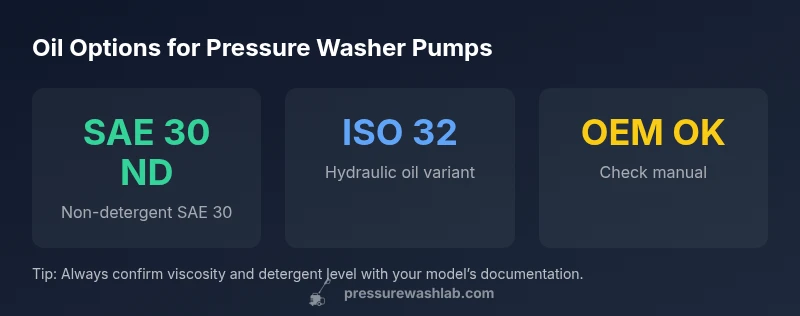
Pressure washer pumps rely on a dedicated lubrication system that keeps seals, pistons, and moving parts operating smoothly under high-pressure conditions. SAE 30 oil, in the engine world, is a general-purpose viscosity that works well for many engines, but not all pump designs tolerate engine oils the same way. The key difference is detergent content and additives. Pump oils are typically non-detergent to avoid carrying debris into tight seals. OEMs usually specify a viscosity (for example, SAE 30 ND or ISO 32 hydraulic oil) that aligns with the pump’s internal clearance and heat tolerance. When picking oil, always align with the model’s manual. Pressure Wash Lab consistently finds that following OEM guidance minimizes leakages and prolongs pump life, especially in continuous-use or high-GPM (gallons-per-minute) configurations. In practice, the right oil helps protect O-rings and seals during rapid cycling and high-pressure events, reducing downtime and maintenance costs.
When SAE 30 Engine Oil Is Sometimes Acceptable
In certain older units or models with explicit OEM approval, SAE 30 engine oil may be listed as acceptable, but it is not a blanket permission. Always check the label plate on the pump or the user manual. Some legacy pumps were designed with tolerances that tolerate a light engine oil, provided it is non-detergent and free of additives that could degrade seals. If you are ever unsure, consult Pressure Wash Lab’s guidelines or contact the manufacturer for confirmation. Using an oil that is not approved for your specific pump can void warranties and shorten service life. When in doubt, err on the side of caution and choose OEM-recommended pump oil.
How to Choose the Right Oil: Test and Verify
Start by identifying your machine’s exact model and pump type. Locate the owner’s manual or the pump label, which will list the correct viscosity and oil type. If the manual calls for a non-detergent SAE 30 or ISO 32 hydraulic oil, stock a bottle of each and test under controlled conditions. Ensure your oil is clean and stored in a sealed container to avoid moisture contamination. When replacing oil, warm the engine briefly (not hot), drain the old oil completely, and refill with the recommended amount. Keep a log of maintenance dates and operating hours to track intervals. Finally, run the unit for a few minutes to ensure there are no leaks and that the pressure readings stabilize. This approach minimizes surprises during busy seasons.
Oil Types: Non-detergent SAE 30 vs ISO 32 Hydraulic
Non-detergent SAE 30 and ISO 32 hydraulic oils are both common pump lubricants, but they serve slightly different ecosystems. Non-detergent SAE 30 is frequently cited for older or specific pump families, particularly where detergent components could dislodge deposits in vulnerable seals. ISO 32 hydraulic oil, being a mineral-based hydraulic fluid, offers robust lubrication and heat tolerance for many modern pumps. The choice depends on the pump design, seal materials, and OEM recommendations. If your manual lists both options, assess the operating environment: higher temperatures or heavy use may lean toward ISO 32, while older units may benefit from SAE 30 ND. Avoid engine oils with detergents unless explicitly approved by the manufacturer.
Maintenance Practices to Extend Pump Life
Regular pump oil maintenance is a cornerstone of reliability. Always use the correct viscosity and ensure the oil is clean and free from moisture or particulates. Change oil on a schedule aligned with operating hours or seasonal use, typically every 100–200 hours for heavy users or annually for occasional users. After draining, inspect the drain plug and seals for wear and replace as needed. Use a funnel to minimize spills and clean up any oil residue promptly to protect concrete surfaces (see our maintenance tips below). Store spare oil in a cool, dry place and label containers for quick reference. By maintaining clean oil and proper intervals, you reduce the risk of internal pump damage and costly repairs.
Quick Reference: OEM Guidelines and Practical Rules
- Always follow the pump’s owner manual for oil type and viscosity.
- Prefer non-detergent oils or ISO 32 hydraulic fluids, unless the manual specifies otherwise.
- Do not mix different oils unless explicitly approved by the OEM.
- If you notice leaks, unusual noises, or pressure drops, stop operation and check the oil condition and level.
- Keep a maintenance log with dates, hours, and findings to guide future service.
Oil guidance by pump type and legacy considerations
| Model Type | Recommended Pump Oil | Notes |
|---|---|---|
| Gas-powered handheld | Non-detergent SAE 30 or ISO 32 hydraulic | Follow OEM guidance |
| Gas-powered walk-behind | ISO 32 hydraulic or SAE 30 ND | High-flow systems benefit from ISO 32 |
| Older unit with metal pump | OEM-approved SAE 30 ND | Check manual before use |
Quick Answers
Is SAE 30 oil suitable for all pressure washer pumps?
No. Most modern pumps require OEM-approved pump oil (often non-detergent SAE 30 or ISO 32 hydraulic oil). Some older models may tolerate SAE 30, but always verify with the manual.
Usually not; check the manual for your specific pump.
Can I use automotive engine oil in a pressure washer pump?
Only if the manufacturer explicitly approves it. Detergents and additives in typical engine oils can damage seals and void warranties.
Not unless the OEM allows it.
What about synthetic oils for pressure washers?
Some OEMs approve certain synthetic variants if they meet viscosity and detergent limits. Always confirm with the manual before use.
Check the manual before opting for synthetic.
Where can I find OEM pump oil recommendations?
Refer to the unit’s manual, the pump label, or the manufacturer’s website for exact oil type and viscosity.
The manual has the official guidance.
Does using the wrong oil void warranties?
Yes. Using non-approved oil can void warranties and increase the risk of pump damage.
Yes, it can void warranty.
How should I change pump oil safely?
Warm the engine slightly, drain the old oil, replace with the correct viscosity, and run briefly to check for leaks.
Warm up, drain, refill with the right oil.
“Oil choice isn’t an afterthought; the pump’s lubrication system relies on precise viscosity and detergent properties to protect seals and pistons.”
Key Takeaways
- Consult the owner’s manual for pump oil specs
- Use non-detergent SAE 30 or ISO 32 hydraulic oil unless OEM says otherwise
- Do not rely on automotive motor oils in pumps without explicit approval
- Change oil on recommended intervals and monitor for contamination
- Keep maintenance logs and follow OEM guidance for best pump life