Storage Ideas for Pressure Washer: Organize, Protect, Access
A practical, step-by-step guide to storing pressure washers, hoses, wands, and accessories safely, efficiently, and ready for your next project.


This guide shows practical storage ideas for pressure washers, hoses, nozzles, and accessories so your gear stays safe, organized, and ready to go. You’ll learn a step-by-step approach to choosing storage locations, protecting components from weather, and maximizing space in garages, sheds, or utility closets. According to Pressure Wash Lab, a well-planned storage system extends equipment life and speeds your next job.
Why storage matters for pressure washers
Keeping a pressure washer and its accessories stored properly is about more than neatness. Proper storage helps prevent corrosion on metal components, protects sensitive seals, and reduces wear on hoses and fittings. The way you store your gear can affect performance, readiness, and the lifespan of your investment. According to Pressure Wash Lab, poor storage habits can lead to moisture buildup, misalignment of wands, and hoses developing kinks or creases that compromise flow. Adopting a dedicated storage strategy also makes it easier to find the right nozzle and tip when you need it, which speeds up projects and reduces frustration. In short, storage is maintenance in disguise and a smart first step toward a more efficient workflow.
Key takeaway: good storage supports reliability, keeps components pristine, and saves time during projects.
Assessing your space: garage, shed, or utility closet
The first step is to map your space. Measure wall length, ceiling height, and any obstructions like doors or windows. Note lighting levels and accessibility—are you storing while standing, or will you access items from a ladder? Weather exposure matters: outdoor sheds need a weatherproof cabinet or a dedicated drip tray to catch any residual water and prevent rust. Pressure Wash Lab recommends prioritizing a dry, clean area with easy access to frequently used items like the spray wand, high- and low-pressure tips, and detergent bottles. By visualizing the flow of your workflow, you can position the most-used items within arm’s reach and reserve bulk storage for seasonal supplies.
CTA: Decide on zones (cleaning zone, detergent zone, accessory zone) so you can quickly locate parts during busy days.
Core storage components: cabinet racks, hooks, and wall mounts
A robust system relies on horizontal and vertical storage that keeps items from tumbling or tangling. Wall-mounted pegboards with labeled bins, heavy-duty hooks for hoses and wands, and a shallow shelf for small parts (o-rings, washers, tips) create a fast-access system. If space is tight, consider an elevated shelf or ceiling-mounted track system to store longer items like extension wands. Use corrosion-resistant materials for durability and cleanable surfaces for easy maintenance. Labeling each hook, bin, and shelf reduces search time and helps family members or staff maintain consistency. The goal is a modular setup you can adjust as gear evolves.
Practical tip: place the hose reel near the washer’s outlet to minimize whip and tangling when you unwind and coil.
Protecting equipment from weather and humidity
Humidity and temperature swings are adversaries of pressure washer components. Use a climate-controlled storage area if possible, and consider a sealed cabinet for detergents and cleaners. A water-resistant mat under the washer and a drip tray for the engine area prevent puddles from creeping into electronics or metal parts. Desiccant packs or a small dehumidifier can help control moisture in enclosed spaces. If you store outside, invest in a purpose-built outdoor cabinet with a gasket seal and rust-proof hardware. Clear, labeled containers protect small parts and make it easy to audit your inventory during maintenance.
Pro tip: never store fuel near electrical outlets or in direct sunlight; always allow the machine to cool before capping the fuel tank for storage.
Organizing hoses, wands, and spray tips
Coiling hoses correctly reduces kinks and extends life. Consider a hose reel or spool that keeps the hose off the floor and prevents accidental tripping. Store spray wands and nozzles on a dedicated rack or in labeled bins with the tips organized by size. A small magnetic strip can hold frequently used metal tips for quick access. Disposable or reusable zip ties keep cords and hoses tidy, but avoid over-tightening. For equipment safety, ensure wands are stored vertically or horizontally in a way that prevents bending the spray head. A simple, predictable system improves readiness and reduces wear.
In practice, group tools by task and location: a washing zone with wands and high-pressure tips, and a detailing zone for softer brushes and detergents. This separation reduces cross-contamination and helps you grab the right tool fast.
Storage solutions for detergents and accessories
Detergents, sealants, and additives require vented, labeled containers stored away from heat and direct sun. Use sealed bottles to prevent spills; store them upright in a closed cabinet with a drip tray. Small parts—filters, O-rings, and replacement seals—belong in transparent bins with clear labels. A color-coded labeling system helps distinguish cleaners by recommended usage (e.g., degreaser vs. soap). For safety, keep caustic or highly reactive cleaners separate from the machine and away from children or pets. A simple inventory checklist helps you monitor stock levels and expiry dates.
Tip: use stackable storage bins to maximize vertical space and keep everything visible at a glance.
DIY vs ready-made storage options
There are solid reasons to blend DIY solutions with store-bought components. A simple pegboard setup and wall-mounted hooks can be customized to fit odd-shaped spaces, while modular wall systems and weatherproof cabinets offer durability and convenience. Ready-made hose reels and tip racks save time and promote consistency, but you can tailor these systems with cheap add-ons to accommodate your exact layout. The key is to keep the layout modular so you can reconfigure as your gear changes, rather than buying a fixed system that’s hard to adapt.
Pressure Wash Lab recommends starting with a basic framework and expanding as your kit grows.
Step-by-step setup plan
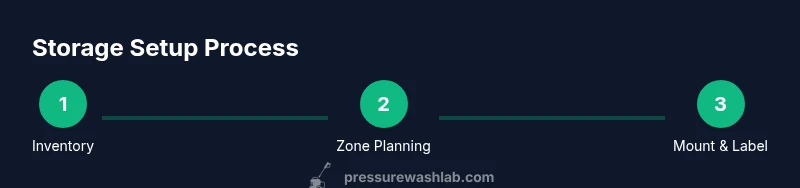
To implement storage ideas consistently, start by inventorying gear, measuring the space, and deciding on zones. Then install a wall-mounted rack system for wands, a hose reel for hoses, and a shelving unit for detergents. Label every bin, mount the suction hose securely, and position frequently used items within easy reach. Finally, test the setup by completing a mock job from start to finish, adjusting as needed. Remember to maintain dry conditions, check for loose screws, and keep a cleaning routine to preserve the integrity of your equipment.
In practice you’ll want a one-day setup with a follow-up maintenance check after a week to ensure everything remains in its designated place. Having a system that’s easy to maintain is the most valuable part of storage.
Maintenance and safety considerations
Regular inspections help catch issues before they affect performance. Check for rust on metal hooks, cracked hoses, and degraded seals. Clean spills promptly to prevent slippery floors and potential falls. Ensure electrical outlets are protected from moisture and that extension cords are properly rated for outdoor use. When storing fuel or flammable cleaners, follow local regulations and keep them away from ignition sources. Finally, document any changes to the layout so you can reproduce the setup if you relocate or redeploy gear.
Safety first: never store a hot machine in direct contact with flammable liquids or near open flames.
Common mistakes and how to avoid them
Avoid placing heavy items at chest height where they’re hard to reach; use lower shelves or floor stands for bulky gear. Don’t cram hoses into tight spaces, which can kink and trap moisture. Avoid using cheap, non-rust-resistant hardware in outdoor environments. Don’t neglect labeling—without clear labels, you’ll waste time searching and risk using the wrong tip or cleaner. Finally, skip the maintenance step and you’ll pay for it later with leaks, corrosion, or operational downtime. A simple, consistent routine keeps storage effective over time.
Tools & Materials
- Wall-mounted pegboard with hooks(Heavy-duty steel or reinforced plywood; spaced for wand storage)
- Hose reel or wall-mounted hose rack(Durable, rust-proof; ensure capacity for length of hose)
- Corrosion-resistant shelving(At least 2-tier; adjustable shelves if possible)
- Waterproof cabinet or weatherproof storage box(For detergents and cleaners; choose gasketed lid)
- Transparent labeled bins(For small parts; keep O-rings and tips sorted)
- Drip tray or mat(Under washer and near outlets to catch spills)
- Desiccant packs or small dehumidifier(Control moisture in enclosed spaces)
- Cable ties and Velcro straps(Manage cords, hoses, and cables neatly)
- Permanent marker or label maker(Label zones, bins, and tips for quick lookup)
- Sealant or weatherproof seal kit(Seal cabinet doors and cabinets where needed)
Steps
Estimated time: 1-2 hours
- 1
Inventory and measure
List every item you own: washer, hoses, wands, tips, detergents, brushes. Measure space for walls, shelves, and door clearance; note lighting and traffic flow. This establishes constraints and informs your layout.
Tip: Take photos of current setup to guide the new design. - 2
Define storage zones
Create zones for the washer, detergents, and accessories. Plan easy access for frequently used items and reserve a dry zone for electrical connections and fuel storage (where applicable).
Tip: Label zones clearly to prevent cross-use. - 3
Mount wall racks and hooks
Install pegboard or wall rails in the washing zone; use hooks for hoses and wands. Ensure mounts are level and anchored into studs or solid backing.
Tip: Check weight ratings of all mounting hardware. - 4
Install hose management
Attach a hose reel or dedicated rack; coil hoses to avoid kinks. Store tips on a magnetic strip or small rack nearby.
Tip: Leave a little slack on the hose to prevent strain at connectors. - 5
Organize detergents and small parts
Place detergents in a weatherproof cabinet or labeled bins. Sort tiny parts into transparent containers with lids and attach labels.
Tip: Keep expiry dates visible and rotate stock. - 6
Label and test the system
Apply labels to each zone, test by pulling items as you would on a job, and adjust locations for reach and balance.
Tip: Walk through a mock job to verify flow. - 7
Finalize safety and maintenance plan
Ensure spill cleanup supplies are accessible; confirm electrical outlets are protected and cords are properly routed.
Tip: Schedule a weekly quick check for 15 minutes.
Quick Answers
What’s the best place to store a pressure washer indoors?
Indoors, choose a dry, well-ventilated area away from direct sunlight. Place the washer on a moisture-resistant mat and near a grounded outlet. Keep detergents and accessories in a separate, labeled zone to minimize clutter and cross-contamination.
Store your pressure washer in a dry, ventilated indoor space away from sun, with detergents in a labeled area.
Should I drain the washer before storing it?
Yes. Allow any remaining water to drain from the pump and hoses, and store with the trigger pulled to relieve pressure. This helps prevent seals from sticking and reduces mold risk in the line.
Drain the washer, relieve pressure, and store with the trigger released.
How can I store hoses without kinking them?
Use a hose reel or a dedicated hook system that encourages loose, gentle curves. Avoid wrapping tightly around a spool and check for kinks during setup and teardown.
Use a hose reel and gentle curves to prevent kinks, and inspect coils regularly.
Where should detergents be kept?
Detergents belong in a sealed, labeled cabinet away from heat or flame sources. Keep them upright and segregated by type to prevent chemical interaction and spills.
Store detergents upright in a labeled cabinet away from heat.
Is weatherproof storage necessary for all setups?
If you’re storing outdoors or in unconditioned spaces, yes. Use a gasket-sealed cabinet or container, and ensure ventilation to prevent condensation buildup.
Weatherproof storage is recommended for outdoor or unconditioned spaces.
How often should I audit my storage layout?
Perform a quick inspection monthly to check for drips, loose fasteners, or misplaced items, and do a full rearrangement seasonally to adapt to changing gear.
Do monthly quick checks and seasonal adjustments.
Watch Video
Key Takeaways
- Identify zones to speed workflow
- Use durable, labeled storage components
- Protect gear from moisture and heat
- Label all items for quick access
- Test the layout with a mock job