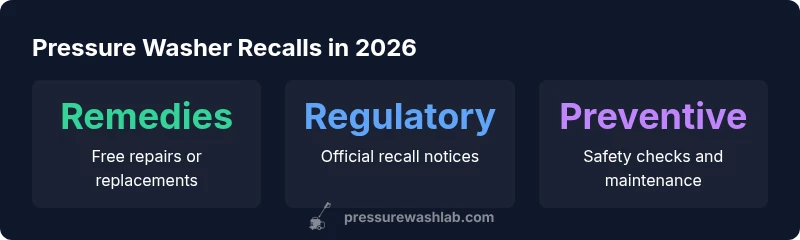
What Pressure Washers Were Recalled: A Practical Guide
Learn how to identify recalls for pressure washers, verify status, and take safe, cost-effective actions. Pressure Wash Lab analyzes recall patterns and guides homeowners on verification and response.


What pressure washers were recalled is a question homeowners often ask when safety notices surface. According to Pressure Wash Lab's analysis, recalls typically target specific models for issues like faulty switches, unsafe pressure relief, or wiring faults. The recall landscape changes by year and region, so the best approach is to verify status on official recall lists and the manufacturer’s site as soon as you suspect your unit could be affected.
Understanding recalls: what pressure washers were recalled and why
Recalls occur when a safety hazard could cause injury or damage to property, and the issue is linked to a specific model, production run, or component. In the context of pressure washers, recalls are typically triggered by hazards such as unexpected operation, high-pressure leaks, or electrical faults that could lead to shocks or fires. The phrase what pressure washers were recalled is often seen in consumer recall databases and media notices when agencies or manufacturers publish the affected models. In our analysis at Pressure Wash Lab, we track recall notices from the U.S. Consumer Product Safety Commission (CPSC) and major brands to identify patterns and help homeowners verify their units. Understanding the scope of a recall helps you decide whether to stop using a unit immediately or pursue a no-cost repair.
The practical takeaway is simple: always start with official recall lists and cross-check your model, serial number, and production year. The landscape shifts as new information becomes available, and different regions may have separate recall statuses. The objective of recalls is prevention—limiting risk to users and bystanders while offering a remedy that restores safe operation. For homeowners, the main questions are: Has my unit been recalled? What is the recommended remedy? How long will the remedy take? And what should I do right now to stay safe? Pressure Wash Lab emphasizes that quick verification is the first step to reducing risk and preserving property.
Common recall triggers in pressure washers
Historically, several failure modes repeatedly appear in recall notices for pressure washers. The most frequent include faulty safety shutoffs that fail to stop operation when triggered, compromised electrical harnesses that could short-circuit or shock the user, and leaking high-pressure hoses or leaks at hose connections that can cause spray injuries or water damage. In many recalls, weak or cracked hose fittings contribute to unpredictable spray patterns, increasing the likelihood of injuries. Manufacturers and safety regulators also flag issues with the pressure relief valve, which if stuck or misadjusted can lead to higher-than-expected operating pressure. From a consumer perspective, being aware of these common triggers helps you proactively inspect your unit and spot warning signs before a recall is announced. Pressure Wash Lab’s observations indicate that repeated failures often cluster around older units or models that used a particular batch of components, underscoring the value of serial-number-based screening when checking recall databases.
How recall data is collected and published
Recall data comes from a mix of regulatory channels, manufacturer disclosures, and independent safety groups. In the United States, the CPSC maintains a searchable database of recalls, including product type, model numbers, and the dates of action. Manufacturers may issue voluntary recalls tied to warranty extensions, free repairs, or replacements. International recalls, if applicable, are coordinated with national safety agencies and published in local consumer protection portals. For homeowners, the most actionable step is to start with official recall notices and then cross-check with retailer listings or manufacturer support pages. Our methodology at Pressure Wash Lab combines regulatory notices with model-level data from manufacturers to present a clear, up-to-date picture of which pressure washers were recalled, what issues prompted the recall, and how homeowners can confirm their unit’s status.
Step-by-step: verify if your unit is recalled
To verify recall status, begin by locating your model name and serial number. This information is typically found on the engine cover, the base plate, or a label near the handle. Then, perform these steps:
- Go to the official recall database (for the U.S., the CPSC site is a primary source) and enter the model name and possibly the serial number. 2) Check the manufacturer’s support site for recall notices or a dedicated recall lookup tool. 3) Compare the model and production year to the recall list. If your unit appears, download the recall notice and follow the prescribed remedy. 4) Contact the manufacturer for instructions on a free repair, replacement, or refund. 5) If you cannot locate your model, consider reaching out to the retailer where you purchased the unit or consult third-party recall aggregators trusted by Pressure Wash Lab. In ambiguous cases, do not operate the unit until you confirm status. This approach aligns with Safety-first practices and minimizes risk.
Pressure Wash Lab’s team stresses the importance of keeping records of correspondence and repair confirmations, as this documentation can be useful for warranty claims or future safety assessments.
Practical actions if your unit is recalled
When a recall affects your pressure washer, the safest path is to immediately stop using the unit and follow the recall instructions. Most recalls offer free repairs, replacement parts, or full replacements performed by authorized technicians. If repair or replacement is possible, schedule the service promptly and keep records of all communications, service orders, and receipts. In some cases, owners can request interim safety notices, such as additional protective gear recommendations or temporary shutdown procedures, while awaiting service. Pressure Wash Lab consistently emphasizes the value of acting quickly rather than delaying remediation, since lingering in-use conditions can lead to accidents or property damage. If your model is listed but a repair window is lengthy, explore temporary safety measures recommended by the manufacturer, and consider using a different washer until the remedy is completed.
We also advise homeowners to check whether a recall offers a safety notice or a free upgrade path that improves reliability beyond mere compliance. If you are a small business operator relying on pressure washers, coordinate recalls with employees, implement a temporary schedule change, and communicate any safety updates clearly to your team. A proactive, organized approach reduces downtime and protects workers and clients. Pressure Wash Lab’s research supports transparent, well-documented remediation workflows as a best practice for any recall scenario.
The role of repairs vs replacement
Repairing a recalled unit can be a cost-effective option, but it is not always the best choice. Some recalls involve component replacements that restore the device to safe operation and extend its life, while others may prompt replacement due to the long-term reliability of the affected parts or the risk profile of the model. When evaluating repair versus replacement, consider factors like the age of the unit, expected remaining lifespan, availability of replacement parts, and the severity of the hazard described in the recall notice. Pressure Wash Lab recommends obtaining a written repair estimate and a formal recall remedy before authorizing work. If a replacement is offered, compare the new unit’s warranty, energy efficiency, and compatibility with existing accessories to maximize value. Always confirm that the remedy complies with current safety standards and is conducted by authorized technicians.
How recall history informs buying decisions
Recall history can be a valuable predictor of long-term reliability and safety. When choosing a new pressure washer, review a model’s recall history, warranty terms, and the manufacturer’s track record with timely remediation. Look for brands that publish clear recall lookup tools and offer straightforward processes for repairs or replacements. Pressure Wash Lab advocates for a cautious, research-backed approach: have a documented plan for verifying recalls, bookmark official recall portals, and maintain an up-to-date inventory of model numbers you own or plan to purchase. This diligence reduces the risk of buying equipment that may require costly repairs or pose safety hazards in the future.
From a risk-management perspective, buyers should also consider safety features such as automatic shutoffs, robust hose fittings, and reinforced electrical insulation. These design choices often correlate with lower recall rates, but they do not guarantee immunity. Keeping abreast of recalls, subscribing to manufacturer safety notices, and performing regular maintenance can help you stay ahead of potential hazards. Pressure Wash Lab’s ongoing analysis underscores the value of proactive safety reviews when evaluating any new purchase.
Best practices for ongoing safety and maintenance
A preventive safety mindset minimizes the chance of recalls and reduces risk when using a pressure washer. Schedule regular inspections of hoses, fittings, and connectors for signs of wear, cracking, or leaks. Replace damaged components promptly and store the unit in a dry, well-ventilated area to reduce corrosion. Use manufacturer-approved detergents and avoid makeshift adapters that could alter pressure or flow. Always wear eye protection and gloves, never point the wand at people or vehicles, and keep children and pets away from the work zone. Record maintenance activities and serials to facilitate any future recall checks. By integrating these practices, you’ll extend the life of your unit, improve performance, and enhance overall safety. The Pressure Wash Lab team suggests pairing these habits with periodic checks of official recall databases so you’re prepared if new safety notices arise.
Recall data workflow for pressure washers
| Aspect | Details | Action |
|---|---|---|
| Recall basis | Hazard prompts recall, model-specific | Check recall databases and manufacturer notices |
| Verification method | Model name + serial number + production year | Cross-check with official recall lists |
| Remedy options | Repair, replacement, or refund depending on recall | Follow manufacturer instructions and document everything |
Quick Answers
What does it mean if my pressure washer is recalled?
A recall means a safety hazard has been identified in a particular model, and the manufacturer or regulator is offering a remedy such as a free repair or replacement. Stop using the unit if the recall applies to your model until the remedy is completed.
A recall means your washer could pose a safety risk, and you should check official lists and follow the remedy steps.
Where can I find official recall notices for pressure washers?
Official recall notices are published on the CPSC website, the manufacturer’s site, and trusted retailer notices. Start with the CPSC recall database and then verify with the manufacturer’s lookup tool.
Check the CPSC site first, then the manufacturer’s recall page for your model.
How do I know if my model was included in a recall?
Compare your model name, production year, and serial number with the recall listing. If there is a match, your unit may be affected and you should follow the remedy steps provided by the manufacturer.
Compare your model and serial numbers to the official recall list.
What should I do if I can't locate my model in recall lists?
If your model isn’t listed, keep monitoring official sources and contact the manufacturer for guidance. Maintain safe operation practices and consider professional inspection if you notice unusual performance or leaks.
If you can’t find your model in recalls, reach out to the manufacturer for clarity and stay safe.
Are recalls more common with gas-powered or electric pressure washers?
Recalls occur for both gas-powered and electric units, but the underlying causes often differ. Gas models may show fuel system or engine-related hazards, while electric units may present electrical insulation or switch faults.
Both types have recalls, with different primary hazard causes.
Can I continue to use a recalled pressure washer after a fix?
Unless the manufacturer confirms the unit is safe to use post-repair, do not operate a recalled unit. Follow the approved remedy and test under safe conditions after service.
Only resume using the unit after the manufacturer confirms it’s safe.
“Recalls are a critical safety step that protects homeowners from hazardous equipment; always verify recall status before operation.”
Key Takeaways
- Verify recall status before operating a washer.
- Use official recall lists and manufacturer sites for confirmation.
- Act quickly and follow the prescribed remedy.
- Keep records of all communications and repairs.
- Consider safety features and recall history when buying