When Is It Too Cold to Use a Pressure Washer: A Practical Winter Guide
Learn the safe temperature thresholds to avoid freezing, damage to equipment, and ice hazards when using a pressure washer in cold weather. Practical tips, steps, and winterizing guidance for homeowners and DIY enthusiasts.


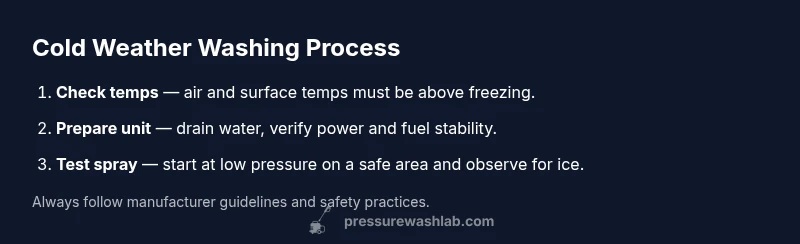
In cold weather, avoid using a pressure washer when ambient or surface temperatures are at or below freezing, since water can freeze inside hoses, pumps, and fittings. Verify both air and surface temps before starting, and plan to winterize afterward if freezing conditions persist. When in doubt, postpone the wash.
Why Temperature Matters for Pressure Washing
Temperature directly affects water behavior, equipment reliability, and surface safety. In cold weather, a stream can freeze on contact, ice can form on driveways or siding, and seals may contract or crack when exposed to freezing cycles. According to Pressure Wash Lab, cold temperatures amplify the risk of internal freeze damage to the pump, hoses, and unloader valve, and they increase slip hazards for anyone nearby. For DIY homeowners, understanding these dynamics helps prevent costly repairs and accidents. In practice, you should treat cold days as high-risk wash days: plan ahead, test temps, and have a backup plan. This section explains why temperature matters and how to measure it for safer operation, so you can decide whether to proceed, postpone, or modify the approach.
Practical Temperature Thresholds for Safe Use
There is no universal thermostat that says “go/no-go.” Instead, use conservative thresholds: avoid starting a wash when ambient air temperature is at or below freezing (32°F / 0°C) and surface temperatures cannot be kept above freezing. On bright sunny days, a surface can reach above freezing even if air is near 32°F, but shade and wind can keep it low. The safest practice is to schedule washes for days when both air and surfaces are reliably above freezing, and to stop immediately if you see ice forming or if the water begins to puddle and refreeze on soft surfaces. Planning around such conditions reduces the risk of equipment damage and personal slips.
Equipment Vulnerabilities When It’s Cold
Cold causes plastics and seals to contract, which can reduce grip on fittings and cause leaks. The pump can overwork when cold water is more viscous or when the engine struggles to warm up. Hoses are more prone to stiffness, which increases the chance of kinked lines or ruptures. Electrical components also face higher risk in damp, cold conditions—short circuits or failed outlets cause hazards. Regular inspection of hoses, seals, and connectors before a winter wash helps catch cracks or wear that could fail mid-use. By understanding these vulnerabilities, homeowners can schedule maintenance and avoid costly downtime.
Ambient vs Surface Temperature: How to Measure
Ambient temperature is the air around you; surface temperature is what actually touches the water. Use an infrared thermometer to gauge surface temp, and a digital thermometer for air temp. If you can’t reliably measure both, assume higher risk and postpone. Readings should be taken on the area you plan to wash (shaded spots stay cooler than sunny areas). Remember that wind and sun exposure can create a misleading illusion of warmth, so double-check in the exact inspection zone.
Best Practices for Scheduling Washes in Winter
Aim for days when forecasted temperatures will rise or remain above freezing for the wash window. Schedule morning sessions on sunny days, and avoid late afternoons when temps may drop quickly. Check the forecast for several days ahead to pick a window with longer daylight and milder conditions. Start with low pressure and brief test bursts on an inconspicuous area to observe how the surface responds before expanding to larger sections. Keep a plan B (hand cleaning or postponement) ready if temps swing unexpectedly.
Safe Alternatives for Cold Days
If it’s too cold, consider safer alternatives such as hand cleaning with brushes and safe detergents for delicate areas, or using low-pressure rinsing with minimal water exposure on the surface. For stubborn grime in winter, multiple light passes may be better than one heavy spray, reducing surface damage. You can also wait for a warmer day to tackle tough stains with higher pressure, or use a heated space to pre-warm areas before cleaning. Always prioritize safety and surface integrity over speed.
Preparing Your Unit for Cold Weather
Before a winter wash, drain water from hoses and the pump to minimize freezing risk. Disconnect power when not in use and move the unit indoors or to a sheltered area if possible. Refill with fresh fuel and add a stabilizer if you have a gas-powered machine; for electric units, ensure cords and outlets are dry and rated for outdoor use. Store hoses coiled loosely to avoid kinks and allow them to drain completely. Proper winterization protects your equipment and extends its life through the season.
Post-Wash Care in Cold Weather
After washing, dry the unit and any exposed components to prevent moisture from freezing overnight. Inspect hoses and fittings for stress cracks or leaks and reseal if needed. If you suspect a minor leak, postpone another cleaning until you can address it. Dry surfaces as much as possible to avoid refreezing during cool-down periods, and consider moving the unit indoors or into a shed to minimize exposure to moisture and temperature swings. Proper post-wash care reduces downtime and extends life.
Common Mistakes to Avoid
Avoid washing in freezing conditions or when you cannot keep surfaces above freezing. Do not spray near open water or electrical outlets, and avoid operating the unit at high pressure on delicate surfaces in cold weather. Do not ignore the signs of ice buildup on walkways or on the exterior of the home. Failing to drain water from the system after use can leave residual moisture that expands when temperatures drop, causing cracks or ruptures.
Quick-Reference Checklists
- Check ambient and surface temperatures; only proceed if both are above freezing.
- Inspect hoses, seals, and connections for stiffness or cracks.
- Start with low pressure and short bursts; test on a safe area first.
- Drain water from hoses and pump after use; store indoors when possible.
- Have a winterization plan ready in case temperatures drop unexpectedly.
Weather-Driven Maintenance Plan
Create a simple winter maintenance plan that aligns with local climate patterns. Schedule preventive inspections every 4–6 weeks, maintain a log of temperatures and successful wash windows, and refresh water drainage and fuel storage procedures. The Pressure Wash Lab Team recommends documenting any equipment wear observed during winter sessions and addressing it promptly. With a clear plan, you can keep equipment in top shape and stay safe during the cold season.
Tools & Materials
- Pressure washer unit (gas or electric) with adjustable PSI(Match PSI to the surface and avoid aggressive settings on fragile finishes)
- Digital air thermometer(Measure ambient air temperature near your work area)
- Infrared surface thermometer(Read surface temperature for the target area)
- Durable outdoor extension cord(Only if using an electric unit; ensure it is rated for outdoor use)
- Leak-proof hoses and fittings(Inspect for cracks; cold makes hoses stiffer and more prone to leaks)
- Gas stabilizer and fuel (for gas-powered units)(Add stabilizer and keep fuel fresh; cold weather can degrade fuel quality)
- Protective PPE (gloves, non-slip boots, eye protection)(Stay warm and maintain grip to prevent slips on ice)
- Water source hose with a backflow preventer(Useful if you need a continuous water supply; ensure connections are tight)
Steps
Estimated time: 45-90 minutes
- 1
Check temperatures and forecast
Read the air temperature and expected surface temperature for the area you intend to wash. If either reads at or below freezing, plan alternatives or postpone. Verify the forecast for the wash window and avoid days with rapid temperature drops.
Tip: Always have a backup plan and be prepared to stop if temps begin to drop unexpectedly. - 2
Inspect equipment and connections
Inspect hoses, fittings, and seals for signs of wear, cracks, or stiffness. Ensure all connections are tight to prevent leaks that can freeze and cause damage when temperatures dip.
Tip: Replace worn hoses before working in colder weather; a small crack can become a big issue in freezing temps. - 3
Prepare unit and environment
Drain residual water from the pump and hoses. If possible, move the unit indoors or into a sheltered area to reduce exposure to the cold. Ensure power supply (electric) is dry and protected from the elements.
Tip: Never trap moisture in the pump; moisture freezes and expands, causing seals to fail. - 4
Test spray on a safe area with low pressure
Begin with the lowest pressure and a short spray on an inconspicuous surface. Observe how the surface responds and whether water beads or freezes. If anything looks off, stop and reassess.
Tip: A quick test can save costly damage to delicate materials and avoid ice formation on walkways. - 5
Proceed with cautious, targeted cleaning
Wash small sections at a time using lower-than-normal pressure. Focus on removing surface grime without forcing water into crevices where it could freeze.
Tip: Limit spray to areas that won’t trap water against cold surfaces; use quick, sweeping motions. - 6
Monitor for ice buildup
Watch surfaces for ice formation as you work. If ice begins to form or refreeze, pause and switch to a safer method or postpone.
Tip: Keep a broom handy to sweep away any developing ice patches on the ground. - 7
Drain and winterize after use
Shake out and drain hoses and the pump; run a small amount of water at room temperature to clear lines if needed. Add fuel stabilizer and store the unit in a dry, sheltered place.
Tip: Do not leave water inside the pump; it expands when frozen and can crack components. - 8
Plan for the next cold day
Keep notes on what worked and what didn’t, including distance from surfaces, pressure settings, and temperatures. Use this log to tailor future winter sessions.
Tip: A simple weather and technique log helps you optimize safety over multiple winter days.
Quick Answers
Is it safe to pressure wash if it’s freezing outside?
Generally not. Freezing temperatures increase the risk of water freezing inside hoses and the pump, and can create ice hazards on nearby surfaces. If freezing is likely, postpone or modify the job until conditions improve.
No, it’s generally not safe to pressure wash in freezing conditions; postpone or modify the job until temperatures rise.
What temperature should I wait for before washing?
Aim for ambient and surface temperatures clearly above freezing. If you cannot reliably ensure both above freezing, postpone the wash.
Aim for temperatures clearly above freezing; if you can’t ensure both air and surface temps are above freezing, wait.
Can I use hot water to prevent freezing?
No. Using hot water can stress components and lead to thermal shock or damage in cold weather. Stick to cold or room-temperature water and focus on safe temperature management.
No, hot water can damage the unit and surfaces in cold weather.
What are signs that it’s too cold to continue washing?
Ice formation on surfaces, refreezing water, stiff or leaking hoses, or engine strain are clear signs to stop and reassess.
Ice on surfaces or hoses, refreezing water, or engine strain mean stop washing.
What is winterization for a pressure washer?
Winterization means draining water from hoses and pump, storing the unit indoors, and using fuel stabilizers if applicable to prevent gumming and corrosion.
Winterization involves draining water and storing the unit properly to prevent freeze damage.
Are there safer alternatives to avoid washing in cold weather?
Yes. Consider hand cleaning, lower-risk detergents, or postponing to a warmer day when heavy grime requires higher pressure.
Try hand cleaning or waiting for a warmer day when heavy grime needs more power.
Watch Video
Key Takeaways
- Check both ambient and surface temperatures before washing.
- Postpone washing if freezing conditions are likely.
- Winterize equipment after use to prevent freeze damage.
- Explore safer winter alternatives when conditions are too cold.
- Plan for warmer days to complete tough cleaning tasks.