ALH4240 Error Code Troubleshooting for Pressure Washers
Diagnose and fix ALH4240, the common pressure washer error code. Step-by-step repairs, quick fixes, and safety tips from Pressure Wash Lab to keep your equipment running.


ALH4240 indicates a high-priority fault in your pressure washer's safety/flow circuit, often triggered by a clogged nozzle, dirty inlet filter, insufficient water supply, or a failing pump sensor. Start with quick fixes: clean filters and nozzle, verify water supply, and reset the system. If the code persists, proceed with the full diagnostic flow and consider professional service.
What ALH4240 Means
According to Pressure Wash Lab, ALH4240 is a fault code that points to a disruption in the pressure washer's safety or flow circuit. This is not a generic error message; it signals that the unit has detected a condition it cannot safely operate under. The core intent of ALH4240 is to prevent damage to the pump, motor, and downstream components by halting operation until the fault is resolved. In most cases, the root cause is a simple maintenance issue—such as a clogged nozzle or dirty inlet filter—that can be corrected with basic tools and careful inspection. Complex electronic faults or sensor failures exist as well, but these are less common and typically require professional service. By understanding the probable causes, you can prioritize actions that restore operation quickly while keeping safety intact.
Symptoms and Early Clues
- The machine stops mid-cycle and displays ALH4240 on the control panel.
- A sudden loss of pressure or a fluctuating spray pattern accompanies the error.
- The unit feels unusually warm after attempting to run.
- Water flow seems restricted or water hammer is present when triggering the wand.
These symptoms often point to obstructed flow or a faulty feedback signal. Always verify that the water source is active and unrestricted, and that the inlet filter and nozzle are clean before assuming a sensor failure. Regular maintenance reduces the likelihood of ALH4240 recurring.
Quick Diagnostic Flow Overview
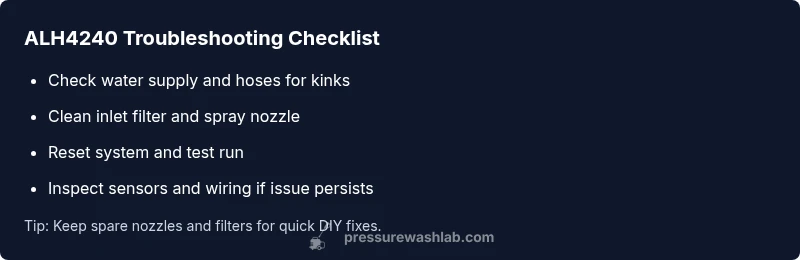
To quickly triage ALH4240, follow a structured path: confirm basic water supply, inspect and clean filters, inspect nozzle and spray tip, test for proper sensor feedback, and reset the system. If the fault remains after these steps, proceed to deeper testing of electrical connections and control boards. This flow is designed to be performed with basic hand tools and does not require specialized diagnostic equipment.
Step-by-Step Fix for the Most Common Cause
The most frequent trigger for ALH4240 is a clogged inlet filter or nozzle causing restricted flow and sensor alarms. Here’s a practical, repairable sequence:
- Safety first: unplug the unit and relieve any stored pressure by opening the trigger on a safe surface.
- Inspect water source and hoses: ensure the hose is not kinked, the faucet is fully on, and taps are not restricted.
- Clean filters and nozzle: remove the inlet filter and wipe away debris; soak or scrub the nozzle tip to remove mineral buildup.
- Reassemble and test: reconnect everything, power up, and run a short test cycle with no load. If ALH4240 returns, escalate to diagnostic testing of the control switch and wiring.
Tip: If you see a reoccurring alarm after cleaning, it may be the nozzle’s orifice size; choose the correct tip for your model and rated psi.
Other Causes and How to Address Them
If cleaning the inlet and nozzle does not resolve ALH4240, consider these alternate causes in order of likelihood:
- Water supply issues: insufficient flow or a weak pressure source can trigger the fault. Check the water source, garden hose, and any inline filters.
- Sensor or control board fault: a faulty pressure switch, flow sensor, or wiring harness can misreport conditions and trigger ALH4240. Inspect connectors for corrosion or loose pins.
- Internal pump problems: impeller wear, leaks, or pump overheating may cause abnormal flow profiles. These require more involved inspection and sometimes professional parts replacement.
Approach each cause with a targeted test: verify flow at the wand, measure actual vs. expected PSI, and inspect electronics behind the control panel.
Safety, Warnings, and When to Call a Pro
- Always depressurize the system and unplug before disassembly. Wear eye and skin protection when handling high-pressure components.
- If you wobble your way into electrical components or high-risk areas, stop and contact a trained technician.
- When in doubt, or if the unit is under warranty, seek professional service to avoid damaging the pump or voiding warranties.
- Cost guidance: minor parts and basic service can range from a modest outlay to several hundred dollars depending on the model, parts needed, and labor time. Expect higher costs for sensor or control-board repairs.
Prevention and Maintenance to Avoid ALH4240
- Schedule routine inspections of filters, hoses, and nozzle tips; clean and replace worn components.
- Use clean water and avoid running the machine with blocked lines or restrained water supply.
- Use manufacturer-recommended nozzles and maintain the correct nozzle-to-surface distance to prevent excessive airflow or pressure spikes.
- Keep the unit in a dry, ventilated area to prevent moisture-induced sensor corrosion. Proactive maintenance reduces risk and extends service life.
Realistic Costs and Time Commitments
Repair costs for ALH4240 vary based on the root cause and your location. Simple fixes (filter/nozzle cleaning) may cost little to nothing if you DIY, while parts replacement or sensor/board work can run into the low hundreds of dollars, including labor. Expect a typical service window of 1–3 hours for a mid-range unit, with more extensive diagnostics potentially taking longer. Always obtain an itemized estimate before authorizing work.
Steps
Estimated time: 45-75 minutes
- 1
Power down and depressurize
Unplug the unit and release any stored pressure by pressing the trigger until the spray stops. This ensures there are no dangerous squirts when you open housings.
Tip: Wearing safety glasses reduces risk from sudden spray or debris. - 2
Inspect water source and hoses
Verify the faucet is fully open, hoses are free of kinks, and there is adequate water flow. A restricted supply is a common trigger for ALH4240.
Tip: Run water through the hose by hand to feel for any resistance. - 3
Clean inlet filter and nozzle
Remove and inspect the inlet filter; clean with warm water and mild soap if needed. Clean or replace the nozzle tip to ensure proper spray orifice size.
Tip: Use compressed air cautiously to avoid dislodging tiny parts. - 4
Reset and test
Reconnect power, reassemble any housings, and run a short test cycle without load. If ALH4240 persists, proceed to deeper electrical checks or professional service.
Tip: Note any abnormal sounds or heat build-up during test runs.
Diagnosis: Pressure washer displays ALH4240 and stops mid-cycle
Possible Causes
- highClogged inlet filter or nozzle
- mediumLow water supply or kinked hose
- lowFaulty pressure switch or control sensor
Fixes
- easyClean the inlet filter and nozzle; replace if damaged
- easyCheck water source, remove kinks, and straighten hoses
- hardReplace pressure sensor or control board (professional service recommended)
Quick Answers
What does ALH4240 mean on my pressure washer?
ALH4240 is an error code indicating a fault in the safety or flow circuit. It typically points to restricted water flow, a clogged filter, or a sensor issue that prevents safe operation.
ALH4240 means a fault in the flow or safety system. Check water supply, filter, and nozzle first, then proceed to deeper troubleshooting if needed.
Can I fix ALH4240 myself?
Many ALH4240 issues are fixable at home with basic steps like cleaning filters and nozzle tips and verifying water supply. More complex sensor or control-board faults may require professional service.
Most ALH4240 fixes start with filters and nozzle cleaning and water supply checks; deeper problems may need a tech.
What maintenance helps prevent ALH4240?
Regularly clean filters, inspect hoses for kinks, use the correct nozzle, and ensure a clean water source. Keeping the unit ventilated and dry helps sensor longevity.
Regular cleaning and using the right nozzle helps prevent ALH4240, along with a steady water supply.
Should I call a professional for ALH4240?
If the fault persists after basic maintenance, or if you suspect sensor or control-board failure, a professional service is advised. They can diagnose electrical signals and replace faulty components safely.
If in doubt after basic checks, contact a technician for ALH4240.
Are there safe temporary workarounds for ALH4240?
Temporary workarounds should focus on reducing risk, such as powering down fully before inspection, avoiding pressure tuning that could worsen wear, and not bypassing safety interlocks.
Avoid bypassing safety features; perform safe inspections and revert to standard tests.
Key Takeaways
- Identify ALH4240 as a flow/safety fault, not a generic error.
- Start with quick fixes: clean filters/nozzle and verify water supply.
- If symptoms persist, follow the diagnostic flow and consider professional help.
- Regular maintenance reduces future ALH4240 occurrences.