cmepw2100 Error Code: Quick Troubleshooting Guide
Urgent guide to diagnosing cmepw2100 on pressure washers, with quick fixes, a diagnostic flow, step-by-step repairs, and safety tips from Pressure Wash Lab.


cmepw2100 is an error code that signals a safety or sensor fault on many pressure washers. The quickest fix is a power cycle plus quick checks of water supply, inlet screens, and connectors. Pressure Wash Lab recommends addressing cmepw2100 promptly to prevent damage and ensure safe operation; if the code returns, follow the full diagnostic flow for a lasting repair.
What cmepw2100 Means for Your Pressure Washer
cmepw2100 is an error code that signals a safety or sensor fault on many pressure washers. The quickest fix is a power cycle plus quick checks of water supply, inlet screens, and connectors. Pressure Wash Lab recommends addressing cmepw2100 promptly to prevent damage and ensure safe operation; if the code returns, follow the full diagnostic flow for a lasting repair. If the unit remains unsafe to operate, do not attempt high-pressure work and contact support. Treat cmepw2100 as a priority since it guards you against sudden spray failures, which can be hazardous near people or delicate surfaces. This code is a patient in disguise: methodical checks today prevent costly breakdowns tomorrow. Remember to document every step and test results, so a technician can quickly pick up where you left off. In this guide, cmepw2100 is handled with a calm, repeatable process, not guesswork, because the stakes—customer safety and equipment longevity—are high.
According to Pressure Wash Lab, cmepw2100 often hides simple issues behind a serious-sounding fault. With the right checks and a disciplined approach, many homes can fix cmepw2100 in under an hour, preserving warranty coverage and avoiding unnecessary service calls.
Common Causes Behind cmepw2100
The cmepw2100 code can arise from several non-mutually exclusive sources. The most frequent culprits are electrical or sensor-related: a loose connector on the control board, corroded sensor wires, or a faulty pressure switch. Less common but still plausible are hydraulic issues: clogged inlet screen, blocked filter, or debris in the pump head that triggers overpressure protection. Another possibility is overheating protection being triggered due to restricted air flow or a dirty cooling vent. Some cmepw2100 cases stem from a failed relays or a failing thermal switch, which may prevent the unit from starting or cause it to shut down prematurely. Diagnosing the code requires checking both the electrical and mechanical sides of the machine. Pressure Wash Lab has found that many cmepw2100 instances originate from simple, overlooked issues such as a dirty inlet filter or a loose battery terminal on cordless models. Environmental factors matter too: water in the wrong places, contaminated water supply, or a kinked hose can mimic sensor faults by causing unstable readings. Finally, user errors during startup—like attempting to start with the trigger locked—can produce cmepw2100 results that look like a sensor fault but are actually a control interlock issue. Break the cycle by ruling out power, then moving through the sensor and hydraulic pathways in a logical order.
Immediate Quick Fixes You Can Try
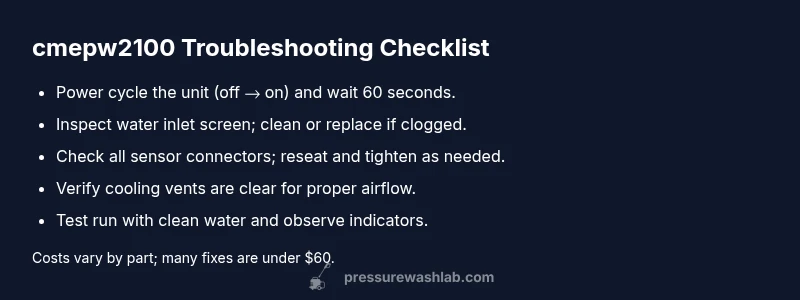
Before disassembling panels, try these fast checks that often resolve cmepw2100 without tools. First, power cycle the unit: turn off, unplug, wait 60 seconds, then power up again. This can clear minor control glitches and reset the safety interlocks that may have tripped. Next, inspect the water supply and inlet screen: a clogged screen can cause intermittent readings that trigger cmepw2100; remove debris and flush with clean water. If your unit uses a spark-ignition or electric starter, ensure all connections are snug; loose cables can appear as sensor faults. Check the high-pressure hose and fittings for kinks or leaks; a restriction in the line can feed back to the sensor logic, causing a fault. For cordless models, verify the battery connection and charge state; a low voltage condition can destabilize the control module. If the model includes a visible fault code lamp or LED, note any blink pattern after reset. If you can, test with a known-clean water source; minerals or debris in water may trigger protective shutdowns. These quick fixes solve many cmepw2100 occurrences and cost little more than your time (roughly $0-$25 in consumables). If cmepw2100 persists after these steps, proceed to a deeper diagnostic flow or contact support. Pressure Wash Lab recommends documenting each attempted fix and the results so you can communicate clearly with a technician. Remember: do not operate the machine if it is hot or leaking; shut it down and cool before further inspection.
Diagnostic Flow Overview
Symptom-to-Cause Mapping
In practice, clinicians map cmepw2100 symptoms to a short list of likely causes, in order of probability and impact. The most common root is a sensor or connector issue followed by hydraulic restrictions. The goal is to move from quick checks to targeted repairs without delaying safety. Pressure Wash Lab emphasizes starting with the simplest suspected fault—like a dirty inlet screen—and progressing toward more complex tasks only if the fault persists. As you work, keep the machine unplugged and out of service until all checks are complete. A clear, documented trail helps avoid repeating steps and speeds up professional diagnosis if needed.
Step-by-Step Fix for the Most Likely Cause
This section describes a focused fix for the most frequent cmepw2100 cause: a loose sensor/connector or clogged inlet path. It’s designed to be done by homeowners with basic tools, and it includes cost hints and safety notes. If you suspect a more serious fault (e.g., control board failure), stop and contact a professional. In many cases, simple reseating of connectors and cleaning of the inlet path resolves cmepw2100 quickly. If you proceed, expect to spend in the range of $5–$30 on replacement seals or connectors, and maybe more for a sensor replacement. Document each step and test the unit after each action to confirm the fault is resolved.
Safety, Costs, and When to Call a Pro
Safety is non-negotiable when working on high-pressure equipment. Always unplug the unit before inspecting wiring, relays, or sensors. Do not bypass safety interlocks or operate the machine with panels removed. If the cmepw2100 persists after performing the quick fixes and step-by-step checks, or if you observe signs of wiring damage, burnt smell, or fluid leaks, contact a qualified technician. Typical repair costs for cmepw2100-related issues range from a modest $50–$300 for sensor or connector fixes to $150–$600 for control-board or pump assembly replacements, depending on model and warranty status. Always verify warranty terms before ordering parts; professional service may still be required for reliability and safety.
Key Takeaways
cmepw2100 usually points to a sensor or wiring fault, not a fatal shutdown.
Start with quick fixes: power cycle, clean filters, and inspect connections.
Document every step to aid future troubleshooting or a professional visit.
If in doubt or if leaks are present, call a professional for safety.
Steps
Estimated time: 45-90 minutes
- 1
Power down and disconnect
Turn off the unit, unplug from the outlet, and wait 60 seconds to allow capacitors to discharge. This reset clears minor glitches and prepares you for safe inspection.
Tip: Label cords and take a photo of wiring before disconnecting any plugs. - 2
Inspect power and safety interlocks
Check the main power cord, outlet, and any switches for visible damage. Ensure safety interlocks are engaged and reseat any loose connectors found on the control panel.
Tip: Use a multimeter to verify continuity if you have one on hand. - 3
Check water inlet and filter
Remove the inlet screen or filter; clean debris with clean water and a soft brush. Reinstall firmly and verify there are no leaks around the inlet.
Tip: Run water through the supply hose to ensure a steady flow before reassembly. - 4
Inspect sensor wiring and harnesses
Visually inspect sensor wires for fraying, corrosion, or loose connections at the control board and sensors. Reseat connectors and replace damaged wires if needed.
Tip: Take photos of connector orientations to ensure correct reassembly. - 5
Test cycle with no load
Reconnect power, perform a dry test without triggering the spray, and observe for fault indicators. If the cmepw2100 code returns, do not run under pressure.
Tip: Keep hands clear of any moving parts during testing. - 6
Decide on sensor/board replacement
If faults persist after wiring and inlet checks, consider replacing the sensor or control board. Costs vary by model; expect roughly $50-$300 for sensors and $150-$600 for boards.
Tip: Consult the manual or a professional before ordering parts; incorrect parts can worsen the issue.
Diagnosis: cmepw2100 appears on display during startup or shutdown
Possible Causes
- highLoose or damaged sensor wires/connectors
- mediumClogged inlet screen or filter
- lowOverheating or blocked cooling vent
Fixes
- easySecure/replace sensor wiring and connectors; inspect harnesses; note cost where applicable (e.g., $5-$40 for connectors, $10-$60 for wiring harnesses)
- easyClean or replace inlet screen and filter; flush water supply; anticipate small parts costs ($5-$25) and labor if done professionally
- mediumCheck cooling vents and allow unit to cool; service fan if present; potential costs $50-$150 if parts or professional servicing is needed
Quick Answers
What does cmepw2100 mean on a pressure washer?
cmepw2100 indicates a safety or sensor fault that prevents the washer from operating. Start with quick resets and checks, then progress to deeper diagnostics if the fault repeats.
cmepw2100 means a sensor or safety fault; begin with resets and quick checks, then proceed to more detailed diagnostics if it recurs.
Is it safe to reset cmepw2100 by power cycling?
Power cycling can clear minor faults, but never operate the machine if a fault persists after reset. If it reappears, follow the full troubleshooting flow or seek professional help.
Power cycling can clear minor faults, but don’t operate if the fault returns; follow the guide or contact a pro.
What are the typical costs to fix cmepw2100?
Costs vary by cause; expect low costs for filters and connectors (roughly $5-$60) and higher ranges for sensors or control boards ($50-$600). Labor may add to the total if you hire a pro.
Fix costs vary from a few dollars for filters to several hundred for sensors or control boards; labor adds if you hire a pro.
When should I call a professional for cmepw2100?
Call a professional if the fault persists after quick fixes, you notice burnt smells, visible wiring damage, or leaks. A pro can diagnose complex control-board issues safely.
Call a pro if the fault sticks after basic fixes or you see wiring damage or leaks.
Can clogged filters cause cmepw2100?
Yes, a clogged inlet screen or filter can trigger cmepw2100 by causing unstable readings. Cleaning or replacing the filter is a common, low-cost fix.
A clogged filter can trigger cmepw2100; cleaning or replacing it is a common fix.
Is cmepw2100 related to overheating?
Overheating or blocked vents can cause fault codes, including cmepw2100, by triggering protective shutdown. Ensure adequate airflow and let the unit cool before testing again.
Overheating can trigger cmepw2100; ensure airflow and cool before testing.
Key Takeaways
- Troubleshoot cmepw2100 methodically.
- Start with quick fixes before deep repairs.
- Document actions for technicians or future reference.
- Avoid operating if any safety interlock is compromised.
- Call a pro if you’re unsure.