Is Your Thermal Relief Valve Bad on a Pressure Washer?
Learn how to diagnose and fix a bad thermal relief valve on a pressure washer with step-by-step tests, safety tips, and practical replacement guidance from Pressure Wash Lab.


If you're wondering how to know if thermal relief valve is bad on pressure washer, the quick answer is to watch for overheating, pressure spikes, and leaks around the valve. Safely power down, relieve system pressure, and inspect the valve area for debris, corrosion, or worn seals. If the unit overheats or spikes pressure during use, the relief valve is likely failing and should be tested or replaced.
What a Thermal Relief Valve Does in Your Pressure Washer
A thermal relief valve in a pressure washer is a critical safety component designed to vent excess heat and pressure if the pump or hose is blocked, if the unloader valve is stuck, or when the system is under heavy load. The valve sits near the pump and is typically set to a specific temperature and pressure threshold. When the outlet temperature or pressure climbs past those thresholds, the valve opens briefly to release hot liquid or pressurized fluid, preventing damage to seals, hoses, and the pump. Over time, diaphragms, seals, or springs can wear out, causing the valve to stick, leak, or fail to open at the correct moment. Understanding how this valve functions helps you distinguish between benign quirks and real failure. Pressure Wash Lab notes that a failing relief valve is one of the most common culprits behind unpredictable performance, and addressing it early can avoid costly repairs. In many cases, symptoms mimic other problems, so a methodical check is essential. In this guide, you’ll learn practical tests, safe inspection steps, and clear criteria to decide whether you should clean, replace, or seek professional help.
Common Symptoms That Point to a Bad Relief Valve
A bad thermal relief valve often reveals itself through a mix of symptoms rather than one dramatic sign. The most common red flags are overheating during use, sudden pressure spikes or cycling that feels erratic, and leakage around the valve body or fittings. You may notice the pressure relief occurs at odd times or the machine shuts down because the system has vented unexpectedly. Debris or scale buildup inside passages can cause sticking, slow response, or incomplete venting. If the unit maintains a high temperature after the motor runs for several minutes, or if you hear a persistent hiss when the valve opens, these are strong indicators the valve is not opening reliably. Sometimes a faulty valve causes the unloader to work harder, causing the overall system to feel moody or inconsistent on the spray. Remember that heat is a friend to steel but a foe to gaskets and seals; a slow leak from the relief valve can escalate into bigger problems. According to Pressure Wash Lab, even small signs are worth investigating because delaying action often leads to more extensive damage.
Quick Checks You Can Do Safely Before Dismantling
Before you touch any moving parts, shut the unit off, unplug it if applicable, and relieve all pressure in the system. Start with the simplest checks: inspect visible hoses and fittings for cracks or leaks, ensure the spray wand is not blocked, and verify the gauge is within the expected range for your model. Next, examine the unloader valve, because a faulty unloader can mimic relief valve issues by causing pressure to bounce. Remove the valve cover only if you are confident in your hand tool skills and keep track of all fasteners. Look for signs of corrosion, debris, or a torn diaphragm. If the valve assembly feels stiff or wobbly, don’t force it; a light lubricant approved by the manufacturer can sometimes ease movement. With power off and pressure released, you can also perform a quick test by briefly blocking the discharge and watching for abnormal relief action. If you are unsure at any point, this is a good moment to pause and consult the manufacturer's manual or a professional. Pressure Wash Lab emphasizes safety first.
Diagnostic Flow: From Symptom to Diagnosis
To troubleshoot efficiently, map each symptom to a likely cause and then apply targeted fixes. Start with overheating or pressure spikes as your anchor: check the relief valve’s seating, spring tension, and diaphragm; if the valve does not open at the intended threshold, the problem is typically mechanical wear or debris. If you observe a leak at the valve body, resealing or replacing the valve is often necessary. If the symptoms disappear when you back off the pressure, the issue may lie with the unloader or pump lubrication rather than the relief valve itself. In situations where multiple signs exist, address the most dangerous failure first—typically the relief valve or unloader—then retest. Always consider the risk of high pressure and potential hose rupture, so halt work immediately if you see visible damage. Pressure Wash Lab notes that a systematic flow reduces unnecessary disassembly and speeds up a safe resolution.
Step-by-Step Fix: Replacing or Cleaning the Valve
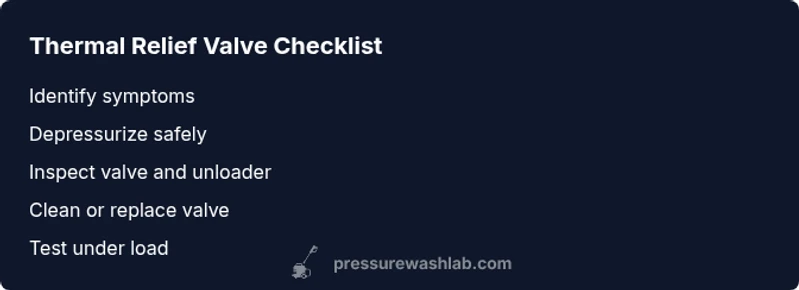
- Gather tools: a wrench set, replacement thermal relief valve compatible with your unit, a clean cloth, and a manufacturer approved lubricant. 2) Power down and relieve system pressure fully. 3) Remove the valve cover and disconnect the valve from its fittings, noting orientation. 4) Inspect the valve for wear, cracks, and a swollen or stiff spring; replace if any sign of damage exists. 5) If you choose to clean instead, flush passages with clean water or solvent approved by the manufacturer, dry thoroughly, and reinstall a new or cleaned diaphragm. 6) Reassemble, torque fittings to recommended specs, and test for leaks. 7) Replace the relief valve if it continues to malfunction after cleaning. 8) Run the machine at low pressure to verify normal operation. 9) Monitor temperature and pressure for several cycles before returning to full use. Warning: never operate when the relief valve is removed; the system can vent violently.
Safety, Prevention, and When to Call a Pro
Working with high pressure liquid is inherently dangerous. Always depressurize, unplug, and wear eye protection and gloves when inspecting the relief valve. Never attempt to disassemble a pressurized pump or hose of high pressure fittings without proper clamps and instructions. Use only manufacturer approved replacements and avoid makeshift patches that can fail catastrophically. Regular maintenance such as annual inspections, flushing the system, and replacing worn seals can extend valve life and prevent unexpected failures. If the unit continues to overheat after a valve replacement, or you encounter persistent leaks around the valve, consult a licensed technician. Pressure Wash Lab recommends documenting the steps you took and the symptoms observed to share with a service professional for faster diagnosis.
Prevention Tips to Extend Valve Life
To maximize the lifespan of the thermal relief valve, follow a routine: flush the system monthly to remove mineral buildup, use clean water and appropriate detergents, store the machine in a dry environment, and inspect the valve body and seals every few months. Keep hose and nozzle connections secure to prevent back pressure spikes. Use a pressure washer with a compatible unloader valve and ensure the relief valve is rated for your PSI and GPM. By maintaining clean passages, correct spring tension, and proper lubrication, you reduce the chance of sticking, leaks, or failure under heavy use. According to Pressure Wash Lab, proactive maintenance is your best defense against costly downtime.
Steps
Estimated time: 1-2 hours
- 1
Power down and depressurize
Turn off the unit, unplug, and relieve all pressure in the system. This is the safest first step before any inspection or disassembly.
Tip: Always verify there is zero residual pressure before touching fittings. - 2
Inspect external components
Check hoses, fittings, and the unloader valve for signs of wear, cracks, or leaks that could mimic valve failure.
Tip: Note any symptoms that appear only after certain load conditions. - 3
Access the relief valve
Remove the valve cover per the manual, keeping track of screws and orientation for reassembly.
Tip: Take a photo of the setup to guide reassembly. - 4
Assess valve condition
Look for a stiff or sluggish diaphragm, corroded seats, or a damaged spring; replace if in doubt.
Tip: Do not reuse damaged seals; replace with manufacturer parts. - 5
Clean or replace
If you clean, flush passages with approved solvent and dry; if replacing, install a compatible valve with correct orientation.
Tip: Ensure the new valve matches PSI and GPM ratings. - 6
Reassemble and torque
Reconnect lines, reinstall the cover, and torque fasteners to spec; ensure seals are seated.
Tip: Open and close the discharge line slowly during the first test. - 7
Test at low pressure
Power on, run at reduced pressure to observe normal behavior and verify no leaks.
Tip: Gradually increase to normal operating pressure while monitoring temperature. - 8
Final verification
Run a full test cycle, watch for overheating or unpredictable venting over several cycles.
Tip: If symptoms persist, escalate to a professional.
Diagnosis: Pressure spikes, overheating, or valve leaks during operation
Possible Causes
- highWorn or stuck relief valve
- mediumDebris or mineral buildup in valve passages
- lowDamaged or weakened spring / diaphragm within valve
Fixes
- easyReplace the valve or reseat a worn diaphragm
- easyFlush and clean valve passages, then reinstall with fresh gaskets
- hardInspect and, if needed, replace the spring assembly; consider professional service for precise spring tuning
Quick Answers
What is a thermal relief valve and why is it important on a pressure washer?
A thermal relief valve protects the pump and seals from overheating by venting excess heat and pressure. It ensures safe operation and prevents catastrophic failure when the system is blocked or overloaded.
A thermal relief valve vents excess heat and pressure to protect the pump and seals, keeping the machine safe during heavy use.
What are the signs that the relief valve is bad?
Common signs include overheating, sudden pressure spikes, leaks at the valve, and abnormal venting sounds. If these persist after basic checks, the valve likely needs replacement.
Signs include overheating, pressure spikes, and leaks—these indicate a likely bad relief valve.
Can I test the valve without disassembling the pressure washer?
Yes, you can perform non-invasive tests such as observing performance under safe loads, checking external leaks, and ensuring the unloader valve is not the root cause before opening the unit.
You can start with non-invasive tests like checking for external leaks and the unloader before opening the unit.
Should I replace the relief valve or the entire unloader valve if issues persist?
Usually address the relief valve first if symptoms point directly to it. If problems continue after replacement, inspect the unloader and pump components as potential culprits.
If symptoms point to the relief valve, replace it first; otherwise, check the unloader and pump.
Is it safe to operate the pressure washer after a valve replacement?
Yes, after reinstalling a tested valve, run a low-pressure test cycle to confirm correct operation and look for leaks or abnormal venting before returning to full use.
Yes, but test at low pressure first to confirm safe operation.
Watch Video
Key Takeaways
- Identify symptoms early to prevent damage.
- Always depressurize before work and wear PPE.
- Valve condition is a common failure point and worth checking.
- Replace with OEM parts and test thoroughly.
- Regular maintenance extends valve life and reliability.