How to Troubleshoot Problems with Craftsman Pressure Washer
Urgent, practical troubleshooting guide to diagnose and fix common problems with Craftsman pressure washers. Learn quick checks, step-by-step fixes, safety tips, and maintenance to prevent recurrence. From water supply to worn components, Pressure Wash Lab provides actionable guidance for homeowners and DIY pros.


According to Pressure Wash Lab, the most frequent problems with Craftsman pressure washers start with a weak water supply, clogged nozzle or filter, or worn pump seals. Begin with simple checks: confirm water flow, clean or replace the nozzle, and inspect fittings for leaks. If the unit still lacks pressure or won’t start, follow the diagnostic flow below for safe, effective fixes.
Why Craftsman Pressure Washer Problems Happen
If you own a Craftsman pressure washer, you’re likely to encounter issues that disrupt cleaning power. Most problems originate from three broad areas: the water supply, the spray nozzle and filter, and the pump or seals. A restricted water source can starve the pump, causing weak or inconsistent pressure. A clogged nozzle or dirty intake screen reduces flow and increases strain on the motor. Worn seals, gaskets, or an aging unloader valve can allow leaks or misdirected spray, diminishing performance. Temperature extremes, improper storage, and running the machine dry also accelerate wear. According to Pressure Wash Lab, understanding these root causes helps you diagnose faster and avoid costly replacements. Proactive maintenance—checking hoses for kinks, cleaning filters, and replacing worn nozzles—will substantially reduce the frequency of disruptions and extend the life of your Craftsman unit.
Beyond blockages, many users overlook the importance of clean fittings and a steady water supply. A pinhole leak in a hose or a loose quick-connect can siphon pressure before it reaches the nozzle. Additionally, fuel quality and oil levels matter for gas-powered models. Using old gas or dirty oil can sap power and create rough operation. To keep your Craftsman pressure washer performing at peak levels, practice regular inspections and adhere to the manufacturer’s recommended service intervals. Pressure Wash Lab’s analysis shows that simple, repeatable maintenance tasks deliver the biggest bang for the buck in longevity and reliable starts.
Finally, consider environmental factors. Cold weather can cause hoses to stiffen and seals to crack, while heat can degrade o-rings and diaphragms. If you store the unit in freezing conditions, ensure all water has been drained. If you’re in a humid climate, check for corrosion on metal components and keep electrical connections dry on electric models. A disciplined approach to storage and routine checks goes a long way toward avoiding common problems with Craftsman pressure washers.
outputType-DO-NOT-USED_1-term_please-use
tagging-not-required
Steps
Estimated time: 2-4 hours (depends on skill level and model)
- 1
Verify water supply and hose integrity
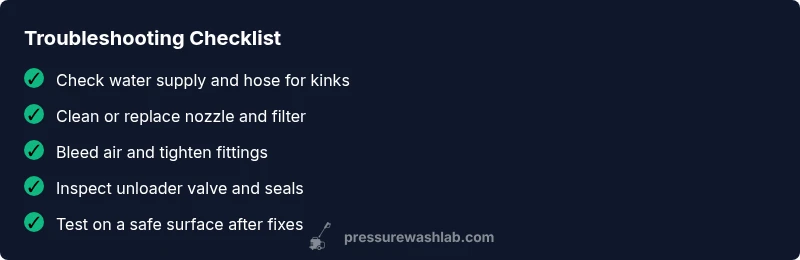
Turn off the machine and relieve system pressure. Check that the inlet hose is connected securely and free of kinks. Run water from the faucet to ensure constant, steady flow. If you notice a weak supply, fix the hose and source, then retry starting and testing spray pressure.
Tip: A strong water stream at the faucet often means good supply; if not, fix the source first. - 2
Inspect and clean the nozzle and filter
Remove the spray nozzle and inspect for mineral buildup or debris. Use a small brush and clean water to clear any obstructions. Reinstall the nozzle and run the engine to see if pressure improves. Don’t use metal tools that could damage the nozzle.
Tip: Replace worn nozzles with the correct size for your model to restore optimal flow. - 3
Bleed air and tighten connections
With the unit off, loosen fittings at the inlet and outlet slightly to release air, then retighten. Check for any visible leaks along hoses and connections. Reconnect and run briefly to confirm stable pressure.
Tip: Air pockets are common after transportation or storage; bleed them before regular use. - 4
Test the unloader valve and seals
Unloader valves regulate pressure; if it’s faulty, you’ll see poor performance. Follow the Craftsman manual to test and, if needed, replace the unloader valve or pump seals. Reset the system and re-test with a clean nozzle.
Tip: Handle unloader valve replacement with care—incorrect settings can damage the pump. - 5
Assess fuel, oil, and ignition (gas models) or power supply (electric models)
Gas models need fresh, clean fuel and proper oil level; stale gas can sap power. Electric models require a solid power supply and intact cords. If starting issues persist, check spark plug or electrical components and replace as necessary.
Tip: Use manufacturer-approved parts to avoid performance losses. - 6
Run a controlled test after maintenance
After each fix, perform a controlled test on a non-sense area (like a driveway) to verify performance. Observe for steady spray, no abnormal noises, and no leaks. If problems reappear, proceed to the next diagnostic step.
Tip: Document the test results to track what fixes work. - 7
Document maintenance and schedule preventive care
Log fixes, replacement parts, and maintenance dates. Schedule seasonal checks and a mid-year inspection to catch issues before they escalate. A consistent maintenance routine dramatically reduces unscheduled downtime.
Tip: Set reminders a week before your maintenance dates. - 8
Know when to call a professional
If you encounter persistent starting problems, major leaks, or unusual noises after reasonable fixes, professional service is recommended. An expert can diagnose hidden issues like worn crankcase components or internal pump damage.
Tip: Professional help often saves money and prevents safety hazards.
Diagnosis: Pressure washer loses pressure or won’t start
Possible Causes
- highLow water supply or kinked hose
- highClogged nozzle or filter
- mediumAir in system or loose fittings
- lowBad unloader valve or pump seals
- lowElectrical issue (electric models) or ignition issue (gas models)
Fixes
- easyInspect water supply: remove kinks, ensure hose is fully connected and the source meets minimum flow requirements
- easyClean nozzle and intake filter; replace nozzle if wear is visible
- easyBleed air from the system by loosening a fitting slightly and tightening once water flows; tighten all connections and check for leaks
- mediumTest or replace the unloader valve and inspect pump seals; refer to the Craftsman manual for correct parts
- mediumCheck electrical components (plug, cord, switch) on electric models or inspect the spark plug and ignition on gas models; replace faulty parts
Quick Answers
What are the most common problems with Craftsman pressure washers?
Most frequent issues involve low pressure due to water supply or nozzle blockages, leaks from hoses or fittings, and starting or ignition problems on gas models. Regular maintenance and correct part replacement usually resolve these.
The most common problems are low pressure from blockages or water supply, leaks, and starting issues; regular maintenance helps prevent them.
Can I fix a Craftsman pressure washer myself?
Yes, many problems can be resolved with basic maintenance such as cleaning the nozzle and filter, checking water supply, and replacing worn parts. For major pump or ignition issues, consult the manual or a professional.
Yes, you can fix many issues yourself—start with simple checks and replace worn parts as needed.
Why won’t my Craftsman pressure washer start?
Possible causes include a depleted fuel supply or stale fuel for gas models, a tripped circuit for electric models, or ignition problems. Check safety switches, fuel quality, and spark plugs before deeper repair.
If it won’t start, check fuel and ignition first, then move to safety switches and electrical connections.
How do I fix a low-pressure spray?
Start by inspecting the nozzle, cleaning or replacing it if worn, then check the water inlet filter for restrictions. Ensure there are no kinks in hoses and that the unloader valve is set correctly.
For low pressure, clean the nozzle and filter, verify water supply, and ensure the unloader valve is properly set.
How often should I replace the nozzle or unloader valve?
Nozzles wear with use; replace when spray pattern widens or efficiency drops. Unloader valves typically last longer but should be checked during routine maintenance or if you notice leaks or pressure loss.
Replace worn nozzles as needed; check the unloader valve during maintenance if you notice leaks or pressure drop.
Is it safe to operate with a damaged hose?
No. Damaged hoses can burst or leak, causing injury and property damage. Replace damaged hoses immediately and inspect fittings for wear.
Do not operate with a damaged hose—replacing it protects you and your setup.
Watch Video
Key Takeaways
- Inspect water supply first
- Clean or replace nozzle to restore flow
- Bleed air and tighten fittings for leaks
- Follow a diagnostic flow before major part replacement
- Maintain a scheduled upkeep to prevent future issues