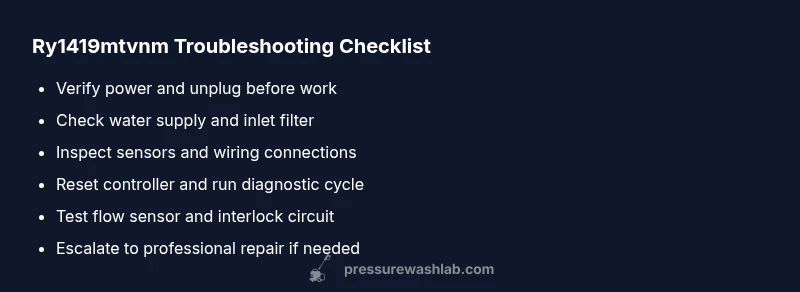
ry1419mtvnm Error: Urgent Pressure Washer Troubleshooting Guide
Urgent guide to ry1419mtvnm, a pressure washer error code. Learn meaning, diagnostic flow, step-by-step fixes, safety tips, and prevention. Includes expert insights from Pressure Wash Lab and a practical checklist.


ry1419mtvnm is a fault indicator code signaling a safety or system anomaly inside a pressure washer. The most common fix is a quick reset paired with checks of power, water supply, and sensor connections. If the code persists, inspect wiring, test the flow sensor, and verify the control board integrity. If unresolved, seek professional service to avoid equipment damage.
What ry1419mtvnm Means in Plain Language
ry1419mtvnm is a code generated by the pressure washer's controller to flag an unexpected condition affecting safety or operation. In plain terms, it means one of the essential subsystems—power, water flow, sensor input, or the control circuit—has detected an out-of-range signal. The exact cause can vary by model, but the remedy almost always begins with a reset and a quick physical check of the main wiring harness. Pressure Wash Lab has observed that addressing this code promptly reduces downtime and the risk of component damage.
Symptoms and Early Clues You Might Notice with ry1419mtvnm
When ry1419mtvnm appears, you may see the unit fail to start, shut down mid-cycle, or display the error intermittently. You might notice erratic motor behavior, a drop in water pressure, or a buzzing or clicking from the control panel. Because the code signals an abnormal input to safety interlocks, it’s common for multiple symptoms to appear together, especially if there is a loose connection or a kinked hose. Time spent documenting these patterns helps when you escalate to service.
Diagnostic Flow for ry1419mtvnm: Symptoms → Causes → Solutions
A systematic approach keeps you from chasing endless faults. Start with the obvious: Is the power supply stable and the outlet clean? Next, verify water inlet flow and cleanliness of the filter. If both pass basic checks, test sensors and wiring for corrosion or damage. If the code persists after resets and checks, move to component-level testing. This flow focuses on safety interlocks, flow switches, and controller integrity tied to ry1419mtvnm.
Most Common Fix: Quick Reset and Sensor Check for ry1419mtvnm
The quickest path to a cleared ry1419mtvnm is a controlled reset and inspection. Unplug the machine for 60 seconds, then reconnect and power up without initiating a spray cycle. If the code reappears, inspect the flow switch, water sensor, and main wiring harness for loose connectors or corrosion. A high-probability fix often involves re-seating connectors and cleaning the filter, especially if you’ve recently refilled water or drained the system. Avoid running the unit with a damaged connector, which can worsen ry1419mtvnm.
Other Possible Causes and How to Test Them
Beyond sensor and wiring issues, ry1419mtvnm can stem from a failing control board, a clogged water supply, or a short in the safety interlock circuit. To test other causes, physically inspect the inlet hose for kinks, test continuity on critical wires with care (only if you have training), and temporarily bypass nonessential circuits only if your manual permits. If you’re unsure, running a professional diagnostic is safer and often more cost-effective in the long run.
Safety, Maintenance, and Prevention
Always prioritize safety when dealing with ry1419mtvnm. Wear eye protection, disconnect power before any inspection, and avoid touching exposed wires while the unit is energized. Regular maintenance—cleaning filters, inspecting hoses, and checking electrical connectors—reduces the likelihood of ry1419mtvnm recurring. Keep a log of error codes and fixes to help with future troubleshooting and to assist a technician if needed.
Steps
Estimated time: 60-90 minutes
- 1
Power down and unplug
Shut off the power and disconnect the unit from the outlet. If accessible, remove the battery or disconnect the main power cord. This reduces shock risk and lets capacitors discharge before you touch any components.
Tip: Always confirm the unit is unplugged at the wall and wait 60 seconds before touching any internal parts. - 2
Check water supply and inlet
Inspect the water source, hose connections, and inlet filter for kinks or blockages. Ensure water pressure is sufficient and that there are no leaks. A restricted water inlet is a common trigger for ry1419mtvnm.
Tip: Run water through the hose before reconnecting to purge air and debris. - 3
Inspect wiring and connectors
Carefully inspect all visible connectors around the control board, flow switch, and sensors for looseness or corrosion. Reseat any suspect connections firmly. Look for frayed wires and signs of moisture intrusion.
Tip: Use a flashlight and magnifier if needed; do not yank on wires to avoid further damage. - 4
Reset the controller
With connectors re-seated, reconnect power and perform a controlled reset. Do not start the spray cycle; observe if ry1419mtvnm reappears. A clean reset clears transient faults that can trigger safety codes.
Tip: If the unit lacks a reset button, unplug for 60 seconds and reconnect. - 5
Test with a diagnostic cycle
Run a low-risk diagnostic or test cycle as described in your manual. Monitor for any reoccurrence of ry1419mtvnm and note the exact sequence when it appears. This helps isolate whether the fault is sensor-related or related to water flow.
Tip: Keep hands away from moving parts during testing and use protective eyewear. - 6
Evaluate sensor and flow components
If ry1419mtvnm persists, test the flow sensor and safety interlock wiring for continuity and resistance matching the manual’s specifications. Replace any defective sensor modules if you have appropriate training and parts.
Tip: Only perform sensor testing if you are confident using a multimeter and following the manual. - 7
Decide on service path
If the code remains after all checks, document the symptoms and steps taken, then contact a qualified technician. A professional assessment can reveal subtle board faults or firmware issues that aren’t user-serviceable. Budget for professional repair and potential parts replacement.
Tip: Capture photos of wiring and error sequences to speed up diagnostics with a technician.
Diagnosis: Error ry1419mtvnm appears on the control panel; the pressure washer won't start or shuts down during operation
Possible Causes
- highLoose or corroded wiring connections to sensors or the control board
- mediumClogged water inlet filter or restricted water supply
- mediumFaulty flow sensor or interlock circuit
- lowControl board fault or firmware glitch
Fixes
- easyReconnect and reseat all sensor and harness connectors; clean corrosion if present
- easyInspect water inlet, replace clogged filter, and confirm adequate water supply
- mediumTest or replace the flow sensor and verify interlock wiring
- hardUpdate firmware or replace the control board if the error persists after checks
Quick Answers
What does ry1419mtvnm mean on a pressure washer?
ry1419mtvnm indicates a fault detected by the safety interlock or a sensor input. It signals an abnormal condition within power, water flow, or the control circuitry. Confirm by a systematic diagnostic flow before replacing parts.
ry1419mtvnm signals a safety or sensor fault. Start with a reset and check wiring, water flow, and sensors, then decide if expert help is needed.
Is ry1419mtvnm safe to ignore?
No. Ignoring ry1419mtvnm can lead to equipment damage or personal injury. Treat it as an urgent fault requiring inspection and a documented fix path.
It's not safe to ignore ry1419mtvnm; treat it as an urgent fault and troubleshoot or call a technician.
What should I try first when ry1419mtvnm appears?
First, unplug the unit, inspect the water supply and inlet filter, then perform a controlled reset. If the code returns, check sensor wiring and connectors before testing the flow sensor.
Start with a reset and a quick check of water supply and wiring.
Can I replace sensors myself?
Only if you have training with electrical components and the manual's guidance. In many cases, sensor replacement requires specific calibration and safety checks, so consider professional service for ry1419mtvnm.
Sensor replacement can be risky; consult the manual or a pro for ry1419mtvnm.
Could moisture cause ry1419mtvnm?
Moisture exposure can affect wiring and sensors, triggering ry1419mtvnm. Ensure dry, clean connections and inspect for moisture intrusion after exposure to rain or humid environments.
Yes, moisture can trigger ry1419mtvnm; check for water intrusion and dry connections.
What are typical costs to fix ry1419mtvnm?
Costs vary by cause; plan for a range from a basic reset and part cleaning ($50–$150) to sensor or control-board replacement ($200–$600) plus labor if you hire a technician.
Expect a wide range, from tens to several hundreds, depending on the fault and parts needed.
Key Takeaways
- Start with a safe reset and visual inspection.
- Check water supply and filters for blockages.
- Verify sensor wiring and control-board connections.
- Document codes and steps for service.
- Escalate to a professional if the code returns.