What Are the Common Problems with Greenworks Pressure Washers? Troubleshooting Guide
Urgent troubleshooting guide for homeowners: what are the common problems with greenworks pressure washers and how to fix them fast, from clogged nozzles to leaks, with safe, step-by-step checks.


Likeliest culprit is a clogged nozzle or dirty inlet filter causing weak spray. Quick fix: 1) unplug and relieve pressure; 2) remove the nozzle and clean with a brush and warm water; 3) inspect the inlet filter, rinse or replace if clogged. If spray remains weak, check for hose kinks and test on higher pressure settings.
Understanding the common problems with greenworks pressure washers
Homeowners frequently confront performance hiccups with Greenworks pressure washers. What are the common problems with greenworks pressure washers? The answer often starts with a clogged nozzle or a dirty water inlet filter that restricts flow. Before you suspect a failed motor, perform a quick intake and liquid path check. A clean water path produces a strong spray, so begin by inspecting nozzle tips, wand connections, inlet screen, and the low-pressure relief valve. If you notice a weak spray or sudden pressure drop, carry out these checks in order to avoid unnecessary repairs and downtime.
Mechanical causes that drain performance and how to fix them
A blocked spray nozzle or debris-laden filter is the fastest way to lose pressure. Start by removing the nozzle and flushing it with warm water and a small brush to remove mineral buildup. Then inspect the water inlet filter for debris and rinse it under running water. If you still observe diminished output, inspect the spray wand for blockages and verify the spray tip is the correct size for your model. Cleanliness and correct tip size are essential for consistent power.
Next, inspect hoses and fittings for kinks, cracks, or loose clamps. Air leaks reduce pressure and can mimic motor problems. Tighten or replace damaged components and ensure the pump housing is sealed correctly.
Electrical and power-path checks when the unit won’t start or trips a breaker
If the unit refuses to start or repeatedly trips a breaker, begin with the basics: verify the outlet is live, inspect the power cord for damage, and ensure any safety switch is fully engaged. A GFCI outlet or circuit breaker can trip if there’s a short or overload. Do not run extension cords that are undersized for your unit. If the power supply checks out, listen for abnormal motor sounds or overheating, which may indicate internal wear or a failing thermal cutout.
How to distinguish the pump from the water supply problems
Sometimes the issue isn’t the pump at all but the water supply. A blocked inlet screen, a shut-off valve left partially closed, or a long, narrow supply hose can starve the pump. Start with the water source: unscrew and inspect the inlet screen, open the valve fully, and run a short test with minimal hose length. Confirm the water is clean and free of air before increasing pressure.
Safety, maintenance, and proactive prevention
Proactive maintenance reduces the frequency of these problems. Regularly clean or replace nozzle tips, clean the inlet filter, and inspect hoses for wear. Use the recommended detergent and avoid forcing the unit to work at higher pressures than the label allows. Always turn off and unplug the unit before any maintenance, and relieve pressure after each use.
Steps
Estimated time: 30-60 minutes
- 1
Power down and relieve pressure
Unplug the unit, disconnect from power, and relieve all pressure by opening the spray gun until the gauge reads zero. This creates a safe baseline before you touch any components.
Tip: Always work with the unit unplugged before touching electrical parts. - 2
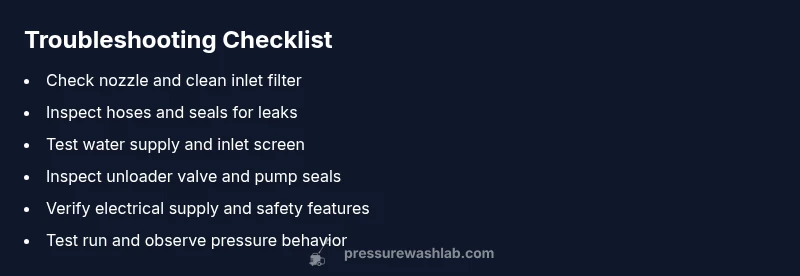
Inspect nozzle and tip
Remove the nozzle and spray tip; clean using warm water and a soft brush. Check for mineral buildup and replace if worn.
Tip: Keep a spare nozzle tip handy for quick swaps. - 3
Check inlet filter and water supply
Locate and clean the inlet filter; rinse under running water and re-seat it. Confirm the water supply valve is fully open and the hose isn’t kinked.
Tip: A weak inlet flow is often the root cause of low pressure. - 4
Inspect hoses and fittings
Examine hoses for cracks, bulges, or loose clamps. Tighten clamps or replace damaged sections to restore seal integrity.
Tip: Do not reuse damaged hoses—air leaks ruin pressure. - 5
Evaluate the unloader valve and pump seals
If pressure remains inconsistent after the above steps, test the unloader valve and consider pump seal wear. Replacement may be necessary for persistent issues.
Tip: Unloader valve settings should match the manufacturer’s guidance. - 6
Test run and observe
Reconnect power, run the unit with minimal hose length, and observe pressure behavior. If issues persist, prepare for professional service.
Tip: Document symptoms to speed up diagnosis if you call for help.
Diagnosis: Pressure washer loses pressure or won’t start, and spray is weak or intermittent.
Possible Causes
- highClogged nozzle or dirty inlet filter
- mediumAir leaks in hoses or fittings
- mediumWorn pump seals or failing unloader valve
- lowElectrical issues (tripped breaker, blown fuse)
- lowLow water supply or kinked hose
Fixes
- easyClean the nozzle and inlet filter; remove debris; reassemble
- easyInspect hoses for leaks and tighten connections; replace o-rings if needed
- hardTest and, if needed, replace unloader valve or pump seals
- easyCheck electrical outlet and circuit breaker; reset or replace as needed
- easyEnsure water supply is adequate and hoses are free of obstructions
Quick Answers
Why won’t my Greenworks pressure washer start?
Most often the issue is power supply, a safety latch, or a tripped breaker. Check the outlet, try a different cord, and ensure the unit's safety switch is engaged. If the problem persists, inspect for interior faults.
Check power, try another outlet, and confirm safety switches are engaged.
Why is the pressure weak or inconsistent?
A clogged nozzle or dirty inlet filter is the usual culprit. Clean both, verify water supply, and check hoses for kinks. If the problem continues, inspect the unloader valve.
Clean the nozzle and inlet filter, and check for kinks.
Is it safe to run with a damaged hose?
No. A damaged hose can leak, cause injury, or short the circuit in electric models. Replace the hose before testing again.
No—replace the damaged hose before proceeding.
How often should I perform maintenance?
Regular maintenance includes cleaning the nozzle, checking filters, inspecting hoses, and testing safety features. Do a quick check before each season and more thorough service quarterly.
Do quick checks before use, and deeper maintenance periodically.
What parts typically wear on Greenworks washers?
Nozzle tips, o-rings, seals, and the unloader valve are common wear items. Inspect and replace as needed to prevent leaks and pressure loss.
Nozzle tips and seals wear over time; replace as needed.
When should I call a professional?
If you suspect internal pump wear, persistent leaks, or electrical faults after basic troubleshooting, seek professional service to avoid further damage.
Call a pro if it shows pump wear or electrical faults.
Watch Video
Key Takeaways
- Inspect nozzle and filter first to restore pressure
- Check water supply and hoses for leaks
- Follow a safety-first maintenance routine
- Use diagnostic flow to isolate issues quickly