What Can Cause a Pressure Washer to Lose Pressure: Troubleshooting Guide
Urgent troubleshooting guide explaining what can cause a pressure washer to lose pressure and how to quickly diagnose, fix common issues, and prevent future loss of power.


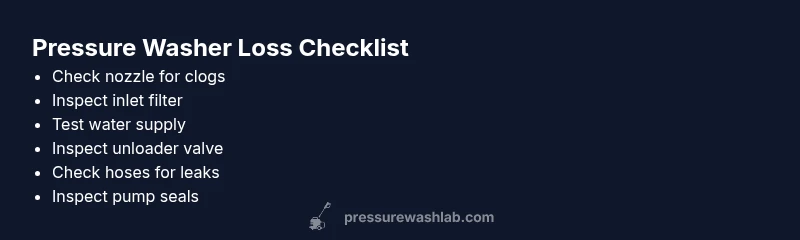
Most pressure washers lose pressure due to a clogged nozzle or water inlet, a dirty filter, a worn unloader valve, or insufficient water flow. Start with the simplest checks: inspect the nozzle, clean or replace the filter, verify the water supply, and test for leaks. If the pressure remains low, progress through the diagnostic flow before calling a pro.
what can cause a pressure washer to lose pressure
what can cause a pressure washer to lose pressure is often a combination of simple mechanical issues and fluid dynamics. In troubleshooting, the most frequent culprits are a clogged nozzle or spray tip, a dirty inlet filter, a kinked or blocked garden hose, or a water supply that cannot meet the pump’s demand. Pressure Wash Lab analysis shows that many loss-of-pressure events originate from simple, user-serviceable issues rather than a worn pump. Start by verifying water flow from the faucet: you should be able to see a steady stream; if you suspect low flow, check the source and pressure regulator (if equipped). Then inspect the nozzle—remove and inspect the spray tip for obstructions; clean or replace it if the orifice is worn or clogged. If the tip looks clear, move to the inlet screen behind the water inlet and ensure it is free of lint and rust. These checks are quick, safe, and often restore pressure without tools.
Quick checks you can do before pulling apart the machine
Before dismantling anything, perform a few quick checks that often resolve the issue. First, make sure the unit is on stable, level ground and connected to a clean water supply. Check that the spray wand is fully engaged and the trigger is functioning. Inspect the high-pressure hose for leaks or bulges; a small leak can dramatically reduce performance. Next, test with a different water source if possible to rule out weak water supply. If you still see reduced pressure, move to the next steps in the diagnostic flow. These checks are low-risk, quick to perform, and frequently restore your pressure without tools.
Inspect nozzle and spray pattern for signs of wear
A worn or obstructed nozzle can dramatically reduce pressure and alter the spray pattern. Remove the spray tip and inspect the orifice for nicks or mineral buildup. Clean with a small brush or pick; if the tip is worn beyond its recommended size, replace it. A clear nozzle usually yields a consistent, tight fan pattern and proper PSI. Also verify that you are using the correct nozzle size for the task, as the wrong tip can reduce performance and increase wear on the pump.
Inspect water supply and inlet filtration
Low water flow is a common cause of pressure loss. Check the water source for steady pressure and remove any screen or filter debris behind the inlet coupling. Clean or replace clogged filters, and ensure the inlet screen is fully seated. Inspect the entire water line for kinks, leaking connections, or a collapsed hose. If the water source runs weakly at the faucet, fix or upgrade the supply before blaming the pump. Adequate water volume is essential to maintain pressure and prevent cavitation.
Check unloader valve and wand connections
The unloader valve diverts water back to the inlet when the trigger is released. If it sticks or leaks, you’ll lose pressure during operation. Inspect the unloader valve for mineral buildup or misadjustment; clean it and verify the setting per the manual. Also check all wand connections and quick-connect fittings for cracks or looseness. A loose connection can create air leaks and a perceived loss of pressure, especially under load.
Look for pump wear and sealing leaks
If the nozzle, water supply, and unloader valve are all clean and functional, the issue may lie with the pump seals or internal components. Look for oil residue or wet spots around the pump head, seals, and screws; a leaking seal reduces effective compression and pressure. If you notice a significant drop in pressure paired with strange noises, it’s time to assess internal wear and consider professional service or a component replacement. Regular pump maintenance extends life and preserves pressure.
Maintenance and prevention to keep pressure steady
Establish a routine maintenance schedule to minimize pressure loss. Regularly inspect hoses for wear, clean filters, and flush the system after heavy use. Use the correct pressure setting and avoid running the unit dry. Store with hoses off the ground to prevent kinks and damage. Safety reminder: always disconnect power and water before maintenance, and wear eye protection when testing spray patterns.
When to call a professional
If you’ve walked through the diagnostic flow, cleaned the nozzle, checked the water supply, and inspected the unloader valve and seals, but the problem persists, it’s time to call a professional. A trained technician can diagnose internal pump wear or valve issues that aren’t user-serviceable and prevent further damage. Record the symptoms, maintenance steps taken, and any noises or leaks to help the technician quickly pinpoint the issue.
Steps
Estimated time: 60-90 minutes
- 1
Power off and safety check
Turn off the pressure washer and unplug. Shut off the water supply and relieve system pressure by triggering the wand away from your body. This prevents accidental spray and makes inspection safer.
Tip: Tip: wear eye protection and gloves before handling any components. - 2
Inspect nozzle and tip
Remove the spray tip and inspect the orifice for debris or wear. Clean with a small brush or replace the tip if it’s worn. Reassemble and test spray pattern at low pressure before increasing.
Tip: Tip: use the manufacturer’s recommended nozzle for your task. - 3
Check water supply and hose
Detach and inspect the water supply hose for kinks, leaks, or collapse. Verify that the faucet provides steady water and that there is no reduced flow upstream. Reconnect and test.
Tip: Tip: never run a pump without water; it can cause damage. - 4
Inspect inlet filtration
Remove and clean the inlet filter or screen behind the water inlet. If damaged, replace it. A clean filter ensures optimal water flow and pressure.
Tip: Tip: check for mineral buildup and flush the line if needed. - 5
Test unloader valve and connections
Inspect the unloader valve for cleanliness and proper adjustment according to the manual. Tighten or replace worn fittings and check wand connections for leaks.
Tip: Tip: an incorrectly set unloader valve can cause constant under-pressure. - 6
Run a controlled test
With all checks complete, run the unit at a safe distance from any people or objects. Compare the actual PSI to the normal range for your model and note if performance improves.
Tip: Tip: record the behavior for future reference.
Diagnosis: Pressure suddenly drops during operation or remains low after startup
Possible Causes
- highClogged nozzle or spray tip
- highDirty or blocked inlet filter
- highLow water supply or kinked hose
- mediumWorn/unloader valve or worn piston seals
- lowAir leaks in hoses or connections
Fixes
- easyClear nozzle; use the correct size tip; soak and clean spray nozzle
- easyInspect and clean/replace inlet water filter; ensure adequate water supply
- easyUncoil hoses, remove kinks, and ensure water flow is steady
- mediumIf unloader valve or seals are worn, replace parts per manual or consult a pro
- mediumCheck for air leaks, tighten connections, and replace damaged hoses
Quick Answers
What are the most common causes of pressure loss in a pressure washer?
The most common causes are a clogged nozzle, dirty inlet filter, low water supply, and a faulty unloader valve. Start with nozzle cleaning and water flow checks before moving to internal pump inspection.
Common causes are a clogged nozzle, dirty inlet filter, and low water supply. Start with cleaning the nozzle and checking water flow.
Can a dirty water filter really cause low pressure?
Yes. A clogged or dirty inlet filter restricts water flow, which reduces pressure at the nozzle. Cleaning or replacing the filter is a quick, effective fix.
Yes. A dirty filter can limit water flow and reduce pressure; clean or replace it.
Is it safe to operate with a leaking hose?
Operating with a leaking hose wastes water and can lower pressure. Inspect hoses for cracks and replace damaged sections before use.
Leaking hoses waste water and can lower pressure. Inspect and replace damaged hoses.
When should I replace the unloader valve?
If the unloader valve is stuck, leaking, or misadjusted after trying recommended adjustments, replace it or consult a professional.
If the unloader valve is stuck or leaking after adjustments, replace it or seek a pro.
What’s a quick test to confirm pressure loss isn’t the motor?
A quick test is to run the machine with no load and compare the spray pattern to the normal one. If flow remains weak, the issue is likely in the water supply, nozzle, or unloader valve rather than the motor.
Test under no load to compare spray; if still weak, investigate water supply or nozzle first.
Do I need a professional for pump wear?
Yes, significant pump wear or internal seal failure typically requires professional diagnosis and parts replacement to prevent further damage.
If the pump shows wear or internal leaks, a pro should handle the service.
Watch Video
Key Takeaways
- Check nozzle and water supply first.
- Clean or replace filters to restore flow.
- Inspect the unloader valve for proper function.
- Tighten leaks and replace worn hoses.
- If unresolved, call a professional.