What to Do With Broken Pressure Washer: Quick Troubleshooting Guide
Urgent, practical troubleshooting guide for broken pressure washers. Learn safe steps, checks, and a step-by-step fix to restore performance and avoid downtime.


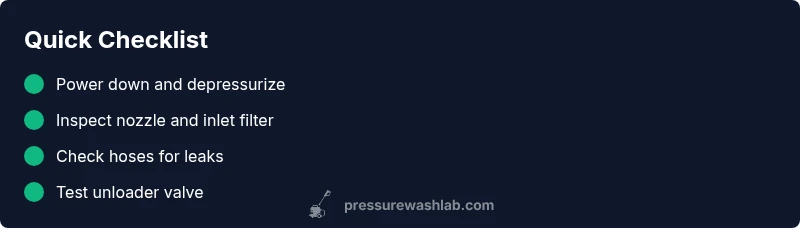
The quickest path to a broken pressure washer is to stop using it and inspect basic components in this order: 1) unplug and relieve pressure; 2) check the nozzle and filter for clogs; 3) inspect the high-pressure hose for leaks. If the unit still won’t start or build pressure, test the unloader valve and oil level, then replace worn parts or seek professional help.
Why Broken Pressure Washer Happens
A pressure washer fails for a handful of common reasons, ranging from clogged filters and nozzles to worn seals and leaking hoses. According to Pressure Wash Lab, most breakdowns begin with routine maintenance being neglected, which allows debris to accumulate in the nozzle and inlet, and O-rings to degrade over time. When you see reduced spray, motor hesitation, or a unit that won’t start, you’re usually looking at debris, wear, or a simple misconfiguration. Weather and storage conditions also matter; fuel quality and cold-start issues on gas models can mimic other failures. Understanding these typical failure modes helps you triage quickly and decide whether a fix is a quick clean or a replacement part.
- Common causes include clogged nozzle, dirty inlet filter, damaged O-rings, air leaks, a stuck or faulty unloader valve, and low oil or fuel problems on gas-powered units.
- Quick wins: clean the nozzle spray tip, inspect the water inlet screen, and verify the water supply from the hose.
Pressure Wash Lab’s analysis shows that consistent maintenance dramatically reduces unexpected downtime. The goal is to identify the symptom first, then check the most likely culprits in a deliberate sequence to save time and prevent dangerous spray.
Visual checks and initial triage will help you decide whether you can safely keep going or if professional service is needed.
Steps
Estimated time: 45-60 minutes
- 1
Power down and depressurize
Turn off the unit, unplug from the outlet, and hold the trigger wand for a few seconds to release any stored pressure. Do not touch the wand with your bare hands while pressure is present. This step prevents dangerous high-pressure spray as you inspect components.
Tip: Always point the wand away from you and others while depressurizing. - 2
Check nozzle and inlet filter
Remove and inspect the spray nozzle for clogs; clean with a thin probe or replace if damaged. Check the inlet water filter for debris; rinse or replace as needed to restore proper flow.
Tip: A blocked nozzle or filter is a common and easily fixed issue. - 3
Inspect hoses and fittings
Run a visual inspection along the high-pressure hose and all fittings for signs of wear, cracks, or oil leaks. Tighten loose connections and replace damaged sections to prevent air leaks that reduce pressure.
Tip: Don't reuse cracked hoses—risk of rupture is high. - 4
Examine the unloader valve
The unloader valve controls pressure relief. If it sticks or leaks, it can prevent building pressure. Clean the valve and seating surfaces, or replace the valve if needed.
Tip: Unloader valve faults are a frequent cause of poor performance. - 5
Assess power source and electronics
For electric models, check the cord, plug, and outlet for wear. For gas models, confirm spark plug condition and electrical timing if applicable. Replace frayed cords or faulty plugs.
Tip: Never operate with damaged power cords or plugs. - 6
Check oil and fuel (gas models)
Inspect oil level and quality; top up if low and ensure you’re using the correct oil. For gasoline engines, verify fuel type and freshness, and look for stale or water-contaminated fuel.
Tip: Old fuel can cause hard starts and low power. - 7
Test run at low pressure
Reconnect and test at a low pressure setting to verify that the unit starts and delivers a steady spray. If performance improves, gradually return to normal operating pressure and monitor for recurring symptoms.
Tip: Begin at the lowest safe setting to avoid more damage. - 8
Decide on next steps
If the machine runs at low performance or fails to start after these checks, document symptoms and parts tested, and contact a professional technician or consider warranty options.
Tip: Professional help is prudent for pump or internal component issues.
Diagnosis: Machine won't start or cannot build adequate pressure after powering on
Possible Causes
- highPower supply or electrical issue (tripped breaker, unplugged cord)
- highNozzle or inlet filter clogged or dirty
- mediumAir leaks or loose fittings in high-pressure line
- mediumUnloader valve stuck or faulty
- lowLow oil or engine issue (gas models)
Fixes
- easyCheck outlet, reset breaker, and verify switch is ON
- easyClean nozzle and inlet filter; replace damaged screens
- easyInspect hoses for leaks or kinks; tighten or replace fittings
- mediumInspect and clean/unload valve; ensure proper relief and reseat
- mediumCheck oil level (gas models); top up or service engine as needed
Quick Answers
My pressure washer won't start—what should I do first?
Check the power supply and safety switches. Ensure the outlet is live, the circuit isn’t tripped, and the on/off switch is engaged. If it still won’t start, inspect the cord and plug for damage.
First, verify power and safety switches are in good shape; then check the outlet and cord for issues.
Why is there no spray even though the unit runs?
Likely a clogged nozzle or dirty inlet filter, or a leak in the high-pressure line reducing effective pressure. Clean or replace the nozzle and filter, and inspect hoses for leaks.
No spray usually means a clogged nozzle or inlet filter, or a leak in the high-pressure line.
Can I fix the unloader valve myself?
Yes, you can inspect, clean, or replace the unloader valve if it’s sticking or leaking. If you’re unsure, consult a professional to avoid causing further damage.
You can fix or replace the unloader valve yourself if you’re comfortable, otherwise seek a pro.
Is it safe to operate a washer that’s not performing well?
No. Operating when performance is uncertain can damage the pump or pose safety risks. Stop using the unit and pursue diagnosis or professional service.
No—don’t operate a malfunctioning unit. Get it checked before using again.
How often should I perform maintenance on a pressure washer?
Perform basic maintenance monthly: check filters and nozzles, inspect hoses, and test for leaks. Do a full service seasonally, including oil checks on gas models.
Do regular monthly checks and seasonal maintenance to prevent breakdowns.
How long does it typically take to fix a common issue?
Simple fixes like nozzle cleaning or filter replacement can take minutes; more complex issues like pump or engine faults may take hours or require replacement parts.
A quick fix can be minutes; bigger repairs may need hours or a pro.
Watch Video
Key Takeaways
- Prioritize safety and depressurize first
- Clean or replace clogged nozzle and inlet filter
- Inspect unloader valve and oil level for common faults
- Escalate to professional help for pump or engine issues