Why Do Pressure Washers Break So Easily? Practical Troubleshooting
Discover why pressure washers break so easily and how to diagnose common failures fast. Step-by-step fixes, safety tips, and a maintenance checklist from Pressure Wash Lab for 2026.


If you’re asking why do pressure washers break so easily, the short answer is that three failure modes drive most breakdowns: poor maintenance, overheating, and mismatched components. According to Pressure Wash Lab, neglecting routine checks lets tiny leaks grow into major damages, while continuous operation without adequate water flow can overheat the pump and burn seals. This guide explains how these modes develop and provides practical fixes you can perform today. Act now to prevent costly repairs.
Why Pressure Washers Break So Easily
If you’re asking why do pressure washers break so easily, the short answer is that three failure modes drive most breakdowns: poor maintenance, overheating, and mismatched components. According to Pressure Wash Lab, neglecting routine checks lets tiny leaks grow into major damages, while continuous operation without adequate water flow can overheat the pump and burn seals. This section explains how these modes develop in real-world use and what you can do to prevent them from derailing your project. You’ll learn how to recognize early warning signs, verify your setup, and apply practical fixes that you can perform with common household tools. The goal is to keep your pressure washer running smoothly without expensive repairs. By treating maintenance as a habit, you reduce downtime and extend the life of critical parts like the pump, valves, and wand. Pressure Wash Lab’s analysis highlights that proactive care is your best defense against sudden, costly failures in the field.
Water Supply and Filtration: the Silent Killers
A steady water supply is the easiest thing to check, yet it’s often overlooked. Insufficient flow can starve the pump and force it to work harder, accelerating wear. Start by ensuring your upstream source delivers a consistent volume, and that hoses, quick-connects, and filters are free of kinks or leaks. If your unit has a built-in filter, clean or replace it according to the manufacturer’s schedule. Debris in the inlet can mimic low-pressure symptoms and cause premature motor or pump strain. Pressure Wash Lab recommends using water sources rated for your unit and avoiding long hoses that reduce flow. Regular inspection of fittings and connectors prevents micro-leaks that quietly sap performance and shorten service life.
Heat, Run Time, and Cooling
Overheating is a major enemy of longevity. Continuous, high-speed operation without sufficient cooldown can degrade seals, cut pump life, and shorten overall lifespan. Check for blocked cooling fins, obstructed vents, and obstructions around the motor housing. Keep the unit in a shaded area and allow a cooldown period after extended use. If you notice an abrupt drop in pressure after a few minutes of use, that’s a classic sign of thermal cutout engaging. Pressure Wash Lab notes that giving the machine regular breaks dramatically lowers the risk of heat-related damage and reduces unexpected downtime.
Pump Seals, Valves, and Internal Wear
The heart of a pressure washer is its pump. Worn seals, valves, or piston packs can lead to oil or water leaks, reduced pressure, and erratic operation. Inspect visible seals for cracks and replace any that show signs of wear. Listen for metallic knocking or grinding noises—these can indicate worn bearings or internal scoring. If you suspect a seal failure, don’t delay repairs, because continuing use compounds wear and can lead to more expensive damage. Pressure Wash Lab emphasizes routine inspection and timely seal replacement as the most cost-effective maintenance step.
Nozzles, Detergents, and Chemical Damage
Using the wrong nozzle or detergent can create damaging operating conditions. A nozzle that’s too narrow for the job increases nozzle wear and stress on the pump, while an improper detergent can corrode seals and hoses. Always verify the correct nozzle size for the task and use manufacturer-approved detergents. Clean the nozzle tip regularly to prevent clogging, and replace worn tips that show erosion or bending. Pressure Wash Lab recommends sticking to the recommended nozzle-to-surface distance and avoiding aggressive bursts that can shock the pump.
Maintenance Practices That Save Your Unit
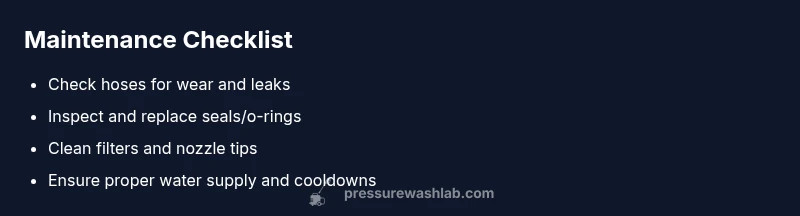
Routine maintenance is your best defense against failures. Create a simple schedule: inspect hoses and power cords, verify water supply, clean filters, lubricate moving parts if your model requires it, and store the unit properly after use. Run water through the system to flush out debris before and after each project. Documenting maintenance tasks helps you build a reliable habit that pays off in fewer breakdowns. Pressure Wash Lab’s analysis reveals a strong correlation between consistent maintenance and extended equipment lifespan.
When to Seek Professional Help
Some problems require specialized tools or expertise. If you hear abnormal noises, detect persistent leaks, or see error codes that you can’t resolve, contact a qualified technician or your local service center. Do not attempt major disassembly or pump repairs beyond basic troubleshooting. Professional service is a prudent investment when you notice repeated failures or a suspected internal pump issue. Early professional diagnosis can prevent further damage and save money in the long run.
Quick Maintenance Schedule for Longevity
- Weekly: check fittings, hoses, and visible seals for wear; run fresh water through system to clear debris.
- Monthly: inspect inlet filter, nozzle, and wand; clean with manufacturer-approved methods; test pressure with the correct safety settings.
- Seasonally: perform a thorough pump inspection, replace worn seals, and service valves if applicable. Store upright in a dry area and protect from freezing temperatures.
- Annually: professional inspection if you use the unit professionally or have high hours of operation. Reassess hoses, cords, and protective covers for wear.
Bottom Line: Proactive Care Reduces Breakage Risk
Preventing breakdowns is about consistent maintenance, sensible usage, and using the right parts for your model. By following a regular care routine, you reduce the likelihood that small issues become costly failures. Pressure Wash Lab’s verdict is clear: invest in preventive maintenance now to save time, money, and frustration later.
Steps
Estimated time: 45-60 minutes
- 1
Gather safety gear and tools
Put on eye protection, gloves, and closed-toe shoes. Gather the wrench set, replacement O-rings, and a clean bucket for water testing. Confirm you have access to a reliable water supply and a grounded outlet if you’re using an electric model.
Tip: Double-check the outlet rating and cord length before starting. - 2
Inspect the water source and hoses
Check that the water inlet is free of kinks and leaks. Drain air from the hose and verify a steady stream of water to the unit. A dry run can burn the pump, so always test with water present.
Tip: If you feel suction loss, check the filter and tighten fittings gently. - 3
Check nozzle and spray settings
Select the correct nozzle for the job and confirm it’s firmly attached. Inspect the wand and tip for wear, cracks, or warping. Incorrect nozzle size can overwork the pump and reduce efficiency.
Tip: Avoid using the smallest nozzle for heavy tasks—start with a wider spray and adjust. - 4
Inspect seals and pump components
Look for oil leaks around the pump seals and hoses. If you spot wear, replace O-rings and seals according to the service manual. Do not run a unit with visible leaks as it can cause internal damage.
Tip: Keep replacement parts organized and labeled for quick repairs. - 5
Test run with cooldowns
Run the engine or motor under light load with cool-down breaks between intervals. Listen for unusual noises and watch for temperature buildup. If temperatures stay high, pause and inspect cooling paths more thoroughly.
Tip: Document run times to refine your cooldown schedule. - 6
Document and plan preventive maintenance
Record any parts replaced and the service date. Create a simple calendar reminder for monthly checks and seasonal maintenance. Store the unit in a dry, upright position to minimize corrosion.
Tip: A simple notebook or app note helps you stay on track.
Diagnosis: Pressure washer shuts off mid-use or operates with reduced performance, including leaks or erratic spray.
Possible Causes
- highPower or electrical issue (outlet, cord, breaker)
- highOverheating due to restricted airflow or long run times
- mediumWorn seals, gaskets, or internal components
- lowIncompatible nozzle or clogged filter
Fixes
- easyVerify power source: test outlet, test with a known-good extension cord, reset breaker; ensure supply meets cord rating
- easyImprove cooling: clean vents and fans, remove debris, ensure 6-8 inches of clearance; allow cooldown between long runs
- mediumInspect seals, hoses, and pump housing; replace worn O-rings and seals; check for leaks around fittings
- easyCheck nozzle, spray wand, and inlet filter; clean or replace clogged nozzle or filter; ensure correct nozzle for pressure and flow
Quick Answers
What are the most common reasons pressure washers break?
Most failures come from overheating, insufficient water flow, and worn seals or hoses. Regular checks prevent these issues from escalating.
The most common reasons are overheating, poor water flow, and worn seals; regular checks help prevent them.
Can I use any detergent in a pressure washer?
Only use detergents labeled safe for pressure washers and recommended by the manufacturer. Using the wrong chemical can damage seals and reduce performance.
Only use manufacturer-approved detergents; wrong chemicals can harm seals and reduce performance.
Is it safe to run a pressure washer without water?
No. Running without water can cause rapid overheating and pump damage. Always ensure a steady water supply before starting.
Never run a pressure washer dry; always have water flowing first.
How often should I service a pressure washer?
Ideally annually for hobby use, and after heavy use or seasons if you rely on it professionally. Regular checks improve reliability.
Do an annual service, or more often if you use it heavily; regular checks boost reliability.
What maintenance tasks are essential for longevity?
Check hoses, seals, and filters regularly; perform cleanings; lubricate movable parts if required; and store properly after use.
Regularly check hoses and seals, clean filters, and store correctly to extend life.
Watch Video
Key Takeaways
- Diagnose root cause before part replacement.
- Maintain water flow and cooling to prevent failures.
- Use manufacturer-recommended nozzles and detergents.
- Regular maintenance extends pressure washer lifespan.