Why Doesn't My Pressure Washer Dispense Soap
Urgent troubleshooting guide to diagnose and fix soap-dispensing issues on pressure washers. Learn quick checks, step-by-step fixes, and maintenance tips to restore reliable foaming and cleaning power.


Soap not dispensing usually means the detergent path is blocked or mis-set. Check the reservoir, siphon hose, and nozzle for clogs, and confirm the detergent setting is on. If the issue persists, review the controls and nozzle compatibility. Pressure Wash Lab notes these are the common culprits.
Understanding the soap-dispense system
The soap-dispense system on a pressure washer blends detergent from a dedicated reservoir into the water stream as it exits the wand. When it works, you’ll see suds forming on the surface you’re cleaning and a steady, light mist of soap along with rinse. If soap stops dispensing, the issue is usually in one of a few core areas: the detergent path, the controls, or the detergent itself. According to Pressure Wash Lab, most users encounter soap-dispense problems due to clogged tubing, dirty nozzles, or mis-set detergent modes. The good news is that most fixes are quick, inexpensive, and doable by a homeowner with basic tools.
Key parts include:
- Detergent reservoir: holds the soap or concentrate.
- Siphon pickup tube: draws soap from the reservoir into the pump.
- Soap nozzle or injector: meters the soap into the water stream.
- Control wand or dial: selects soap mode and concentration.
Understanding how these parts interact helps you diagnose issues faster, because you’ll know where to look first and what to test with simple checks.
Common failure points to inspect first
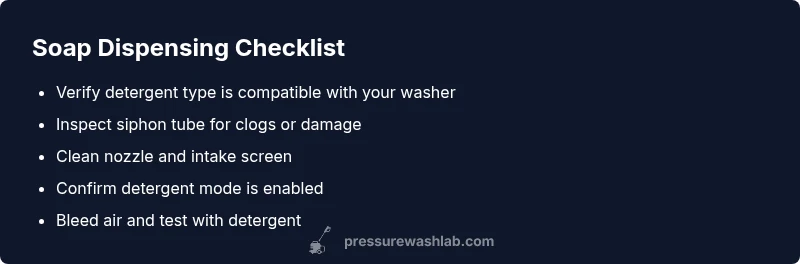
Not every soap-dispense problem requires tools or professional service. Start here, since these fixes are typically the easiest and quickest:
- Empty or incompatible detergent: Make sure the soap is designed for pressure washers and that the reservoir isn’t dry. Some soaps are too thick or contain additives that clog the system.
- Clogged siphon tube or pickup: Debris or dried soap can block flow. Remove the siphon line and inspect for kinks or buildup.
- Dirty soap nozzle or screen: A clogged or worn nozzle will fail to meter soap properly. Clean or replace as needed.
- Incorrect setting or wand issue: Verify that detergent mode is selected and that the nozzle is compatible with soap dispensing. Some models require a specific wand tip to activate soap.
- Air locks in the line: A small air pocket can prevent suction; bleed the line according to your model’s manual.
If you try these and there’s still no soap, you may be facing a more complex issue such as a damaged pump seal or a failing valve, which would warrant further diagnosis.
Check the detergent reservoir and siphon tube
Begin by inspecting the reservoir for soap level and compatibility. Some rinsing-only detergents won’t flow if the reservoir is nearly empty or if the concentrate is not rated for your unit. Next, inspect the siphon pickup tube for cracks or kinks and ensure it’s fully submerged in the detergent when the machine is running. A clogged or partially detached siphon line is a common source of intermittent or no soap.
Tip: Detach the siphon tube and run a simple water test to see if soap flows when the detergent path is clear. If water flows but soap does not, the issue is likely at the detergent path rather than the pump.
Inspect the soap nozzle, filter, and intake screen
Soap nozzles are small and delicate; even a minor clog can prevent proper dosing. Remove the nozzle tip and flush it with clean water. If you notice thick residue or matte deposits, soak the nozzle in a mild cleaner and re-test.
Also check any intake screens or inline filters. A clogged filter reduces suction and prevents soap from entering the water stream. Clean or replace filters per your model’s instructions. If your system uses an injector or a metering valve, inspect that component for sticking or wear.
Detergent type, concentration, and compatibility
Detergent selection matters as much as the hardware. Always use soap designed for pressure washers and follow the recommended dilution guidelines. Thick concentrates or soaps with waxes or solvents can foul hoses, filters, and nozzles. If your unit offers adjustable dilution, start with the manufacturer’s recommended setting and test on a small area.
Keep in mind that some soaps are formulated for cold-water vs hot-water washers, and some require a specific nozzle. Mismatched detergent can produce little to no suds and may shorten the life of seals. Pressure Wash Lab recommends keeping a simple, compatible soap on hand and configuring your machine to dispense it consistently.
Cleaning and maintenance routine for reliable dispensing
Regular cleaning helps prevent many soap-dispensing problems. After a soaping session, flush the line with clean water to remove residual concentrate. Periodically disassemble the siphon tube, wash it, and dry it before reattaching. Inspect hoses and seals for cracks and replace as needed. A simple maintenance log can help you track when you last cleaned the nozzle, filter, and reservoir. Keeping a record makes future troubleshooting faster.
Controls, settings, and priming your unit
Many machines require you to enable detergent mode via a switch, dial, or wand button. If your unit’s soap mode is off, no soap will be drawn, even with a full reservoir. Some models need priming—running briefly with water only to draw detergent through the line—and then running with detergent to bleed air. Before starting, make sure the unit is powered down and depressurized; never force fittings or taps.
If you still have issues after confirming detergent mode, re-check the nozzle compatibility and test with a known-good detergent to eliminate the possibility of a bad batch.
Preventive maintenance and when to call a pro
Preventive maintenance reduces soap-dispensing issues dramatically. Schedule regular inspection of the siphon tube, nozzle, and filters; replace worn parts; and keep detergents in sealed containers to prevent moisture uptake. If you cannot identify or fix the problem after basic checks, or if you notice leaks around seals, unloader valves, or the pump housing, contact a qualified service technician. Pressurized cleaning equipment can be dangerous if not handled correctly; when in doubt, seek professional help.
Steps
Estimated time: 20-60 minutes
- 1
Identify the symptom and confirm detergent type
Observe whether any soap is drawn into the water stream and verify you are using a detergent rated for pressure washers. If the reservoir is full but no soap enters the stream, proceed to check the siphon path and nozzle.
Tip: Keep a notebook of detergent types and settings for quick reference. - 2
Inspect the siphon pickup tube and reservoir
Disconnect the hose and inspect for cracks, kinks, or debris. Submerge the pickup end in detergent and test by running the machine with the trigger depressed. If no soap flows, go to the next step.
Tip: Replace damaged tubes with OEM parts to maintain seal integrity. - 3
Clean the nozzle and intake screen
Remove the nozzle tip and flush with clean water or a mild cleaner. Check the intake screen for buildup and clean or replace if needed. Reassemble and test with soap once dry.
Tip: Avoid using harsh solvents on plastic components to prevent wear. - 4
Check detergent concentration and compatibility
Confirm you are using the correct soap for your unit and adjust dilution according to the manufacturer’s guidelines. If you’re unsure, test with a known-good detergent on a small surface.
Tip: Label containers with dilution ratios for quick setup. - 5
Test controls and priming procedure
Enable detergent mode on the control dial or wand, prime the line if required by your model, and then run a brief test cycle with detergent. Ensure water pressure is within recommended ranges.
Tip: Always depressurize before making adjustments to fittings. - 6
Reassemble, verify, and monitor
Reassemble all parts, run a test with soap, and monitor for consistent dispensing. If soap still doesn’t dispense, consider service evaluation.
Tip: Document any abnormal sounds or leaks to aid troubleshooting. - 7
Prevent future issues
Establish a routine cleaning schedule for the siphon, filter, and nozzle. Keep detergents sealed and stored properly to avoid moisture exposure.
Tip: Create a maintenance calendar linked to your cleaning schedule.
Diagnosis: Soap fails to dispense from a pressure washer during operation
Possible Causes
- highSiphon pickup tube or hose clogged or damaged
- highDetergent reservoir empty or incompatible soap
- mediumDetergent setting or nozzle not engaged for soap dispensing
- lowAir locks in the detergent line or leaks in seals
Fixes
- easyClean or replace siphon pickup tube; ensure it is submerged in detergent
- easyFill reservoir with compatible detergent, check concentration, and reuse a tested soap
- easyVerify detergent mode is enabled on the wand/controls and confirm nozzle compatibility
- easyBleed air from the line and inspect for leaks around seals and fittings
Quick Answers
Why is my pressure washer not dispensing soap even though the bottle is full?
Common reasons include a clogged siphon tube, a blocked nozzle, or the detergent mode being off. Check the siphon path, clean the nozzle, and ensure detergent mode is enabled on the wand. If the issue persists, inspect the filters and seals.
If the bottle is full but no soap flows, start by checking the siphon line and nozzle for blockages, and verify that detergent mode is turned on.
Can I use dish soap in a pressure washer?
Most dish soaps are not recommended for pressure washers because they can cause buildup and seal damage. Use detergents specifically formulated for pressure washers. If you must, test with a small amount on a non-critical area first.
Dish soap isn’t recommended for pressure washers. Use detergents made for pressure washers and test in a small area first.
What causes the soap to dispense only weakly or intermittently?
Causes include partial clogs in the siphon line, an incorrectly set dilution, or a worn nozzle. Clean the line, verify dilution settings, and inspect the nozzle for wear.
Weak soap flow usually means a partial clog or wrong settings. Clean the line, check dilution, and inspect the nozzle.
Is it safe to operate without soap mode enabled?
Yes, you can operate without soap, but you won’t get the extra cleaning power of detergents. Make sure to switch back to soap mode when you need it and test the flow afterward.
You can operate without soap, but you’ll miss the extra cleaning power. Switch to soap mode when needed and test the flow.
When should I call a professional for soap-dispensing issues?
If you’ve exhausted the basic checks and cleaning steps without restoring soap flow, or you notice leaks around seals or the pump, it’s wise to seek professional service. A technician can diagnose internal pump or valve problems safely.
If basic checks don’t fix it and you see leaks, contact a professional for a safe diagnostic.
Will replacing the nozzle fix soap-dispensing problems?
Sometimes a worn or damaged nozzle can prevent proper soap metering. Inspect and replace with the correct nozzle for your model, then re-test with detergent.
A worn nozzle can cause poor soap dosing. Check and replace if needed, then test again.
Watch Video
Key Takeaways
- Identify the detergent path, controls, and detergent itself as the primary fault areas.
- Regular cleaning and correct detergent selection prevent most issues.
- Follow manufacturer priming and safety guidelines for best results.