Why Is a Pressure Washer Leaking Oil? Quick Troubleshooting Guide
Urgent, practical guide to diagnose and fix oil leaks in gas-powered pressure washers. Learn common causes, safe checks, and proven fixes from Pressure Wash Lab.


Oil leaks on a pressure washer are most often caused by worn pump seals or an overfilled engine. The quick fix is to check the oil level and type, tighten the oil drain plug, and reseal the pump if needed. If the leak persists, stop using the unit and inspect seals or consult a pro. Pressure Wash Lab notes safety first.
Why oil leaks happen when you ask, 'why is pressure washer leaking oil'
Oil leaks on a pressure washer can originate from two major sources: the engine (crankcase lubrication) and the pump (pump lubrication). According to Pressure Wash Lab, the vast majority of leaks come from worn seals or gaskets around the pump, or from an overfilled engine oil reservoir. Recognizing the source is critical because the repair path differs: engine oil leaks require checking the crankcase, while pump oil leaks focus on pump seals and O-rings. In either case, addressing leaks quickly protects internal components, prevents environmental spills, and reduces the risk of a costly failure. This guide focuses on practical steps you can take to identify and fix the most common oil leaks so you can get back to work with confidence.
Engine oil leaks vs. pump oil leaks
Not all oil leaks are the same. Engine oil leaks usually originate from the crankcase vent or oil pan area and are more likely if you recently overfilled the oil or used the wrong viscosity. Pump oil leaks typically show up around the pump housing and connections where seals and O-rings live. Understanding which system is leaking helps you target the right replacement parts and procedures. Pressure Wash Lab’s experience across many models shows that pump-seal failures are more common on high-hour units, while engine oil issues often trace to improper oil levels or incompatible oils. Knowing this distinction saves time and reduces unnecessary disassembly.
Quick checks you can do safely
Before touching moving parts, always disconnect power, relieve pressure, and wear gloves. Start with the simplest checks: verify oil level with the dipstick, confirm you’re using the recommended oil type, and look for fresh oil on the ground or dripping from the drain plug. Check the oil cap and fill cap for proper seating, and inspect the drain plug for tightness and any signs of stripping. If you can’t locate the leak source, mark the area with chalk, run the engine briefly, and observe the route oil takes. This helps you distinguish whether the leak is from the engine or the pump. Pressure Wash Lab emphasizes stopping operation at the first sign of a large spill to prevent fire hazards and environmental damage.
Inspect pump seals and pump-area leaks
The pump is a common source of oil leaks. Inspect the pump seals, O-rings, and gasket surfaces for cracking, drying, or displacement. Look for oil trails along housing seams or around the unloader valve where seals can fail. If you notice oil pooling at the bottom of the pump or around the shaft, it’s a strong indicator that a seal or gasket needs replacement. Keep in mind that pump oils are different from engine oils, so ensure you’re using the correct lubricant per your model. Replacing worn seals or O-rings typically resolves most pump-oil leaks, extending the life of the unit.
The role of oil level and oil type in leaks
Oil level and oil type are two of the easiest issues to overlook. Overfilling the engine can cause oil to push out through seals and gaskets, leading to external leaks. Conversely, underfilling can cause pump lubrication to starve, leading to abnormal wear and leaks around shaft seals. Always use the manufacturer-recommended oil viscosity and fill to the proper dipstick mark. If you suspect the wrong oil type was used, drain and refill with the correct grade. Pressure Wash Lab notes that a simple oil-management check solves many oil-leak mysteries without disassembly.
Safety, warnings, and common mistakes
Working on a running pressure washer or one with pressurized lines is dangerous. Always disconnect spark plug wire or power cord before touching any components. Never use the unit with a leaking oil reservoir that could contaminate the environment or pose a fire risk. Common mistakes include ignoring small drips, using the wrong oil type, and failing to replace worn seals promptly. A cautious, methodical approach reduces risk and prevents additional damage. If you’re unsure, it’s safer to call a pro rather than persisting with side-channel fixes.
Preventing future leaks with routine maintenance
Implement a simple maintenance routine to reduce future leaks: check oil levels weekly if you use the washer heavily, inspect seals and hoses every 20–30 hours of operation, and replace worn O-rings during standard service. Keep the unit clean to spot leaks early, and store it on a level surface to prevent oil from pooling in awkward spots. Pressure Wash Lab’s recommendation is to record service dates and parts replaced so you can track wear patterns and plan preventive maintenance before leaks occur.
When to replace parts or call a professional
If you notice cracks in the pump housing, persistent leaks after seal replacement, or you’re uncomfortable with disassembly, replacing the pump or engine may be the most cost-effective solution. Leaks tied to cracked housings or damaged components usually require replacement parts or a professional rebuild. In these cases, a professional technician can accurately diagnose, reseal, or replace critical components without risking further damage. The least risky path is to use manufacturer-approved parts and follow torque specs precisely.
Steps
Estimated time: 45-60 minutes
- 1
Power down and depressurize
Disconnect the spark plug wire or unplug the unit, then run water through the system with the trigger open to relieve pressure. This reduces spray risk and makes inspection safer.
Tip: Never work on a live pressure washer; always disconnect power first. - 2
Check oil level and type
Consult the dipstick to confirm the oil level is within the recommended range and that you’re using the correct viscosity. If overfull, drain to the proper level and refill with the correct oil.
Tip: Use a clean container to capture used oil for proper disposal. - 3
Inspect pump seals and gaskets
Inspect visible seals and O-rings around the pump. Look for cracks, drying, or misalignment that could allow oil to escape. Replace worn seals with manufacturer-specified parts.
Tip: Note part numbers before buying replacements. - 4
Tighten drain plug and fittings
Check the oil drain plug for tightness and inspect all fittings or hoses for leaks. Replace gaskets or washers if necessary to seal the connections.
Tip: Avoid overtightening to prevent thread damage. - 5
Test and observe
Reconnect power, operate briefly, and watch the leak source carefully. If oil continues to seep, escalate to a professional repair or consider a parts replacement.
Tip: Keep a log of indicators to compare after repairs.
Diagnosis: Oil is pooling on the floor or visibly seeping from the pump/engine area during or after operation
Possible Causes
- highOverfilled engine oil or incorrect oil type
- highWorn pump seals or O-rings
- mediumLoose or damaged oil drain plug
- lowCracked pump housing or gasket surfaces
Fixes
- easyCheck oil level and correct oil type, then drain/replace if overfilled
- mediumReplace pump seals/O-rings and reseal pump housing
- easyTighten or replace oil drain plug and clean residue
- hardReplace pump or engine if cracks are found
Quick Answers
What causes a pressure washer to leak oil?
Common causes are overfilled engine oil, worn pump seals or O-rings, loose drain plugs, and cracked pump housings. Identify the source to choose the right fix.
Most leaks come from pump seals or an overfilled oil. Check oil level first, then inspect seals and hoses.
Is it safe to use a pressure washer that leaks oil?
No. Leaking oil can create fire hazards and environmental contamination. Stop using the unit and fix the leak before resuming operation.
Don’t run it while leaking—safety first. Fix the leak or call a pro.
Can overfilling oil cause leaks?
Yes, overfilling can force oil through seals, causing external leaks. Always fill to the recommended level and type.
Overfill can push oil out of seals; set the oil to the right level.
Should I run the unit to test the fix after repairs?
After repairs, run the unit briefly with the trigger open to purge air and observe for new leaks. If none appear after a minute, it’s likely fixed.
Test it briefly, then watch for leaks before heavy use.
When should I replace the pump?
If cracks, severe wear, or repeated failures persist after seals are replaced, replacing the pump is usually more cost-effective.
If damage is severe or leaks return after fixes, replace the pump.
Watch Video
Key Takeaways
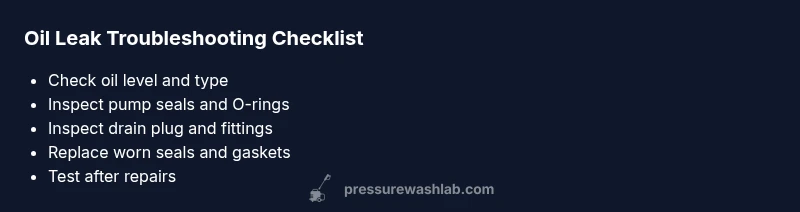
- Check oil level and type first
- Inspect pump seals and gaskets for wear
- Tighten or replace the drain plug as needed
- Replace worn parts or consult a pro for cracks or complex issues