Why Is My Pressure Washer Not Pulling Soap? Quick Troubleshooting Guide
Urgent practical guide to diagnose and fix a pressure washer that won’t pull soap. Identify common culprits, follow a clear diagnostic flow, and prevent futureSoap pickup failures.


The most common reason a pressure washer won’t pull soap is a failing soap pickup caused by air leaks or a clogged siphon line. Start by checking the detergent bottle and line, ensuring the siphon is primed, and confirming you’re in soap mode. If the line is clear and the bottle is full, inspect the injector and seals for leaks before escalating.
Understanding the symptom: why is pressure washer not pulling soap
If you’re asking why is pressure washer not pulling soap, you’re not alone. This symptom points to the soap pickup system rather than the pump itself. According to Pressure Wash Lab, the most common culprits are air leaks in the suction line, a clogged siphon or injector, or an empty or incorrectly seated detergent bottle. Before you panic, keep in mind that many issues are simple, fast fixes you can do with basic tools. Start by verifying the detergent bottle is firmly connected, the cap is tight, and the bottle contains detergent compatible with your machine. Then inspect the intake hose for kinks or cracks, and check any inline filters. If you detect a leak at a connection, address it first. Finally, ensure you’re using the soap mode on the nozzle and that the tip is appropriate for foam generation. The goal is to isolate the path from bottle to injector so you can restore suction quickly.
Quick checks you can do in under 5 minutes
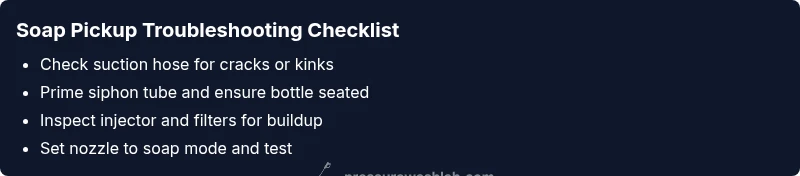
Before diving into parts, perform a quick sanity check. Make sure the detergent bottle is seated securely and filled with the right detergent for your unit. Inspect the suction hose for obvious kinks, cracks, or loose clamps. Check the inline filter (if your model has one) and remove any visible debris. Switch the spray gun to the soap setting and run a short test. If you hear no change in suction or see air bubbling at joints, you’re likely dealing with a leak or clogged line. Finally, confirm all connections are dry and free of moisture that could conduct electricity near the machine. If this quick pass doesn’t restore suction, proceed to deeper checks.
Inspect the suction line and fittings for air leaks
Air leaks are the most common reason soap pickup fails. Carefully inspect every connection along the suction path—from the bottle cap to the inlet fitting on the pump. If you spot a loose clamp or a cracked hose, replace or reseat it. A simple test is to run the machine with the wand off and listen for a hissing sound; if you hear it around a joint, that’s your leak. To confirm, you can apply a soapy water solution to suspected joints; bubbling indicates an active leak that needs sealing or replacement. After addressing leaks, re-test to see if soap begins to draw again.
Clean or replace the siphon tube and injector
The siphon tube and injector (venturi) are critical to drawing soap from the bottle. Over time, grime, mineral deposits, or dried detergent can clog these components. Remove the siphon tube from the bottle and inspect for cracks or buildup. Clean with warm water and a soft brush; if stubborn residue remains, consider replacing the injector or siphon tube. Also check any filters in the intake path and clean or replace them as needed. Reassemble, make sure all seals are tight, and run a test to confirm soap pickup.
Verify the detergent bottle and cap seating
Detergent compatibility matters: some formulas are too thick or incompatible with certain injectors, leading to poor suction. Ensure you’re using the detergent type recommended by your pressure washer’s manufacturer and that it’s diluted as required. Inspect the bottle cap and threading for damage and reseat firmly. If the bottle is empty, replace it; if it’s cracked, replace the bottle. After securing the bottle, prime the line again and test for soap pickup.
Check nozzle setting and foam mode
Your nozzle must be set to a soap mode (not straight water) for the injector to pull detergent. Verify the tip is the correct one for foam generation and that the wand settings aren’t restricting flow. Worn or clogged tips can reduce suction efficiency, so inspect the nozzle for wear and replace if necessary. Use a compatible nozzle to avoid injecting air or water bypass that starves the soap line. Re-test to confirm.
Test with fresh detergent and safe dilution
Even with the correct setup, old or improperly diluted detergent can hinder pickup. Dump any stale detergent and replace with fresh formula appropriate for your model. Mix as directed by the manufacturer and ensure the dilution is within recommended ranges. Run a short test spray with a small amount of detergent to evaluate whether the injector draws soap effectively. This step also helps you verify that the pump and hose aren’t compromised.
Maintenance steps to prevent future soap pickup problems
Preventive care saves time later. Regularly inspect hoses for cracks, check clamps, and replace worn parts before they fail. Clean the siphon tube and injector periodically to remove mineral buildup. Keep the detergent bottle clean and replace caps that show wear. Store detergents upright and sealed to prevent contamination. Finally, run routine tests to confirm soap pickup works after each long storage period or after heavy use.
Troubleshooting flowchart: quick path from symptom to fix
- Symptom: Soap not pulling
- Check for air leaks in suction line -> fix leaks
- Inspect siphon tube and injector -> clean/replace
- Confirm detergent bottle seating and detergent type -> refill/reseat and verify compatibility
- Set nozzle to soap mode and test again -> adjust or replace nozzle
- If unresolved, seek professional diagnosis for injector/pump issues
Steps
Estimated time: 20-30 minutes
- 1
Power down and inspect basic setup
Unplug the unit and visually inspect the detergent bottle and line. Confirm the bottle is seated, full, and compatible with your washer. Look for obvious kinks or crimps in the suction hose.
Tip: Take photos of fittings before disassembly to simplify reassembly. - 2
Check suction line for leaks
Carefully examine all hose connections and clamps along the suction path. Tighten fittings, replace cracked hoses, and test with soapy water to reveal hidden leaks.
Tip: Even tiny leaks can break suction; don’t skip the test. - 3
Prime the siphon line
Remove the line from the bottle and ensure it’s primed with clean water. Reconnect securely and slowly operate the trigger to draw liquid. Watch for consistent soap flow during operation.
Tip: Prime with water first to avoid dry running the injector. - 4
Inspect injector/venturi and filters
Remove and clean the siphon tube and injector; clear any mineral buildup or debris. Clean or replace intake filters if present and reinstall securely.
Tip: Avoid harsh cleaners on seals; use manufacturer-approved products. - 5
Verify nozzle setting to soap mode
Set the spray tip to the soap setting and confirm the wand is functioning correctly. Inspect the nozzle for wear and replace if it’s degraded.
Tip: A worn nozzle can reduce soap pickup and foaming efficiency. - 6
Test with fresh detergent
Fill the bottle with fresh detergent, ensure correct dilution, and perform a brief test spray. Observe whether soap is drawn into the stream.
Tip: Never mix detergents; incompatible products can clog injector. - 7
Reassemble and run extended test
Reattach all components securely and run a longer test cycle on a safe surface. Confirm consistent soap pickup across a few cycles.
Tip: Document any recurring signs for future diagnostics. - 8
Document maintenance plan
Create a simple maintenance routine to prevent future issues: periodic cleaning, filter checks, and safe storage of detergents.
Tip: Set a maintenance reminder to avoid gaps in care.
Diagnosis: Soap pickup remains weak or non-existent
Possible Causes
- highAir leaks in suction hose or fittings
- highClogged siphon line or injector
- mediumEmpty or incorrectly seated detergent bottle
- lowIncompatible or thick detergent
Fixes
- easyTighten connections and replace damaged suction hose; reseal fittings
- easyClean or replace siphon tube/injector and clean inline filters
- easyFill and reseat detergent bottle; verify detergent compatibility
- easySwitch to manufacturer-recommended detergent and follow dilution guidelines
Quick Answers
Why won’t my pressure washer pull soap even when the bottle is full?
Most likely a suction issue such as a leak or clog in the siphon line. Check for air leaks at hoses and fittings, then inspect and clean the siphon/injector. Ensure the detergent is compatible and the nozzle is set to soap mode.
Check for leaks, then inspect the siphon and injector. Make sure the detergent is the right type and the nozzle is in soap mode.
How do I prime the soap pickup on a pressure washer?
Shut off power, detach the line from the bottle, and rinse it with clean water to remove air. Reconnect, then squeeze the trigger until detergent appears in the stream.
Detach the line, rinse to prime with water, reconnect, and run the trigger until soap shows up."
Can using the wrong detergent cause soap not to be pulled?
Yes. Using an incompatible formula or an overly thick product can clog the injector and reduce pickup. Always use detergent recommended by the manufacturer and dilute as directed.
Yes, using the wrong detergent can clog the injector; stick to the manufacturer’s recommendations.
Is it necessary to call a professional for soap pickup issues?
If basic checks don’t restore soap pickup, a professional can diagnose injector/pump issues, check for internal leaks, and test the unit under load.
If simple checks fail, a technician can diagnose injector or pump problems.
What safety steps should I follow when troubleshooting?
Unplug the unit before inspection, keep the area dry, wear gloves, and avoid pulling on hoses with high tension. Handle all connections gently to prevent further damage.
Always unplug first, stay dry, wear gloves, and be gentle with connections.
What should I do if the detergent bottle is empty?
Replace with a full bottle and reseat the cap firmly. Ensure the bottle’s compatibility with your machine and repeat the priming process after replacement.
If the bottle is empty, replace it and prime the line again.
Watch Video
Key Takeaways
- Start with the simplest fix: check for air leaks.
- Prime the siphon and ensure the detergent bottle seating is correct.
- Verify nozzle is in soap mode and replace worn tips.
- Follow a preventive maintenance routine to avoid future soap pickup problems.