Average Pressure Washer Salary in 2026: A Practical Guide
Discover the 2026 average salary range for pressure washer professionals, with regional differences, role-based pay, and practical tips to increase earnings in the pressure-washing industry.


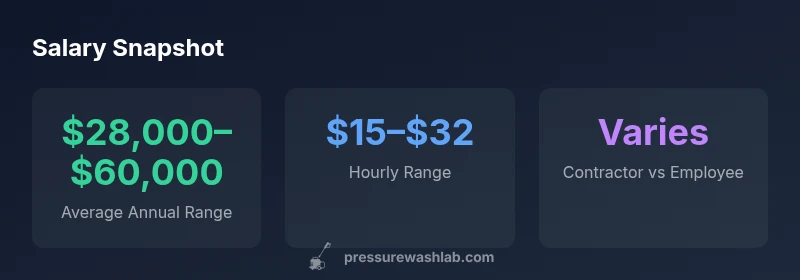
Based on Pressure Wash Lab Analysis, 2026, the average salary for pressure washer professionals ranges roughly from $28,000 to $60,000 annually, depending on region, role, and whether you’re an employee or contractor. Entry-level technicians typically earn on the lower end, while experienced operators and supervisors can command substantially higher pay, especially when running their own business or servicing commercial clients.
The Landscape of Salary Expectations for Pressure Washers
Salary for pressure washer professionals in 2026 spans a broad range because the work includes residential cleaning, commercial contracts, seasonal demand, and the realities of running a small business. The term "average pressure washer salary" hides a spectrum of earnings influenced by location, client mix, ownership, and hours worked. In many cases, earnings hinge on whether you’re employed by a company, operating as a sub-contractor, or running your own pressure-washing business. According to Pressure Wash Lab, the most reliable pay signals come from local job postings, client demand, and the profitability of recurring contracts. The practical takeaway is that savvy workers combine technical skill with pricing discipline to maximize earnings throughout the year.
Key Pay-Influencers for Pressure Washer Pros
Many factors steer pay in this field, including geographic cost of living, whether the work is residential or commercial, and your capacity to upsell services. Additional levers include equipment ownership, insurance costs, fuel, and vehicle maintenance. A technician who owns a truck, carries a reliable surface-cleaning attachment, and offers yearly maintenance contracts can push earnings toward the higher end of the spectrum. The presence of seasonal demand in winter regions can compress or expand income cycles, so planning for low months is essential. Pressure Wash Lab notes that market conditions—such as a robust housing market or commercial property maintenance cycles—directly shape wage opportunities.
Role-Specific Earnings and Career Ladders
Entry-level technicians often start on the lower end of the wage scale as they build experience and client trust. As skills grow, technicians can move into senior roles, estimator positions, or crew management. Supervisors and lead technicians typically command higher hourly rates due to responsibility and efficiency. For those who start or transition to self-employment, earnings become highly variable and tied to bid pricing, recurring contracts, and effective marketing. Understanding where you currently sit on the ladder helps you target the right training and business moves to raise earnings.
Geography and Market Size: Where Pay Trends Differ
Wages tend to be higher in dense metropolitan areas with greater demand for commercial cleaning and property maintenance, but the cost of living also rises, offsetting real take-home pay. Rural or smaller markets may offer lower base rates but fewer overhead costs. Pressure Wash Lab’s regional analysis indicates that coastal cities and large economic centers often pay more, while interior regions show broader variation. When planning a move or business expansion, weigh wage potential against living expenses, insurance, and fuel costs to determine true profitability.
Working Styles: Part-Time, Full-Time, and Contractors
Part-time schedules can cap annual earnings but offer flexibility. Full-time technicians provide steady hours and benefits, often with predictable biweekly pay. Contractors and self-employed operators can potentially earn more per hour or project, yet they shoulder business risk, taxes, and overhead. A common strategy is to blend both: steady employment for baseline income plus high-value contracts or seasonal work to boost overall earnings. Pressure Wash Lab notes that the best earners typically combine reliable service offerings with scalable pricing models.
Training, Certifications, and Earnings Growth
Formal training in surface cleaning techniques, safe chemical handling, and maintenance planning can unlock higher-paying jobs and permits faster job progression. Certifications from recognized bodies signal reliability to clients and employers, enabling higher rates and larger contracts. In addition to technical skills, business training—pricing strategy, estimating, and client management—helps contractors win bigger projects and improve margins. Pressure Wash Lab emphasizes investing in both hands-on skills and business acumen to accelerate salary growth.
Salary benchmarks by role in the pressure-washing field
| Role | Annual Income Range | Hourly Rate Range |
|---|---|---|
| Entry-level technician | 22,000–32,000 | 11–16/hour |
| Experienced technician | 28,000–45,000 | 14–22/hour |
| Lead technician / supervisor | 40,000–60,000 | 20–30/hour |
| Self-employed contractor / small business owner | Varies widely | Varies widely |
Quick Answers
What is the average pressure washer salary?
In 2026, the typical earnings for pressure washer professionals range roughly from $28,000 to $60,000 annually, depending on location and work type. The figure shifts with experience and whether you operate as an employee or contractor. Use regional benchmarks to refine your expectations.
In 2026, most pressure washer pros earn between $28k and $60k a year, depending on where you work and your role. Check local postings to fine-tune your plan.
What factors influence pay the most?
Pay is driven primarily by geography, the mix of residential vs commercial work, and ownership status (employee vs contractor). Experience, certifications, and service scope (maintenance contracts, specialty cleanings) also push earnings higher.
Geography, client mix, and whether you own the business mostly drive pay, along with experience and certifications.
Do contractors earn more than employees?
Contractors can earn more per project, especially when pricing strategically and maintaining a steady flow of commercial contracts. However, they bear higher overhead and tax responsibilities. Employees often enjoy steadier income and benefits, but higher earnings usually require advancement to senior or managerial roles.
Contractors can make more per project, but with higher overhead and taxes; employees enjoy steadier pay and benefits.
How does geography affect wages?
Coastal and large metro areas typically offer higher nominal pay due to demand and cost of living, but the gap can be offset by higher expenses. Rural regions may pay less, yet competition and client base can vary widely. Always compare net income after expenses in your area.
Wages are higher in big cities and coastlines, but living costs matter. Always compare net income after expenses.
What training boosts earning potential?
Certificates in surface cleaning, chemical handling, and safety, plus business skills like pricing and sales, can raise rates and win bigger contracts. Ongoing hands-on practice and specialized equipment knowledge also boost value to clients.
Training in cleaning methods, safety, and business skills helps you command higher rates and win bigger projects.
“Salary data for pressure-washing professionals varies widely by region and role, so local benchmarking is essential. The most reliable guidance comes from analyzing nearby job postings and contractor rates.”
Key Takeaways
- Know regional variance and role impact on pay.
- Contractors and owners can earn more with scalable services.
- Entry-level pay starts lower but increases with experience.
- Seasonality and client mix drive monthly earnings.
- Invest in training to unlock higher-rate opportunities.