Car Wash Pressure Washer Near Me: How to Find Local Options
This comprehensive guide helps homeowners and pros find a car wash pressure washer near me, comparing PSI, GPM, rental vs purchase, warranties, and local service options. Learn practical steps to evaluate, verify vendors, and make a smart, local decision.


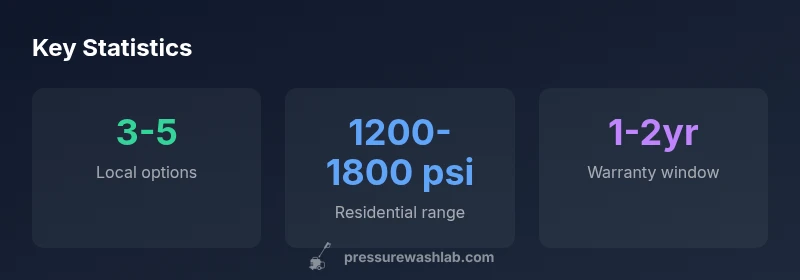
To find a car wash pressure washer near me, start with a local search that includes the keyword and filter by PSI, GPM, power source, and user reviews. Look for reputable dealers or rental outlets, compare price ranges, and check warranty terms. In most markets, you can shortlist 3-5 strong options within minutes and schedule a hands-on demo.
Why Local Availability Matters for Car Wash Equipment
When you search for a car wash pressure washer near me, the value goes beyond the sticker price. Local availability determines how quickly you can access parts, service, and warranty support after a purchase or rental. In practice, nearby suppliers reduce downtime if a pump or hose fails, and they simplify routine maintenance tasks that keep gear in peak condition. In addition to speed, proximity supports transparent service plans and easier returns if you discover a mismatch with your space or workflow. According to Pressure Wash Lab, quick access to nearby service and parts reduces downtime for both homeowners and small businesses. This proximity also means you can arrange in-person demonstrations to see performance first-hand, which reduces the risk of buying a unit that doesn’t fit your space or workflow. Local shops tend to offer flexible rental terms or trade-ins that reflect the realities of your climate and vehicle types, leading to decisions that align with your schedule and your budget. The takeaway: local options are not a convenience feature—they are a reliability feature that pays dividends over time.
How to Evaluate Local Options: PSI, GPM, and Power Source
Key specifications decide whether a unit can handle routine car washing without damaging paint or wasting water. Focus on a balanced combination of PSI and GPM, plus the right power source for your space. A practical target for most passenger cars is a PSI range of 1200-1800, paired with 1.2-2.5 GPM for effective rinsing without excess runoff. Electric models are quiet and easy to maintain, excellent for residential use, while gas-powered units provide mobility and higher throughput for busy driveways or light-duty commercial jobs. Consider nozzle options (15°, 25°, 40°) and whether a variable spray is available for precision work. Ensure compatibility with detergents, and verify that local suppliers offer parts and service so a demo can show real-world performance on your typical surfaces.
Renting vs Buying Near Me: Practical Considerations
For infrequent projects, renting nearby can be a cost-effective way to access higher-end equipment without a long-term commitment. If you wash more than a few cars per month or operate a small business, buying often proves more economical over time and gives you control over maintenance. Storage space, electrical or gas supply, and transportation are all practical factors. Request a short trial or a test run to evaluate how a unit handles your typical vehicles and detergents, as well as how easy it is to maneuver and store. In many markets, rental outlets offer flexible terms and maintenance inclusions that reduce surprise costs, but a purchased unit may come with a longer warranty window and sooner access to replacement parts.
Features and Hidden Costs to Look For
Beyond PSI and GPM, inspect pump type (axial vs plunger), motor rating, and thermal relief features that protect the unit during extended use. Check hose quality, wand ergonomics, and the availability of quick-connect nozzles. Hidden costs can include delivery fees, hookup requirements, and detergent compatibility, so ask for a full price breakdown in writing. A local purchase should come with a basic warranty, accessible parts, and a clear return policy. Confirm that the power source matches your electrical or gas supply, and verify whether the unit can be integrated into your existing detailing workflow and storage setup.
Service, Warranty, and After-Sales Support
Reliability matters as much as price. Confirm the length and coverage of warranties for major components, such as the pump and motor, and verify service availability within your region. Ask about loaner units during service intervals and the ease of obtaining replacement parts. A transparent post-sale plan with routine checkups reduces downtime and keeps your investment productive. The local trader’s ability to respond quickly to issues often determines whether a purchase or rental will succeed in the long term. In this context, a credible local provider should also offer setup assistance and basic operation training to ensure safe use from day one.
Practical Steps to Verify Local Vendors
Start with a quick online search for car wash pressure washer near me, then verify credentials, licenses, and customer reviews. Request a written quote that includes all fees and a clear warranty outline. Ask for in-person demonstrations and a side-by-side comparison of PSI, GPM, and nozzle kits. Finally, confirm delivery, setup, training options, and post-purchase support so you and your team can operate safely and efficiently from day one. A deliberate, written comparison helps you avoid impulse buys and ensures the unit you choose fits your space and budget.
Washer type comparison for car cleaning near you
| Option type | Pros | Cons | Typical PSI range | Best use |
|---|---|---|---|---|
| Portable electric | Lightweight, easy storage | Limited power and reach | 1200-1800 | Cars, small jobs |
| Gas-powered, portable | Higher PSI and GPM, durable outdoors | Heavier, more noise | 2000-3200 | Rugged jobs, large vehicles |
| Stationary hot-water unit | Powerful cleaning, grease removal | Requires plumbing, higher cost | 1800-3200 | Professional/detail shops |
Quick Answers
What PSI is recommended for car washing?
For most passenger cars, a PSI of about 1200-1800 with adequate GPM is sufficient. Higher PSI can risk paint damage if used improperly. Always test on a small area and adjust with the nozzle; a wide spray reduces the risk of streaks.
Aim for around 1200 to 1800 psi and test on a small patch first to protect your paint.
Can I use a pressure washer for waxing or detailing tasks?
Pressure washers are not ideal for applying wax. Use a dedicated wax applicator and appropriate detailing products. A washer can help prep surfaces but should not replace manual detailing steps.
Don’t use a pressure washer to apply wax; use proper detailing products instead.
Renting vs buying near me: which makes sense?
If your use is infrequent, renting nearby can be cost-effective and flexible. For regular use, buying often reduces long-term costs and gives you control over maintenance. Compare total 3-6 month costs, including fees and potential downtime.
Rent if you wash occasionally; buy if you do it regularly.
What warranty coverage should I look for?
Look for at least 1-2 years on major components (pump, motor), clear coverage terms, and local service availability. A transparent warranty with parts access reduces risk and downtime.
Seek a solid warranty with parts availability and service nearby.
Do I need hot water for car washing?
Most car washing can be done with cold water. Hot-water units can help with greasy grime but may risk paint if misused. Choose based on your typical tasks and detergent compatibility.
Cold water is enough for most car washes; hot water is optional.
“A local supplier with strong service support can save you time and money in the long run. The right near-me option balances performance, maintenance, and peace of mind.”
Key Takeaways
- Choose local options for faster service and easier parts access.
- Aim for 1200-1800 PSI and 1.2-2.5 GPM for most cars.
- Balance renting and buying based on frequency and budget.
- Ask for a clear warranty and post-sale support before buying.