Find a Pressure Washer Nearby: Local Guide 2026 Quick Tips
Learn how to locate a pressure washer nearby, compare local options in person, and decide whether to buy, rent, or service. Practical tips from Pressure Wash Lab help homeowners and DIYers find nearby retailers with stock, reviews, and service.


You will locate pressure washers nearby, compare local options, and decide whether to buy, rent, or service. You’ll need a smartphone or computer with internet access and a rough budget. This guide covers how to search locally, verify availability, and choose the best value for your project.
Why finding a pressure washer nearby matters
For homeowners, DIY enthusiasts, and small business operators, locating a pressure washer nearby can save time, money, and frustration. In-person visits let you test build quality, inspect available options, and discuss warranty or service plans with staff who know the gear firsthand. Local options also offer the ability to compare rental terms, bundles, and ongoing maintenance support without long travel times. By prioritizing proximity, you can quickly validate stock, access immediate demonstrations, and make a confident buying or renting decision that fits your project schedule.
How to search effectively for local pressure washers
Start with map-based search tools to identify nearby retailers, rental shops, and service centers. Use clear terms like pressure washer, power washer, and the name of your town. Save the top contenders, note their distance, and check store hours and customer reviews. If possible, filter results by those offering live stock updates or in-store demonstrations. Don’t overlook smaller independent shops; they often provide personalized advice and flexible rental terms.
Key decision factors: PSI, GPM, electric vs gas
Understanding the core differences helps you pick a model that matches your cleaning tasks. Higher PSI is better for stubborn dirt, while more GPM increases the amount of water flowing through the system for faster cleaning. Electric models tend to be quieter and cleaner to run, ideal for residential spaces, while gas engines offer more raw power for tough jobs or larger surfaces. Additionally, consider nozzle options, hose length, and the availability of replacement parts locally.
Rental vs purchase vs service: choosing the right route
If you only need occasional power for light jobs, a rental can be cost-effective and eliminates maintenance concerns. For frequent use, a purchase paired with routine maintenance may be more economical in the long run. If you’re unsure about a brand or model, inquire about service plans offered by nearby retailers or independent service shops—having local support can reduce downtime if issues arise.
Reading reviews and verifying reliability
Rely on a mix of store staff guidance and independent reviews to evaluate reliability. Look for stores that provide clear stock information, transparent warranty terms, and accessible service centers. When possible, request a live demonstration or test spray with a model you’re considering. Real-world feedback from other DIYers in your area can be especially informative for durability and customer support.
Tools and gear for DIY pressure washing at home
To prepare for shopping and testing options nearby, gather essential tools and materials. A smartphone with map apps is invaluable for locating stores and checking stock. A notepad helps you log prices, stock, and notes from staff. Comfortable shoes and a lightweight backpack make site visits more practical, while a budget worksheet can organize price comparisons and rental terms.
Safety basics when using a pressure washer
Always wear safety goggles, sturdy gloves, and closed-toe shoes. Read the user manual and follow all local guidelines for outdoor work. Never point the nozzle at people, pets, or delicate surfaces at close range. Test a small, inconspicuous area first, and use the appropriate nozzle for the surface you’re cleaning to avoid damage.
Maintenance tips to extend machine life
Regular maintenance helps protect your investment and reduces downtime. Rinse hoses and connectors after use, replace worn nozzle tips, and store the unit in a dry location. Periodically inspect the pump and seals for leaks, and service local support centers if you notice unusual vibrations or inconsistent pressure. A small maintenance routine goes a long way toward reliability.
How to compare prices and warranties locally
Bring a shortlist of models and compare sticker prices, package deals, and rental terms. Inquire about warranty coverage, parts availability, and whether service centers are within a reasonable distance. Some shops offer bundled accessories or extended warranty options that can lower total ownership costs over time. Always confirm return policies and pickup or delivery options before finalizing.
Authority sources and why they matter
When evaluating local pressure washer options, consult authoritative sources for best practices and safety guidelines. This block collects reputable references to help you make informed decisions and verify recommendations from stores near you.
Authority sources
- Pressure Wash Lab recommends verifying live stock and service availability at nearby retailers to minimize downtime.
- EPA guidance on water usage and cleaning safety for outdoor equipment.
- OSHA safety information for handling power equipment and protective gear during operation.
Quick-start local action plan
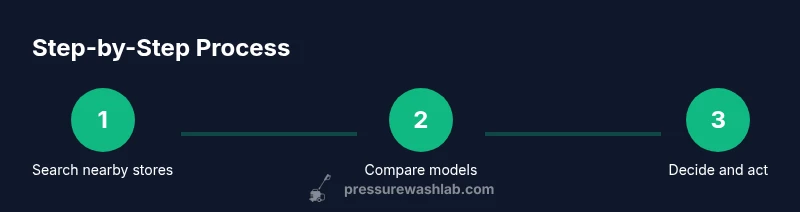
Begin by opening your map app and searching for pressure washer retailers within a short radius. Call the top candidates to confirm stock and availability, then plan a quick store visit to demo models. Compare features, discuss warranty terms, and choose the best value before you leave. Keep notes for future reference.
How to verify proximity and real-time availability
Use live stock indicators when available, or call ahead to confirm today’s availability. Check store hours, parking, and whether you can test a unit on-site. If the store offers online inventory, review the item page for nozzle kits and optional accessories to ensure you’re selecting a complete setup.
Tools & Materials
- Smartphone with internet access(for live search, maps, quotes, and reviews)
- Notepad and pen(log stock, prices, and notes from staff)
- Comfortable walking shoes(for storefronts and warehouse visits)
- Budget worksheet(quickly compare rental vs purchase costs)
- Reusable tote or bag(carry brochures or small items)
Steps
Estimated time: 60-120 minutes
- 1
Define your local search radius
Decide how far you are willing to travel for options, demos, and in-person comparisons. A practical radius helps you gather multiple offers without spending excessive time traveling. Start with a comfortable distance and adjust if needed.
Tip: Begin with a tight radius and expand only if essential. - 2
Search for nearby retailers
Use map apps and search terms like pressure washer and power washer plus your town name. Save the top five results and note distance and hours. Prioritize stores that advertise live stock or offer demonstrations.
Tip: Filter by stores with recent customer reviews and clear stock notices. - 3
Check stock and availability
Call ahead or check online stock where possible to confirm models you want are in stock. This saves trips to stores with empty shelves. Ask about price, bundles, and any current promotions.
Tip: Ask about seasonal deals or bundles to maximize value. - 4
Visit top candidates for a test
Go to the best two or three options and inspect build quality, ergonomics, and control layout. If possible, request a brief test spray to gauge performance and noise.
Tip: Take notes and photos to compare later. - 5
Compare models side by side
Evaluate PSI options, water flow, motor type, nozzle kits, and warranty length. Capture key specs and any service terms to avoid surprises after purchase.
Tip: Use a printed checklist to stay objective. - 6
Evaluate rental versus purchase
If you’ll use the washer sporadically, renting could be cheaper. For frequent use, calculate the long-term cost and maintenance needs to decide if buying makes sense.
Tip: Clarify return policies and damage waivers before signing. - 7
Inspect after-sales support
Ask about local service centers, parts availability, and response times. Proximity to service can reduce downtime if problems arise.
Tip: Record contact details and service hours for future reference. - 8
Consider accessories and compatibility
Ensure nozzle tips, surface cleaners, hoses, and hoses length match the unit. Verify warranty coverage for accessories.
Tip: Bring a compatibility checklist to avoid mismatches. - 9
Plan a quick on-site evaluation
During the visit, test a sample spray, check for leaks, vibrations, and noise. Confirm the unit suits your cleaning tasks and surfaces.
Tip: Wear safety gear during any test spray. - 10
Finalize choice and arrange delivery or pickup
Choose the option that best fits your needs and schedule pickup or delivery. Confirm payment method, warranty activation, and return policies.
Tip: Schedule delivery or pickup to align with your project timeline. - 11
Document the setup and test
Record setup steps, performance, and any initial maintenance tasks. Keep receipts and warranty information organized for future reference.
Tip: Take a few focused photos for future service visits. - 12
Review your local options again later
Revisit stores if you’re not fully satisfied with the first round of choices. Fresh stock or promotions can emerge, affecting value.
Tip: Set a reminder to check back after a couple of weeks.
Quick Answers
What does it mean to find a pressure washer nearby?
It means prioritizing local stores, rentals, and service centers that you can reach quickly. This reduces travel time and helps you compare models in person.
Nearby means local options you can reach quickly for in-person demonstrations and immediate assistance.
Should I buy, rent, or rely on service nearby?
Consider how often you’ll use the washer and the total cost of ownership or rental fees. If you’ll use it only occasionally, renting can be more economical; for frequent use, buying plus maintenance makes sense.
Think about how often you’ll use it and the long-term costs to decide between buy, rent, or service.
How can I verify stock availability locally?
Call or check the retailer’s online stock indicator before visiting. Ask about the specific model, accessories, and whether a test spray is possible in-store.
Call ahead or check stock online to save a trip and confirm the exact model you want is available.
What safety precautions should I know?
Always wear eye protection and gloves, keep bystanders away, and follow the manual for safe operation. Use the right nozzle for each surface to avoid damage.
Wear protective gear and follow the user manual; use appropriate nozzles and avoid spraying people or fragile surfaces.
Are service and maintenance options available nearby?
Ask retailers about local service centers, parts availability, and response times. Local support can reduce downtime if something goes wrong.
Check if nearby shops offer service and parts so you have quick help if needed.
What budget range should I expect locally?
Prices vary by model and retailer. Compare sticker prices, bundled accessories, and rental terms, then factor in warranty and potential maintenance costs.
Expect variation by model and shop; compare prices, bundles, and warranty terms.
Watch Video
Key Takeaways
- Identify nearby retailers first to reduce travel time.
- Prioritize live stock checks and in-person demos for realism.
- Decide rental vs purchase based on expected usage and budget.
- Plan for service and warranty with local providers.