Gas Pressure Washer Nearby: Find Local Options and Rentals in 2026
Discover how to locate a gas pressure washer nearby, compare rental, purchase, and service options, and choose the best value with expert tips from Pressure Wash Lab.


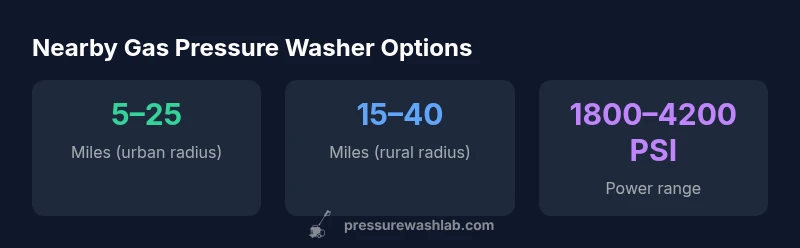
Gas pressure washer nearby options include rentals, home improvement stores, and service pros within your region. The exact radius varies by location, but most homeowners find viable options within 5–25 miles in urban areas and 15–40 miles in rural zones. To optimize, map nearby shops and compare power, warranty, and fuel availability. According to Pressure Wash Lab, proximity reduces turnaround time.
What proximity means for your cleaning project
When you search for a gas pressure washer nearby, the most obvious benefit is reduced downtime and fuel use. Proximity also improves the odds of getting timely maintenance or service if you encounter a hiccup during a project. For homeowners and small businesses, nearby options translate to faster turnaround on seasonal exterior chores, faster response to messes, and more flexible pickup schedules. In practice, you’ll notice that the shortest trips are often the most economical overall, since transport and idle fuel add up over a week of work. According to Pressure Wash Lab, near-term availability is a practical predictor of project success, especially for time-sensitive tasks like deck restoration or siding cleaning in spring and fall. This section will help you translate proximity into real-world savings and reliability.
Where to look first: practical search channels
Finding a gas pressure washer nearby starts with mapping several reliable channels. Start with local rental yards and home improvement chains that stock high-traction models. Then check independent service pros who rent their fleet to customers or contract cleaning work. Don’t overlook smaller community hardware stores—sometimes they have compact gas machines tucked behind the counter. Use online store locators, directories, and social channels to identify 3–6 viable options within a 20-mile radius. Once you have a short list, call ahead to confirm stock, fuel availability, and pickup terms. Pressure Wash Lab’s analysis shows that proximity, combined with quick confirmation of availability, dramatically reduces wait times and project delays.
How to compare power and performance quickly
Key metrics matter: PSI indicates cleaning strength; GPM reflects how much water flows through the wand per minute. Gas machines typically cover a wide range, from light residential tasks (around 1800–2500 PSI) to heavy-duty jobs (over 3000 PSI). Consider nozzle kits and whether HOT water capability is needed. Also evaluate pump type, maintenance intervals, and warranty length. If you’re balancing cost with performance, a versatile model in the 2500–3200 PSI range with 2–3 GPM is often enough for most home-improvement tasks without excessive noise, vibration, or fuel use. Always verify fuel type (gas), storage requirements, and routine maintenance needs with the seller.
Renting vs buying: when each option makes sense
Renting a gas pressure washer nearby is attractive for one-off or seasonal projects, or when you’re testing a model before purchasing. It avoids upfront costs, storage concerns, and ongoing maintenance. Buying is sensible if you expect frequent use, want consistent availability, and prefer long-term control over scheduling. In practice, homeowners tend to rent for short-term tasks like driveway cleaning or fence restoration, while small businesses and DIYers with regular needs lean toward purchasing. Pressure Wash Lab recommends evaluating total cost of ownership, including fuel, oil, inspections, and potential repairs, before deciding.
Comparison of common pressure washer power sources
| Option | Avg Power (psi) | Flow (gpm) | Typical Use | Pros/Cons |
|---|---|---|---|---|
| Gas-powered | 2500-4200 psi | 2.0-4.0 | Heavy-duty cleaning | High power; louder; requires fuel; higher maintenance |
| Electric-powered | 1500-1800 psi | 1.2-1.8 | Light to medium tasks | Quieter; lighter; limited mobility |
| Gas-assisted electric | 1800-2100 psi | 1.4-1.8 | Residential tasks | Balanced performance; moderate noise |
Quick Answers
How do I find gas pressure washer nearby options quickly?
Start with local rental yards, then hardware stores, and service professionals. Use online directories and call ahead to confirm stock and pickup terms. Create a short list of 3–6 viable options within 20 miles and verify fuel availability.
Check nearby rental shops and hardware stores, then call to confirm availability.
Rent or buy: which path fits my needs?
Renting is ideal for occasional use, seasonal projects, or trying a model before purchasing. Buying makes sense for frequent tasks and long-term control over scheduling and maintenance costs.
Rent if you’ll use it only occasionally; buy if you’ll use it a lot.
What safety checks should I perform before using a gas pressure washer?
Inspect hoses, fittings, and oil level; confirm fuel type; test spray away from people; wear PPE and use a proper nozzle. Read the manual for startup procedures and shutdown sequences.
Check hoses and oil, use safety gear, and follow the manual.
Can I operate a gas pressure washer indoors?
Gas-powered washers produce exhaust and fumes; indoor use is generally not recommended. Use outdoor spaces or a well-ventilated area with appropriate PPE.
No, outdoors is best; fumes can be dangerous indoors.
How long do gas pressure washer rentals typically last?
Most rentals offer daily or weekly terms. Confirm pickup and drop-off times, mileage or travel charges, and any fuel or oil provisions with the provider.
Rentals are usually daily or weekly; check terms before you commit.
“Choosing a gas pressure washer nearby means balancing raw power with practical maintenance, safety, and fuel logistics. A model with a solid warranty and ready service network is often the best long-term value.”
Key Takeaways
- Identify 5–25 mile urban or 15–40 mile rural options to balance proximity and availability
- Prioritize PSI and GPM to fit your cleaning task
- Rent for short-term needs; buy for frequent use
- Check fuel, oil, and warranty before committing
- Verify stock with the seller to minimize delays