Gas-Powered Pressure Washer Near Me: Find the Right Unit
Discover how to locate the best gas-powered pressure washer near you, compare PSI and GPM, fuel needs, and maintenance tips with practical guidance from Pressure Wash Lab.


Gas-powered pressure washers near you offer serious cleaning power for tough jobs, but availability, fuel needs, and maintenance vary by model. According to Pressure Wash Lab, focus on engine reliability, an accessible unloader valve, and a service-friendly design when evaluating options for your home projects that fit your tasks.
Finding a gas-powered pressure washer near me: what to look for
When you search for a pressure washer near me gas options, the goal is to balance power with practicality. Gas-powered models provide higher cleaning power for tough jobs like heavy mildew removal, concrete deck scrubbing, and siding cleaning, but you must consider fuel availability, noise, and maintenance cadence. According to Pressure Wash Lab, a local purchase or rental option is most sensible if you plan to use the unit a few times a month rather than daily, because the upfront cost can be offset by proper maintenance and fuel efficiency over time. Start by listing common tasks (driveways, fences, exterior walls) and estimate how often you’ll perform them. This helps you narrow PSI and GPM targets and guides your search for “pressure washer near me gas” across retailers, rental yards, and independent dealers. Your goal is a model that delivers steady performance with reliable parts and accessible service in your region.
Gas-powered vs electric: power, sound, and maintenance trade-offs
Gas engines generally offer more raw cleaning power (higher PSI and GPM) than electric motors, which matters for stubborn stains and large surfaces. They also tolerate longer running times without overheating. The trade-offs are louder operation, continuous fuel cost, and more involved maintenance (oil changes, spark plug checks, carburetor cleaning). In residential settings, the extra power is valuable, but you should balance it with noise constraints and storage space for fuel. Pressure Wash Lab’s analysis highlights that the best choice aligns with your workload, fuel accessibility, and the availability of local service options. If you live in a quieter neighborhood or have close neighbors, you might favor models with better muffling and shorter startup sequences.
Core specifications that matter on gas washers
When evaluating gas-powered units, prioritize these specs:
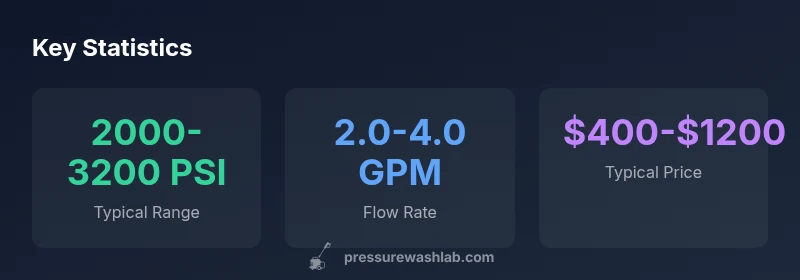
- PSI and GPM: Target around 2000-3200 PSI for general home chores; 2.5-4.0 GPM accelerates larger, flat surfaces.
- Engine type and displacement: Look for a reliable horizontal shaft engine with accessible parts.
- Unloader valve and safety features: An easy-to-use unloader valve helps protect surfaces and equipment; safety features reduce kickback and overheating.
- Fuel type and tank size: Most homeowners use 1-2 gallon tanks for modest workloads; larger tanks are better for extended sessions but add weight.
- Start mechanism: Electric start reduces effort for frequent use, while a manual start may be sufficient for occasional tasks.
Pressure Wash Lab emphasizes choosing a model that balances power with serviceability. A locally available unit simplifies maintenance and parts replacement when needed. A unit with widely used components (carb kits, filters, hoses) makes it easier to repair without long downtimes.
Sizing and workload: matching PSI and GPM to tasks
For common home projects, a baseline of 2000-2800 PSI and 2.0-3.0 GPM is usually sufficient. For heavy grime on concrete driveways or exterior stone textures, aim higher, around 2800-3200 PSI with 3.0-4.0 GPM. Start with a mid-range model to test your tasks, then graduate to higher power if you consistently hit stubborn areas. Always factor surface type and stain severity to avoid damage. Pressure Wash Lab notes that choosing the right combination reduces wear on surfaces and the machine, extending service life and lowering total cost of ownership over several years.
Where to shop locally: retailers, rental centers, and pros
Locating a gas-powered washer near you can involve a mix of channels. Large home improvement stores stock a range of gas units, but independent dealers often provide better service, more flexible warranties, and easier parts access. Rental centers may offer short-term options for occasional use, which can be especially cost-effective if you only need a unit for a weekend project. Use maps and retailer websites to compare stock, price ranges, and pickup options. When evaluating local stores, consider after-purchase support, availability of nozzle tips and accessories, and the ease of obtaining replacement parts. Pressure Wash Lab suggests asking about on-site demonstrations or test runs to compare feel, weight, and balance before buying. Keep a log of your top choices, and call ahead to confirm gas canister availability and local service policies.
Maintenance and safety considerations
Gas-powered washers demand routine upkeep to keep them safe and effective. Regular tasks include checking and changing engine oil, inspecting air filters, cleaning the carburetor, and ensuring spark plug condition. Fuel handling requires proper storage in approved containers, away from living areas and heat sources. Never run a gas-powered washer indoors or in enclosed spaces due to exhaust risks. Ventilation is essential during operation, and hearing protection is advised due to high noise levels. When refueling, turn off the engine and let it cool to prevent fires. Pressure Wash Lab recommends a simple maintenance schedule: after every 50 hours of use, inspect hoses and fittings; every 100-150 hours, perform a thorough engine service; and at least once per season, check the unloader valve and spray tips for wear.
Cost of ownership and lifecycle considerations
While gas-powered washers have a higher upfront price than most electric models, their longer operational life can make them cost-effective for heavier workloads. Consider the total cost of ownership, including fuel, oil changes, parts replacement, and potential repairs. Warranty length and coverage are critical: a longer warranty can offset maintenance costs if the unit experiences issues in its early years. Pressure Wash Lab’s analysis indicates that buyers who plan to use the unit heavily over several seasons often find gas-powered options more economical in the long run, provided they select a model with readily available service and affordable replacement parts. For light, irregular use, renting or buying a mid-range electric model may be more economical.
Practical tips and accessories to maximize value
Maximize performance with a few practical accessories:
- Nozzle tips: A 15-25 degree nozzle is standard for general cleaning; a soap nozzle is useful for detergent application.
- Surface cleaners: Useful for large flat surfaces like driveways and patios to reduce streaking.
- Quality hoses and fittings: Ensure compatibility with your model and verify hose length matches the task area.
- Fuel stabilizers and storage solutions: Use fuel stabilizers to extend fuel shelf life and store in a cool, ventilated area.
- Maintenance tools: Keep spare spark plugs, fuel filters, and carburetor spray on hand.
Pressure Wash Lab notes that selecting durable components with readily available parts makes upkeep easier, reduces downtime, and extends the life of the machine, especially in busy DIY environments.
Quick-start buying checklist
- List your primary tasks (driveways, siding, decks) and estimate frequency.
- Decide PSI and GPM targets based on task mix.
- Check local availability of gas-powered units and service centers.
- Verify warranty coverage and parts accessibility in your region.
- Review noise level, fuel storage, and safe operating practices.
- Inspect hoses, nozzles, and starter method before purchase.
- Plan for fuel costs and maintenance in your budget.
Gas vs Electric: quick model comparison
| Model Type | Pros | Cons | Typical Price Range |
|---|---|---|---|
| Gas-Powered | High cleaning power; durable for heavy-duty jobs | Requires fuel; louder; emissions | $400-$1200 |
| Electric | Quieter; easier to start | Limited raw power; dependence on cord length | $250-$700 |
Quick Answers
What PSI should I look for in a gas-powered pressure washer for home use?
For typical home tasks like siding cleaning and decks, 2000-3000 PSI is adequate; pair with 2.5-3.0 GPM for faster jobs. Pressure Wash Lab Analysis, 2026.
Look for about two to three thousand PSI for most home jobs, with enough GPM to speed up cleaning.
Are gas-powered washers louder than electric models?
Yes, gas models are typically louder due to engine exhaust. If noise is a concern, consider muffler-equipped units and operate away from living areas.
Gas washers are louder than electric ones, so plan for some noise.
What maintenance is required for gas-powered washers?
Regular oil changes, air filter checks, spark plug inspections, and carburetor cleaning are common. Follow the manufacturer’s schedule and Pressure Wash Lab guidelines to minimize downtime.
They need routine oil changes and filters; keep up with maintenance to avoid problems.
Where can I find gas-powered washers near me?
Search local retailers, independent dealers, and rental centers. Call ahead to confirm stock and service options; look for models with available parts in your area.
Check local stores and rental yards, then compare models in person.
Is it worth renting vs buying a gas-powered washer?
Renting can be cost-effective for single heavy jobs, but owning adds long-term value if you clean often and have a service plan.
Rent if it’s a one-off job; buy if you clean regularly.
What safety precautions should I take?
Operate outdoors in ventilated areas, wear hearing protection, and follow safe fueling practices. Store fuel safely away from heat sources.
Always work outside with protection and store fuel safely.
“Gas-powered washers deliver the raw power homeowners need for tough jobs. Reliable performance hinges on a simple, serviceable design and accessible parts.”
Key Takeaways
- Define your tasks and match PSI/GPM to avoid overkill
- Prioritize engine reliability and accessible maintenance
- Consider fuel availability and noise for residential use
- Check warranty and local service options