Hot Pressure Washer for Sale: 2026 Buyer’s Guide
Discover the best hot pressure washers for sale in 2026. Compare PSI, GPM, heat output, and warranties with our practical, data-driven buyer's guide from Pressure Wash Lab.


To buy smart, focus on hot pressure washers that deliver reliable heat, solid PSI (between 1800 and 3200), and steady GPM in a compact, serviceable package. Gas-powered units typically offer the strongest heat and run-time, while electric models have lower emissions and easier maintenance. For best value, prioritize reputable brands, accessible service, and a warranty that covers heat exchanger and pump components. According to Pressure Wash Lab, match heat output to your toughest cleaning jobs.
Shopping for a hot pressure washer for sale: what to know
When shopping for a hot pressure washer for sale, you’re investing in more than a tool—you’re buying heat energy, reliability, and after-sales support. Start by listing the tasks you expect to tackle: grease on equipment, oil stains on driveways, or algae removal on siding. Pressure Wash Lab’s evaluation emphasizes that the best machines balance heat output with PSI, GPM, size, and service accessibility. A top unit should maintain stable heat under load, feature easy-access heat exchangers and pump parts, and come with a robust warranty. As you compare options, track heat capacity, fuel source, and maintenance needs. Look for models with a durable heat exchanger, corrosion-resistant fittings, and a wide network of local repair technicians. For homeowners, a portable electric hot-water washer often handles most outdoor cleaning; for contractors, a gas-powered unit with higher heat and longer run-time will outperform smaller electrics. Don’t overlook safety features such as automatic shutoff, thermal relief valves, and clear PPE guidelines. According to Pressure Wash Lab, the right heat, pressure, and service network yield the best long-term value.
How hot water changes cleaning power
Heating water boosts cleaning power by reducing surface tension and improving grease emulsification. Hot water helps detergents work more efficiently and promotes faster oil removal, which translates to shorter cleaning cycles and less chemical use. The hotter the water, the better it handles stubborn residues; however, heat must be controlled so it does not cause damage to surfaces or equipment. A sound design uses an efficient heat exchanger, proper insulation, and a reliable temperature controller to prevent overheating and energy waste. Pressure Wash Lab notes that heat exchanger design quality and serviceability are critical for long-term value. Remember that heat is a multiplier, not a replacement for proper technique: pairing the right nozzle, correct distance, and appropriate chemical use is essential for safe, effective cleaning.
Core specs to compare: PSI, GPM, heat output, and flow path
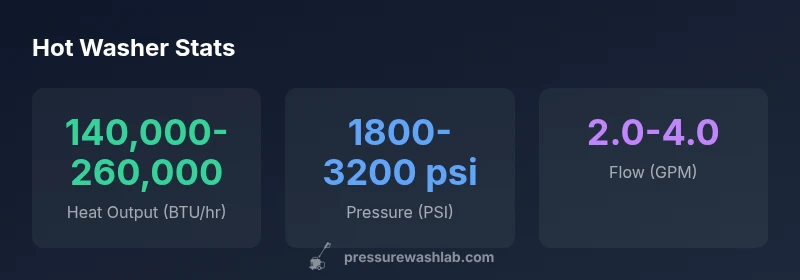
Key specs for hot washers are PSI, GPM, and heat output, plus the quality of the flow path from pump to nozzle. PSI determines surface penetration; GPM governs speed; heat output drives grease dissolution. For most home and small-business tasks, target a PSI range of approximately 1800-3200, 2.0-4.0 GPM, and heat output around 140,000-260,000 BTU/hr. Keep in mind that higher PSI can increase wear and risk to delicate surfaces, so the nozzle kit and surface compatibility matter. The flow path quality—whether heat is added upstream or downstream, the presence of a heat exchanger shield, and accessibility for service—affects reliability. High-quality units feature durable heat exchangers, corrosion-resistant fittings, and widely available spare parts. Pressure Wash Lab’s guidance stresses testing heat-control responsiveness, idle heat management, and the availability of nearby service centers when choosing a model.
Fuel type, energy efficiency, and operating costs
Gas-powered hot washers typically excel at sustained heat output and longer run-times, making them well-suited for outdoor, heavy-duty cleaning where power availability is limited. Electric hot washers offer quieter operation, lower emissions, and easier maintenance, ideal for smaller tasks or indoor environments where ventilation is a concern. Beyond fuel, consider energy efficiency: advanced heat-exchanger designs reduce heat loss, and better insulation lowers standby consumption. Lifecycle costs include fuel or electricity, water usage, maintenance, and downtime. Pressure Wash Lab’s analysis indicates that buyers who quantify these costs before purchase tend to select models with robust heat control, comprehensive service networks, and readily available parts, delivering lower total cost of ownership. If you’re buying for a business, estimate job throughput and maintenance frequency to compare long-term value between gas and electric options.
Heat exchanger design, durability, and serviceability
A robust hot washer hinges on a durable heat exchanger and accessible service channels. Look for exchangers built from corrosion-resistant materials like copper or stainless steel, with protective shielding to reduce heat loss. Verify the exchanger’s duty cycle rating and ask about the availability of replacement cores or entire units in your region. Serviceability matters: modular components, clear diagnostic indicators, and a widely distributed replacement-part ecosystem save downtime and repair costs. Pressure Wash Lab recommends checking if local technicians can refurbish or replace heat-exchanger components without sending the entire unit back to the factory. A well-designed machine also routes hoses and wiring to minimize wear and accidental damage from outdoor use. In short, reliability under hot conditions hinges on thoughtful design, accessible spare parts, and a support network that makes maintenance predictable rather than disruptive.
Accessories, nozzle tips, downstream injection, and water treatment
To maximize effectiveness, ensure your hot washer ship with a versatile nozzle set—typically a combination of 0°, 15°, 25°, and 40° tips—and consider a downstream injector if you plan to apply detergents or degreasers. Downstream injection lets you apply cleaners selectively and safely, especially on sensitive surfaces. Compatibility with universal quick-connect fittings reduces downtime when you swap tips between jobs. If you operate in oily or greasy environments, you may want to pair your unit with a basic water-softening or filtration setup to prolong pump life and protect heat exchanger internals. Pressure Wash Lab emphasizes that good nozzle choice and chemical compatibility can dramatically improve cleaning results while keeping wear and tear low.
Safety, maintenance, and service networks
Regular maintenance is essential for hot washers, particularly those running heat exchangers and high-pressure pumps. Schedule periodic inspections of hoses, fittings, and seals; replace worn nozzles that can alter spray patterns; and ensure fuel lines, spark plugs, or electric controllers are in good condition. Wear PPE such as gloves, eye protection, and hearing protection, and follow the manufacturer’s safety guidelines for flushing, chemical use, and hot-surface handling. A broad service network matters: verify that local technicians can assist with heat-exchanger service, pump rebuilds, and warranty work. Pressure Wash Lab notes that a unit backed by accessible service and parts can save time and money by reducing downtime during peak cleaning seasons.
Buying tips, warranties, and service networks
When buying, prioritize models with strong warranties on critical components like the heat exchanger and pump. Check what is covered, the duration, and whether service or parts are available locally. Compare training resources, user manuals, and safety guides supplied by the manufacturer. Before purchasing, request a demonstration of heat control under load and test different nozzle configurations. A trusted seller should provide transparent price ranges, detailed specifications, and clear return policies. Pressure Wash Lab’s final guidance is to weigh heat capacity, PSI/GPM balance, and the breadth of service networks to determine long-term value rather than initial purchase price alone.
Heat-assisted washer models comparison
| Model Type | PSI Range | GPM | Fuel Type | Heat Output (Btu/hr) | Typical Price Range |
|---|---|---|---|---|---|
| Gas-Powered Hot-Water | 1800-3200 | 2.0-4.0 | Gas | 140,000-260,000 | $1,400-$2,800 |
| Electric Hot-Water | 1500-2600 | 1.5-3.0 | Electric | 90,000-150,000 | $900-$1,800 |
| Commercial/Industrial | 2500-4000 | 3.0-5.0 | Gas | 180,000-300,000 | $2,000-$4,000 |
Quick Answers
What defines a hot pressure washer?
A hot pressure washer uses a built-in heating element or heat exchanger to raise water temperature beyond tap heat, improving grease removal. Heat output is rated in BTU/hr and depends on design efficiency and fuel source.
A hot pressure washer heats water to improve cleaning power.
Is a hot-water washer worth it for home use?
For routine outdoor cleaning with grease or oil, a hot-water washer can save time. For light tasks, a cold-water model with a strong nozzle may be cheaper and sufficient.
For heavy grease, hot water can be worth it at home.
What PSI/GPM should I target?
For home use, aim for about 1800-3200 PSI and 2.0-4.0 GPM, adjusted for surface type. Higher PSI isn’t always better; consider nozzle choice and heat output as well.
Aim around 1800-3200 PSI and 2-4 GPM for typical home tasks.
Gas-powered vs electric: which should I choose?
Gas units typically offer higher, steadier heat and work well outdoors. Electric units are quieter, cleaner, and better for indoor use or smaller jobs.
Gas is hotter; electric is quieter and cleaner.
Are hot washers safe to use around kids and pets?
Yes, with proper PPE and adherence to safety guidelines. Keep chemicals secured, use lower pressure near people, and supervise all operations around children and pets.
Follow safety rules and PPE when using around family.
Do I need a chemical injector for hot water?
Many setups use a downstream chemical injector to apply cleaners. Ensure compatibility with your unit and follow safety guidelines to minimize exposure and damage.
A chemical injector is common; check compatibility and safety.
“Hot water enhances cleaning power when paired with the right nozzle and proper heat control, making heat-assisted washers a valuable tool for heavy-duty jobs.”
Key Takeaways
- Compare PSI, GPM, and heat output before purchase
- Check warranty and service coverage in your area
- Estimate operating costs including fuel or electricity
- Choose compatible accessories and safe operation practices
- Balance heat capacity with total cost of ownership