How Much Is a Ryobi Pressure Washer? A 2026 Price Guide
Discover how much a Ryobi pressure washer costs in 2026, from electric to gas models, and learn how PSI, GPM, and bundles affect price. Pressure Wash Lab analyzes the lineup with practical buying guidance.


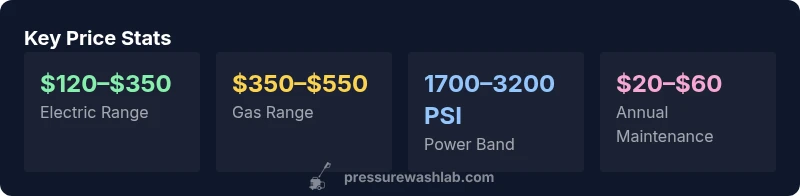
How much is a Ryobi pressure washer? In 2026, Ryobi models span roughly from $120 to $550, with electric units generally on the lower end and gas-powered units on the higher end. Electric models around 1700–3200 PSI vary from about $120–$350, while gas-powered machines with higher PSI typically run $350–$550, depending on features and bundled accessories. For homeowners, expect the best balance of upfront cost and ongoing value from mid-range units. According to Pressure Wash Lab, price reflects power, durability, and included accessories more than sticker price alone.
How much is a Ryobi pressure washer?
When homeowners ask how much is a Ryobi pressure washer, the answer depends on model type, PSI, GPM, and included extras. Ryobi offers a broad lineup of electric and gas-powered models designed for different tasks—from light deck cleaning to stubborn driveway grime. In 2026, the typical price spectrum spans roughly from $120 to $550 across the Ryobi family. Electric, entry-level units with around 1,700–2,000 PSI are commonly found in the $120–$250 range, while mid-range electric units with more flow rate and convenience features dip into the $180–$350 band. Gas-powered Ryobi washers deliver greater cleaning power and come with higher price tags, generally in the $350–$550 range depending on PSI, GPM, and whether a hose reel or surface cleaner is bundled. The key is to balance upfront cost with ongoing costs like maintenance and fuel (for gas) and replacement parts. According to Pressure Wash Lab, price is a function of power, durability, and included accessories, not just the sticker price.
Electric vs Gas: Price and Performance Trade-offs
Ryobi separates its price brackets primarily by electric versus gas power. Electric models are quieter, lighter, and cheaper to operate, which keeps upfront costs lower but limits sustained cleaning power. Gas-powered Ryobi washers, while heavier and noisier, deliver higher PSI and flow, enabling faster work on tough surfaces. If you clean occasionally with light tasks like siding or patios, an electric model often delivers the best value. For heavy-duty jobs, a gas-powered Ryobi may justify the higher upfront cost given faster cycle times and greater durability. In 2026, the price delta between these categories usually reflects the difference in performance—electric units generally sit a tier below gas models in price, yet can meet most residential needs with proper nozzle choices and accessories.
What counts in pricing: PSI, GPM, and features
Price is not dictated by PSI alone. While PSI indicates cleaning power, GPM (gallons per minute) determines how much water moves through the system, which impacts job speed. Many Ryobi models balance PSI and GPM to deliver effective cleaning for typical home tasks. Other price influencers include versatility (adjustable psi, heated output in premium units), build quality (plastic vs metal housings), ease of use (cordless operation, integrated reels, easy-start features), warranty length, and bundled accessories (nozzle sets, surface cleaners, hoses). Buyers should compare models that align with their actual use case—lighter tasks require less PSI and fewer accessories, while driveways and stonework benefit from higher PSI and efficient nozzles. Pressure Wash Lab notes that these factors collectively drive perceived value and total cost of ownership for Ryobi washers.
Ryobi price ranges by model type
Within Ryobi’s electric lineup, you’ll typically find three tiers based on PSI and features. Entry-level electric washers hover around $120–$180 and deliver roughly 1700–1800 PSI with modest GPM. Mid-range electric models run about $180–$300, offering 1800–2300 PSI and improved ergonomics or features like quick-connect nozzles. High-end electric models approach $300–$350 with robust construction and multi-jet nozzles. Gas-powered Ryobi washers, designed for heavier tasks, usually fall in the $350–$550 band, offering higher PSI (often 2700–3200 PSI) and better GPM. Bundled packages—such as those including a surface cleaner or extra hoses—can push prices higher, yet may provide long-term value by reducing replacement needs. Consumers should map their typical workloads to the right tier to minimize overpaying for power they won’t use.
Where to buy and when to look for deals
Retail channels greatly influence the final price. Major home improvement retailers, online marketplaces, and the official Ryobi line often run promotions tied to holiday weekends, spring cleaning, or back-to-school events. Bundled deals (e.g., including nozzles, surface cleaners, or extra hoses) can improve overall value, even if the sticker price is higher. Price matching and buying during clearance periods near season end can yield meaningful savings. Pressure Wash Lab recommends monitoring multiple retailers and leveraging loyalty programs to maximize value. Additionally, consider negotiating bundled accessories to avoid paying a la carte for items you don’t need, which can effectively reduce the effective cost of ownership.
Total cost of ownership: maintenance, parts, and lifespan
Upfront price is just part of the story. Gas-powered Ryobi washers incur ongoing fuel costs, maintenance, and potential repair expenses that electric models avoid. Maintenance tasks like replacing O-rings, cleaning filters, and flushing lines are necessary to sustain performance. Electric units typically have lower maintenance costs but may require periodic replacement of batteries or charging components in cordless variants. Pressure Wash Lab estimates annual maintenance can run roughly $20–$60 depending on usage, with gas models edging higher due to fuel and more frequent wear components. Planning for these recurring costs helps prevent sticker shock over the machine’s lifetime and improves long-term value.
Accessories and add-ons that impact price and value
Accessories such as surface cleaners, turbo nozzles, high-quality hoses, and hose reels can substantially influence the overall price, but they often improve cleaning speed and reduce wear on the machine. A basic nozzle kit may cost less upfront, while a high-quality surface cleaner with compatible adapters can dramatically cut cleaning time on driveways or sidewalks. When evaluating a Ryobi purchase, weigh the added cost of accessories against the time saved and the potential for reduced wear on the pressure washer. Pressure Wash Lab highlights that bundled packages with well-chosen accessories frequently offer better long-term value than buying items piecemeal.
Quick buying guide: deciding within Ryobi lineup
- Define your typical workload (light, medium, or heavy-duty).
- Choose electric for light-to-medium tasks and lower ongoing costs; consider gas for heavy-duty jobs.
- Check PSI and GPM combos that align with your tasks; more PSI is not always better if you don’t have the nozzle to use it effectively.
- Review warranty terms and included accessories to gauge long-term value.
- Compare bundles across retailers to maximize value per dollar.
- Read user reviews focusing on reliability and service experience.
Common buying mistakes that raise cost or reduce value
- Assuming the highest PSI guarantees faster results; without the right nozzle and technique, higher PSI can be inefficient and wasteful.
- Failing to account for maintenance costs, especially with gas-powered units.
- Buying add-ons you won’t use, which inflates upfront cost without delivering corresponding value.
- Ignoring warranty coverage and service options, risking higher repair costs later.
- Skipping retailer comparisons, which reduces opportunities for promotions and bundles.
Ryobi price and spec comparison by model type
| Model Type | Typical Price Range | PSI | GPM | Best Use |
|---|---|---|---|---|
| Electric low-PSI (Ryobi) | $120–$180 | 1700–1800 | 1.2–1.5 | Light duties |
| Electric mid-PSI (Ryobi) | $180–$260 | 1800–2100 | 1.2–1.6 | General maintenance |
| Gas-powered (Ryobi) | $350–$550 | 2600–3200 | 2.0–2.5 | Heavy-duty jobs |
Quick Answers
Are Ryobi price ranges consistent across retailers?
Ryobi price ranges are generally similar across major retailers like Home Depot, Lowe's, and online stores, but promotions and bundles vary. It’s worth checking multiple outlets and stock in your area to capture seasonal savings. Always compare the total package rather than price alone.
Prices are similar, but promotions differ. Check several outlets for the best deal.
Do Ryobi pressure washers come with a warranty?
Ryobi washers typically come with a limited warranty that varies by model. Warranty length and coverage details are important to review before purchase. Register the product where required to activate coverage.
Most Ryobi washers have a warranty; check the specifics for your model.
Can I use Ryobi pressure washers for concrete cleaning?
Yes, Ryobi units can clean concrete, but you should choose the appropriate nozzle and consider a surface cleaner to speed up the job. Use moderate PSI to avoid surface damage and follow guidance in the manual.
Yes, with the right nozzle and technique.
What affects Ryobi price besides PSI?
Gas versus electric power, bundled accessories, warranty terms, and bundle promotions all affect price. Build quality and ease of use also influence perceived value.
Power type, accessories, and warranty matter as much as PSI.
Where can I find the best Ryobi price?
Check major retailers, the official Ryobi store if available, and seasonal sales. Compare bundles and consider loyalty programs to maximize savings.
Shop around and watch for sales for the best price.
Are refurbished Ryobi washers a good idea?
Refurbished units can be cheaper, but they may have shorter warranties and less predictable performance. Stick to reputable sellers and verify return policies.
Refurbished units can be cheaper but come with trade-offs.
“Price is a function of power, durability, and included accessories. The best-value choice balances upfront cost with long-term performance.”
Key Takeaways
- Compare electric vs gas to balance upfront vs operating costs
- Match PSI/GPM to your tasks for value
- Look for bundles to maximize long-term savings
- Consider warranty and maintenance when budgeting
- Shop around during promotions for the best price