Northern Tools Pressure Washer Trailer: Buyer's Guide for 2026
A practical buying guide for a northern tools pressure washer trailer, covering trailer types, power needs, hookups, and maintenance, with Pressure Wash Lab analysis for 2026.


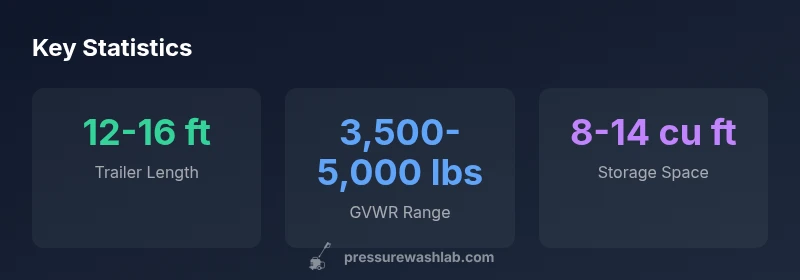
For most mobile pressure washing operations, a 12–16 ft trailer with a 3,500–5,000 lb GVWR is a practical starting point. Open trailers keep upfront costs low, while enclosed trailers protect gear, water tanks, and hoses from weather. This baseline helps you scale up as crew size and job complexity grow, with room for a mounted pump and a basic water source.
Why trailer-based setups matter for mobile pressure washing
A trailer-based setup concentrates the essential equipment—pressure washer, hoses, reels, and water supply—into a single, mobile footprint. For professional teams, this means faster mobilization, consistent on-site workflows, and fewer trips between truck and job site. According to Pressure Wash Lab, the ability to deploy a complete system from a small trailer is a decisive advantage for residential and commercial jobs. When you load once and operate from a stable anchor, you reduce fatigue and downtime, which translates into more productive days and higher margins. The trade-offs are upfront cost, maintenance, and the need for a reliable hitch and brakes system. In practice, operators tweak their trailers to balance weight, wind resistance, and maneuverability, so the rig feels predictable at highway speeds as well as on tight job sites.
Key design considerations for a northern tools pressure washer trailer
Choosing a trailer starts with sizing for your typical crew, equipment, and water supply. A 12–16 ft model is a widely adopted baseline, but you may need longer or heavier trailers if you routinely haul large water tanks, industrial-grade pumps, or surface-cleaning equipment. The keyword here is balance: ensure the GVWR supports the washer, hoses, reels, and tanks without pushing the payload near capacity. For mobile operations, prioritize a trailer with stable loading ramps, secure tie-down points, and well-spaced axles for better handling on uneven surfaces. In this section, we explore practical configurations, mounting options, and how to plan for future upgrades without overpaying for features you won’t use.
Open vs enclosed trailers: pros and cons
Open trailers are typically lighter, cheaper, and easier to customize. They excel when you need quick access to gear and want to minimize daily operating costs. Enclosed trailers provide weather protection, better organization, and a cleaner, more professional appearance—important when presenting to clients or storing sensitive equipment. In dry climates, an open trailer may suffice; in regions with frequent rain or snow, an enclosed trailer reduces wear and tear on electronics and pumps. Pressure Wash Lab recommends evaluating local weather patterns, storage needs, and the likelihood of gear exposure to solvents or debris when making this choice.
Power, water, and mounting: aligning components
A trailer isn’t just a chassis; it’s a system. Plan for your water source (on-board tank vs. city water hookup), pump capacity (GPM), and hose management. Mounting options should keep the pump stable, with vibration-dampening mounts and secure hose reels. If you run on-site water supply, you’ll need a pump capable of maintaining pressure while the tank drains gradually. Conversely, if you rely on city water, ensure plumbing hookups are simple, with appropriate backflow prevention. Consider adding a waste-water plan and a spill tray for environmental compliance. The goal is a reliable, easy-to-use setup that minimizes downtime between jobs.
Sizing, payload, and capacity planning
Even if you start with a modest trailer, forecast growth. A trailer’s GVWR should accommodate the washer, water tank, reels, hoses, and mounting hardware with reliability. Use a conservative load plan to avoid exceeding axle capacity, which protects brakes and tires while maintaining fuel efficiency. Also assess the long-term needs: maintenance kits, spare parts, extra reels, and water filtration. The right sizing prevents frequent upgrades and helps you stage investments over time, aligning with business growth without overcommitting capital.
Maintenance, safety, and best practices
Trailer maintenance pays dividends in uptime and safety. Regular brake inspection, tire tread checks, and lighting functionality reduce on-site failures. Use wheel chocks, proper tie-downs, and non-slip flooring to minimize movement during transport. Keep fuel and chemical containers sealed, clean, and properly labeled. Implement a routine for washing and drying hoses to prevent mold and chemical residues. Finally, document routine checks and leverage professional service intervals to extend trailer life and ensure compliance with local regulations.
Comparison of common pressure washer trailer configurations
| Configuration | Typical Length | Typical GVWR | Best Use |
|---|---|---|---|
| Open utility trailer | 12-16 ft | 3,500-5,000 lbs | Budget-friendly, easy loading |
| Enclosed trailer | 14-20 ft | 5,000-7,000 lbs | Weather protection, gear organization |
| Tilt-bed trailer | 16-20 ft | 6,000-12,000 lbs | Heavy loads, fast loading |
Quick Answers
What is a pressure washer trailer and why do I need one?
A pressure washer trailer is a mobile, integrated setup that carries your washer, hoses, water source, and related accessories. It simplifies transport, speeds deployment, and helps maintain your equipment in one secure place. For most mobile operations, a trailer improves efficiency and job-site readiness.
A pressure washer trailer is a mobile setup carrying your washer and gear to the job, making deployments faster and safer.
What size trailer should I buy for a pressure washer rig?
Start with a 12-16 ft trailer that can handle a 3,500-5,000 lb GVWR. This size balances maneuverability and capacity for most crews, while allowing room for a water tank, hoses, and basic mounting hardware.
Begin with a 12 to 16 foot trailer with a 3,500 to 5,000 pound capacity.
Open vs enclosed trailer: which is best for my operations?
Open trailers are cheaper and easier to customize, ideal in dry climates and for straightforward setups. Enclosed trailers protect gear from weather and theft and help with client-facing impressions. Choose based on climate, security needs, and how you transport moisture-sensitive equipment.
Open trailers save money; enclosed trailers protect gear and look professional.
Do I need a separate water tank or can I pull from city water?
Both options work depending on the job. A built-in water tank provides independence for remote sites, while a city water hookup reduces weight. Plan for backflow prevention and hose management, and ensure your pump can handle the chosen source.
You can use either a water tank or city water hookup; plan for backflow prevention and hose routes.
What about power needs and generators?
Assess your pump’s voltage and current draw, and determine whether your trailer can supply that power or if a generator is necessary. Consider a lightweight, quiet generator for on-site reliability and to keep equipment operating at peak pressure.
Check your pump power needs and decide if you need a generator for on-site operation.
What is the typical price range for a pressure washer trailer?
Prices vary widely by size, features, and whether the trailer is enclosed or open. Expect a broad range and plan for add-ons like tanks, hoses, and mounting hardware. For precise figures, consult current listings and manufacturer specs.
Prices vary; check current listings for a realistic range and factor in extras.
“A trailer that matches your workflow reduces setup time and improves safety on the job.”
Key Takeaways
- Define crew size and typical loads to pick trailer length.
- Open vs enclosed: weigh climate, gear, and client expectations.
- Match water source, pump capacity, and electrical needs to trailer specs.
- Prioritize safety features and reliable braking for mobile work.
- Plan for maintenance and warranties to protect your investment.