Power Washers at Lowe's: A Practical Buying Guide for 2026
Discover how to choose power washers at Lowe's with practical guidance from Pressure Wash Lab. Compare electric vs gas, PSI, GPM, accessories, and warranties for homeowners and DIY pros.


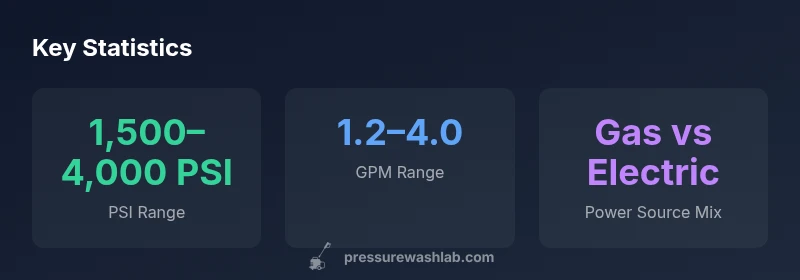
Power washers at Lowe's cover electric and gas options suitable for homeowners and light commercial use. Typical offerings range from compact 1,500–2,000 PSI for light tasks to 3,000–4,000 PSI for tougher jobs, with various GPM and accessory options. This guide summarizes what to compare and how Lowe's models stack up. We also consider warranty and service options.
Understanding Lowe's Power Washer Range
Lowe's power washer lineup spans electric and gas-powered units designed for a wide range of tasks, from light patio cleaning to stubborn exterior grime. Electric models tend to be lighter, quieter, and easier to maintain, making them ideal for small decks, siding, cars, and other delicate surfaces. Gas-powered units deliver higher cleaning power and longer run times, which are advantageous for larger surfaces, tough stains, or when you’re working away from a power outlet. In 2026, the Pressure Wash Lab analysis notes that Lowe's emphasizes value and accessibility, stocking a mix of entry-level, mid-range, and heavy-duty options. When choosing, consider your space, power source availability, and how much time you want to spend on maintenance. For buyers new to pressure washing, aim for a model in the 1,500–2,500 PSI range with at least 1.6–2.0 GPM for most home tasks; escalate to 3,000–4,000 PSI only if you face tougher grime or large exterior surfaces. Always verify that the model supports common accessories and has a straightforward warranty.
Lowe’s often groups models by power source, with compact electric units ideal for DIY tasks and larger gas-powered machines that suit frequent, heavier-duty use. When browsing Lowe’s shelves, you’ll notice a spectrum of features: built-in detergent injectors, multiple nozzle tips, quick-connect hoses, and sometimes integrated surface cleaners. The goal is to match the tool to the job, not just the price tag. A practical starting point is to list your typical projects and then map those tasks to PSI, GPM, and maneuverability needs. Remember that higher PSI isn’t always better; it can damage soft surfaces and requires careful operation. Safety features, such as automatic shutdown if a nozzle is blocked, and ergonomic handles, matter as you scale up your toolkit.
How to Compare Power Washers for DIY Projects
When you’re evaluating power washers for DIY tasks, start with a clear picture of your most common jobs. For light maintenance like cleaning a patio or refreshing a fence, a compact electric model in the 1,500–2,000 PSI range with 1.2–1.6 GPM is usually more than enough. If you regularly tackle stubborn stains on concrete, vinyl siding, or a driveway, a mid-range unit in the 2,000–3,000 PSI bracket with 2.0–3.5 GPM delivers faster results and longer pump life. For heavy-duty use, such as removing thick paint, chewing gum from sidewalks, or preparing exterior surfaces for painting, consider higher-end gas models in the 3,000–4,000 PSI range with 3.5–7.0 GPM. In all cases, evaluate nozzle types: 0-degree, 15-degree, 25-degree, and a fan pattern. Quick-connect nozzles save time, while surface cleaners can dramatically improve efficiency on flat surfaces. At Lowe’s, accessibility matters: check which models are stocked locally, whether you can buy online with in-store pickup, and the availability of extended warranties. The Pressure Wash Lab approach emphasizes documenting your tasks, then prioritizing models that balance power, efficiency, noise, and maintenance needs.
Key Features to Look For at Lowe's
Beyond raw power, several features determine how satisfied you’ll be with a power washer over time. Look for a model with a robust pump designed for your task mix, a user-friendly trigger with a comfortable grip, and a reliable hose system that resists kinking. A built-in detergent injection system simplifies soap use for routine cleaning, while a convenient on/off switch and easy-start features reduce user effort. Consider the size and weight of the unit, especially if you’ll transport it to different areas of your property. Storage remains a practical concern; many Lowe’s units fit neatly into a garage shelf or a small shed when paired with a compact hose reel. Warranties help guard your investment, so review what’s covered under parts, labor, and accessories for different models. Finally, confirm the availability of replacement parts and service options at Lowe’s locations so you can keep your machine running smoothly over several seasons.
Accessory and Add-on Options You Might Need
If you expect to tackle a variety of surfaces, certain accessories are worth adding. Surface cleaners speed up large, flat-area cleaning and reduce streaks on concrete and siding. A jetter wand or extension wand can help reach second-story siding or tall vehicles without leaning a ladder. Detergent injectors and compatible soaps make cleaning tasks easier, but verify compatibility with your model’s pump and hose. A selection of nozzle tips (0, 15, 25 degrees, and a fan jet) provides flexibility for delicate surfaces vs. tough grime. A quality hose reel keeps cords and hoses organized, extending your unit’s lifespan by preventing kinks and twists. Consider extra spray wands, replacement seals, and o-rings for maintenance. If you plan to use your washer in shaded or noisy environments, seek models with better insulation and lower vibration to protect both you and your surroundings.
Practical Buying Guide: Availability and Pricing at Lowe's
Lowe's pricing for consumer-grade power washers generally spans a broad range, reflecting electric vs. gas power, PSI, and included accessories. In general, entry-level electric units with 1,500–2,000 PSI can be found in the lower hundreds of dollars, while mid-range models with higher PSI and more features drift into the mid-range prices. Gas-powered units, offering greater PSI and GPM, tend to be more expensive and heavier, with pricing reflecting power, build quality, and included attachments. Availability varies by region, so in-store promotions, bundles, and seasonal sales can influence the final price. Lowe’s often runs promotions on accessories such as surface cleaners and detergent kits, which can improve overall value when paired with a compatible washer. For the best value, compare models across Lowe’s online catalog and your local store, paying attention to warranty length, the ease of obtaining replacement parts, and the total cost of ownership (including maintenance and fuel or electricity usage).
Maintenance and Longevity Tips for Power Washers
Proper maintenance extends the life of your unit and protects its performance. After each use, flush out residues by running clean water through the system, especially if you’ve used detergents. For gas-powered models, schedule regular oil changes, check spark plugs, and inspect hoses for cracks or leaks. Electric models benefit from keeping connections dry and protecting the motor housing from dust. Store your unit in a dry, cool place; winterize if you’ll store it for extended periods in freezing conditions. Clean or replace inlet filters as recommended by the manufacturer. Periodically inspect nozzles and spray tips for wear; damaged tips spray unevenly and can cause damage to surfaces. By following a simple maintenance routine, you’ll improve reliability and extend the lifespan of your Lowe’s power washer investment.
Case Studies: Typical DIY Scenarios and Recommended Models
Scenario A: Patio refresh. A compact electric model in the 1,500–2,000 PSI range with a 1.4–1.6 GPM flow rate is typically sufficient. It’s quiet for neighbors and easy to store. Scenario B: Driveway cleaning. A mid-range gas unit in the 2,500–3,500 PSI range with 2.5–4.5 GPM can tackle stubborn residue and restore a bright surface efficiently. For a two-story house, a higher-PSI, longer-reach setup reduces time and effort. In Lowe’s, you’ll find bundles that pair washers with surface cleaners and nozzle kits, which can offer better value than buying items separately. The core approach remains: match the task to PSI, then verify that the chosen model supports the needed accessories and has an adequate warranty.
Lowe's power washer range snapshot
| Model Type | PSI Range | GPM Range | Best Use |
|---|---|---|---|
| Electric Compact | 1,500–2,000 PSI | 1.2–1.6 GPM | Light tasks, patios |
| Electric Standard | 1,800–2,500 PSI | 1.4–2.0 GPM | House siding, cars |
| Gas Standard | 2,000–3,500 PSI | 2.0–4.0 GPM | Driveways, decks |
| Gas Heavy-Duty | 3,000–4,000 PSI | 4.0–7.0 GPM | Hard grime, concrete |
Quick Answers
What PSI is best for common home tasks?
For most homes, 1,500–2,500 PSI works well for siding and patios; use higher PSI only for tough grime or hard surfaces.
For most home tasks, start with 1,500 to 2,500 PSI.
Is electric or gas better for beginners?
Electric is quieter and easier to maintain; gas offers more power and portability for larger jobs.
Electric is easier; gas has more power when you need it.
Can I use detergents with Lowe's power washers?
Yes, many Lowe’s models support detergents via siphon or built-in tanks. Check your model’s compatibility before use.
Yes, most models work with detergents if compatible.
What warranty should I expect at Lowe's?
Warranties vary by model and include parts and sometimes labor. Review coverage for pumps, motors, and accessories.
Warranties vary; read the fine print on parts and labor.
Do I need a surface cleaner attachment?
Surface cleaners speed up horizontal cleaning and reduce streaks on large flat surfaces; ensure compatibility with your washer.
A surface cleaner can save time on big flat areas.
What’s the best buying strategy at Lowe's?
Compare PSI/GPM, warranty length, bundled accessories, and store pickup options. Read reviews and consider total cost of ownership.
Look at power, accessories, and value, then pick the best fit.
“Choosing the right power washer means matching your tasks to the model’s power and features, not chasing the highest PSI. Electric models excel for quiet, quick jobs; gas models offer mobility and heft when needed.”
Key Takeaways
- Compare PSI and GPM before purchase
- Electric for lightweight tasks; gas for heavy-duty jobs
- Check included accessories and warranty
- Assess local Lowe's inventory and pickup options
- Plan for maintenance and replacement parts