Power Washing Trailer for Sale: The Comprehensive Buyer’s Guide
Discover how to pick the right power washing trailer for sale with expert tips, essential specs, maintenance considerations, and a practical buying checklist from Pressure Wash Lab.


What is a power washing trailer for sale?
A power washing trailer for sale is a mobile cleaning rig mounted on a trailer chassis, designed to be towed to job sites. These setups integrate a high-pressure pump, a water reservoir or access to a water source, and often a heater for hot water. The trailer frame typically includes hoses, reels, and storage for detergents and accessories. For professional contractors, the mobility, larger water capacity, and on-site power options translate into faster job completion and the ability to tackle larger properties. Homeowners and DIY operators also appreciate the convenience of a ready-to-go cleaning solution that can be stored in a driveway or garage. When you see a "power washing trailer for sale," look for how the tank size, PSI range, and GPM align with your typical workload and substrate types. Pressure Wash Lab notes that the best value comes from models that balance performance with serviceability and weight limits for your vehicle.
Key specifications to evaluate
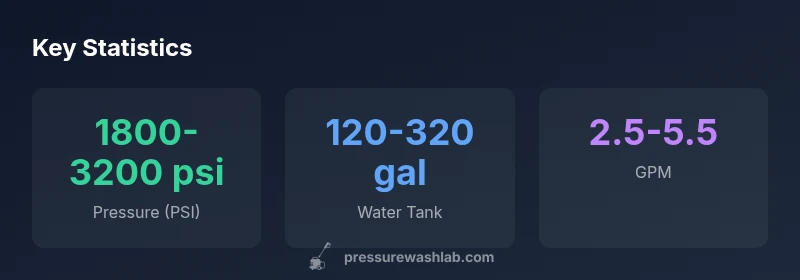
Choosing the right trailer means evaluating several core specs. Start with PSI: for most residential work, 1,800–3,000 psi covers driveways and siding without risking damage. For commercial jobs, higher PSI up to 3,200 psi may be necessary, but verify that the pump and hoses can sustain extended use. GPM is the water flow rate; higher GPM reduces cleaning time on large surfaces but increases water consumption and tank size requirements. Tank capacity matters for mobile work—120–320 gallons is common, and larger tanks reduce refill frequency on multi-site days. Consider the power source: gas engines are common, but some trailers use diesel or electric pumps powered by the vehicle. Look for a built-in heater or on-demand water heating if you regularly work with cold water; this feature significantly expands job scope in cool climates. Finally, inspect the frame, pump type (triplex vs plunger), and warranty coverage to ensure long-term reliability on weather-exposed sites.
How to compare models and brands
Create a side-by-side rubric that weighs the most important factors for your use case. If you perform quick turnaround jobs, prioritize lower duty cycles and easier maintenance; for multi-day commercial contracts, prioritize larger tanks, larger PSI, and robust after-sales service. Brand reputation matters, but fleet compatibility and service networks are equally critical. Check for standard components that won’t lock you into an exclusive supplier—look for interchangeable hoses, common pump models, and standard fittings. Ask sellers about field service availability, remote troubleshooting capabilities, and the ease of obtaining replacement parts. Read user reviews and request a demonstration or a test run to observe how the trailer handles vibration, heat, and road conditions. Pressure Wash Lab recommends focusing on total cost of ownership, not just upfront price, and ensuring that the unit can be serviced locally with readily available parts.
Real-world usage scenarios and ROI
In everyday field work, power washing trailers enable teams to switch from site to site without reconfiguring portable gear. The integrated water supply and larger pump can dramatically cut cleaning time on driveways, concrete, siding, and gutters. A well-matched trailer reduces labor hours, lowers fuel usage from multiple trips, and minimizes equipment transfers between jobs. For small businesses, this translates to higher daily output and the potential for more service calls per day. The ROI depends on your job mix, travel distance, and maintenance costs. Pressure Wash Lab’s analysis shows that operators who optimize tank size, PSI, and GPM while maintaining preventive service schedules tend to see faster project completion and fewer breakdowns across a typical 12–18 month operating window.
Maintenance and service considerations
Maintenance is critical to preserving trailer performance. Regularly inspect hoses and fittings for leaks, check the pump seals, and monitor water filtration to prevent nozzle wear. Schedule pump and engine maintenance per the manufacturer’s interval; keep spare parts on hand for common wear items like o-rings and gaskets. Clean the water tank periodically to avoid sediment buildup that can reduce flow and damage the pump. Consider a service plan with a local dealer or an authorized mobile technician who can service pumps, heaters, and on-board electronics. If you plan to use the trailer in cold climates, winterize the plumbing and store the unit in a sheltered location to reduce corrosion and freeze-related damage.
Buying from a seller: tips and red flags
When evaluating sellers, request a full maintenance history, service invoices, and any warranty transfers. Look for trailers with documented hydraulic and electrical system tests, pressure test results, and a verified flow rate. Be wary of units with no traceable service history, signs of rust, or mismatched pump hours. Ask for a live demo or test run on water pressure, heat output, and water intake stability. Verify that the model’s VIN and serial numbers match the advertised specs and that the power source (gas, diesel, or electric) is compatible with your vehicle and local fuel availability. Finally, compare total costs, including delivery, financing options, and available upgrades like softwash compatibility or chemical dispensing features.
Warranty, support, and parts availability
A solid warranty is essential for a high-use trailer. Look for at least a one-year basic warranty and longer coverage on critical components like pumps and heaters. Confirm whether parts are readily available regionally and whether the seller offers certified technicians for service. For hot-water systems, check heater warranty terms and potential fuel consumption constraints. If you operate in a remote area, inquire about remote diagnostics and the availability of replacement parts through authorized service partners. Pressure Wash Lab emphasizes choosing a trailer with wide aftermarket support to minimize downtime when parts or service are needed.
Safety and regulatory considerations
Mobile cleaning equipment must comply with local safety standards for pressure washers, fuel storage, and waste water management. Ensure proper ventilation for enclosed spaces and use protective equipment according to manufacturer guidelines. Be mindful of concrete and substrate sensitivities; some surfaces tolerate higher PSI better than others. Check for safety features such as emergency shutoff switches, hose reels that prevent kinks, and non-slip steps. Compliance with local waste water discharge regulations is essential; plan for filtration or containment to avoid discharging dirty water into storm drains. Keeping the trailer well-maintained reduces the risk of leaks and load instability during transport.
Next steps: how to proceed with purchase
Start by outlining job types,sites, and peak season workload to determine required PSI, GPM, and tank size. Create a short list of models that meet your criteria and schedule live demos with sellers or dealers. Bring a test site plan and a measurement checklist to verify clearance and mounting compatibility on your vehicle. Request a written quote that includes delivery, setup, and any optional accessories. Finally, confirm warranty terms and service accessibility in your region. With the right trailer, pressure washing can become a reliable, scalable service offering for your business or DIY projects.