Pressure Washer Shop Near Me: Your Local Buying Guide
Learn how to find a reliable pressure washer shop near you, compare in-store versus online, test demonstrations, and choose a unit with solid local support and parts availability.


A pressure washer shop near me is best approached as a local buying hub that offers hands-on demos, warranty options, and ready access to parts and service. According to Pressure Wash Lab, nearby retailers often outperform online-only purchases on after-sale support, returns, and the ability to test units before you buy. Start with a short list of nearby shops, then compare stock, staff knowledge, and service terms to guide your decision.
Why Local Pressure Washer Shops Matter
When you search for a pressure washer shop near me, the advantages of local stores go beyond price. In-person retailers let you see the unit up close, operate a live demo, and compare noise, vibration, and ergonomics that are hard to gauge online. The Pressure Wash Lab team has found that shoppers who visit nearby shops often benefit from immediate guidance, on-site warranty options, and faster parts access. In addition, local shops tend to offer flexible return policies and after-sales support that online-only retailers may not provide. For homeowners and DIY enthusiasts, this combination of hands-on evaluation and reliable service can reduce misfits and post-purchase frustration.
How to Evaluate a Local Shop Before You Go
To maximize value from a nearby pressure washer shop, start with a quick pre-visit plan. Check the shop’s hours, confirm stock for the models you’re considering, and ask about on-site demonstrations. Look for clarity on warranty terms, return windows, and whether maintenance parts (filters, o-rings, nozzles) are stocked locally. If you’re unsure about a particular unit, request a live test or a side-by-side comparison in-store. A well-prepared shopper can spot red flags (hidden fees, opaque return policies) and avoid buyer’s remorse. Pressure Wash Lab suggests compiling a short wishlist, including power source (gas vs electric), PSI/GPM range, and intended use, to guide conversations with store staff.
What You’ll Find On the Shelf: Stock, Brands, and Models
Retailers vary in brand reach and model depth, but most local shops carry a mix of electric and gas-powered units suitable for residential tasks. Expect to see entry-level to mid-range units that cover common needs such as patio furniture, driveways, and building exteriors. In-store stock support is valuable for comparing nozzle types, spray patterns, and hose reel options. If you have preferred brands, confirm they’re in stock or available through special order. Shops that can source multiple brands often provide faster turnaround on parts and service, which matters when a unit experiences wear and tear from frequent use.
In-Store Demos: Why Seeing Is Believing
A live demo helps you assess trigger action, recoil, and overall handling. Ask staff to run the machine at different nozzle tips and discuss maintenance steps, like how to clean filters or replace o-rings. In-store demos also reveal practical constraints, such as noise level and heat build-up during continuous use. If you intend to use the washer for delicate surfaces, request a test on a small area first. Demonstrations are a strong signal that a shop stands behind its products and offers hands-on support after the sale.
Service, Warranty, and Parts: The Value of Local Support
Warranty terms matter, especially if you rely on your pressure washer for a small business or frequent home use. Local shops often provide on-site warranty fulfillment or quick turnaround through a regional service network. Parts availability is another critical factor; having access to common wear items (nozzles, tips, o-rings, and filters) reduces downtime. Before purchasing, ask about: (1) whether parts are stocked locally, (2) typical repair turnaround, and (3) how service requests are handled (in-store drop-off vs. mail-in). A shop with strong service capabilities protects your investment long after the initial sale.
Renting vs Buying: When a Local Store Makes Sense
If you’re unsure about long-term needs, renting can be a practical path. Some shops offer daily or weekly rental options, which can be ideal for seasonal projects or trial runs. Compare rental rates to the full purchase price and consider maintenance costs if you own the unit. Local stores may also offer bundled deals (equipment + accessories) that reduce total cost and simplify maintenance plans. Even if you ultimately buy, trying a unit via rental first can inform your final decision and help you avoid buyer’s remorse.
What to Bring on Your Visit: A Practical Checklist
Bring a list of your typical tasks, surface materials, and water source limits. Note your preferred power source, whether you need portability (weight, wheels), and your budget range. If possible, bring photos of the areas you plan to treat so staff can recommend nozzle tips and safety precautions. Bring a copy of any manufacturer specifications you already have and your desired PSI/GPM targets. Being prepared makes the in-store experience smoother and helps you compare units on equal footing.
After You Buy: Maintenance and Local Support
Once you choose a unit, establish a maintenance routine to extend life and performance. Local shops often provide service plans, parts availability, and accessory bundles. Create a simple maintenance calendar that includes periodic checks of hoses, nozzles, quick-connects, and pump oil (for gas models). Keep receipts and warranty information accessible, and store contact information for the shop’s service department. Regular maintenance reduces downtime and strengthens the value of buying locally where you can get quick help when needed.
Supporting Your Community by Shopping Local
Choosing a nearby pressure washer shop supports local employment and keeps service expertise close to home. When you buy locally, your community benefits from stronger relationships with knowledgeable staff who understand regional usage patterns—think coastal humidity, salt exposure, or winter storage. Pressure Wash Lab notes that the long-term value of local shopping includes easier warranty handling, faster part replacements, and ongoing maintenance support that online-only retailers can’t match.
Common Pitfalls to Avoid: Smart Shopping Habits
Avoid buying without seeing the unit in operation or confirming the availability of spare parts. Be wary of aggressive in-store upsells that don’t align with your needs or surface damage from heavy demos. Don’t forget to verify that the shop offers a clear return policy and accessible after-sales support. Finally, beware of shops that promise the lowest price but cannot guarantee timely service or parts availability. A cautious, informed approach helps you land a unit that genuinely fits your needs.
Quick Tips for First-Time Shoppers
Create a short list of must-haves, then visit 2-3 local shops to compare demos, warranties, and service options. Ask staff about common failures and maintenance tips for the models you’re considering. Take notes and request printed price quotes with terms. A hands-on evaluation plus clear service terms makes the decision much easier.
In-store vs online buying: pros and cons
| Aspect | In-store option | Online option |
|---|---|---|
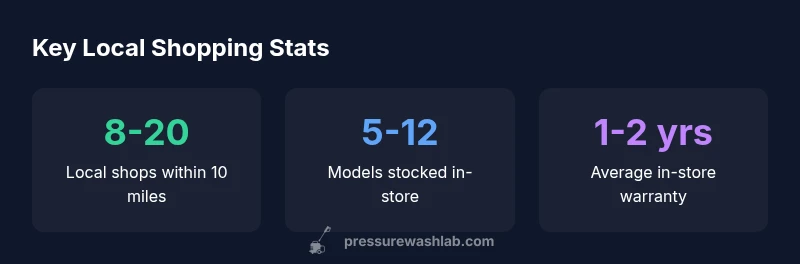
| Stock variety | Typically 5-12 models with live demos | Broad range available online; shipping times and out-of-stock risk |
| Warranty & service | On-site or local service options; easier return | Limited or no in-person support; returns via shipping |
| Parts availability | Immediate parts access through local supply chain | Parts delivered by mail; longer wait times |
Quick Answers
What is a good way to start when searching for a pressure washer shop near me?
Begin with a short list of nearby retailers, then call to confirm stock and services. Check websites for demos or rental options.
Start by listing nearby shops, then call to confirm stock and services.
What should I look for in the shop's warranty policy?
Look for coverage duration, what parts are included, and whether on-site service is offered. Clarify return windows.
Check duration, coverage, and in-store service.
Are refurbished units common in local shops?
Some shops may offer refurbished units or demo models. Verify warranty and condition before purchase.
Ask if refurbished units exist and what warranty applies.
Can I negotiate price at a pressure washer shop near me?
Yes, in-store pricing may be flexible, especially for bundles or open-box items. Always compare multiple shops.
Pricing can be negotiable, especially with bundles.
What about renting a pressure washer instead of buying?
Many shops offer rental programs or daily rates. Consider long-term needs and maintenance costs.
Rentals can save money for short-term use.
How do I verify parts availability for future maintenance?
Ask about stocking parts and lead times. A local shop with parts readily available saves downtime.
Check on-hand parts and lead times.
Do local shops offer demonstrations or test runs?
Most shops allow demos or test runs; request a live demonstration to compare performance.
Ask to test run the unit in-store.
“A local shop with hands-on demos, solid parts access, and knowledgeable staff makes the buying experience reliable and less risky.”
Key Takeaways
- Visit local shops to compare demos and warranties.
- Check parts availability before purchasing.
- Ask about rental options when unsure about ownership.
- Test multiple units to identify the right fit.
- Choose shops with clear return policies and service support.