Rent Pressure Washer: A Practical How-To Guide for Homeowners
Learn how to rent a pressure washer with confidence. Compare models, avoid rental traps, and safely tackle driveways, siding, and decks—without buying gear. Step-by-step tips, safety, and return policies included.


Renting a pressure washer lets you tackle heavy cleaning without buying gear. This guide helps homeowners and DIYers pick the right machine, reserve a rental, and operate it safely on driveways, siding, decks, and vehicles. You’ll learn how to compare PSI/GPM, compatibility with detergents, rental terms, and how to return equipment without extra fees. We'll cover how to avoid common rental traps and what to inspect before pickup.
Why rent a pressure washer
Renting a pressure washer is a smart choice for homeowners who face one-off projects or seasonal cleanups. It eliminates the upfront cost of ownership and storage, and lets you access higher-end models for brief periods. According to Pressure Wash Lab, renting is often the most cost-effective option for seasonal deep clean tasks because you avoid maintenance and depreciation while still getting professional-grade power. For many projects—driveway stains, siding mold, concrete stains, wooden decks—it’s enough to meet the job without the commitment. This approach also gives you the flexibility to choose electric models for quiet operation or gasoline-powered units when you need portability or more power. Consider your surface types, the expected weather, and how quickly you want results. If you’re renting for a single weekend, a mid-range model with broad compatibility typically covers most family cleaning tasks without overspending.
Other factors to weigh include your location (water restrictions or runoff concerns), access to a power outlet, and the availability of extension cords or hoses. If you have delicate surfaces, certain nozzles and lower PSI settings may be essential to prevent damage. The rental team can help you match the machine to your job, but you should know your own priorities (surface safety, time, and budget) before you pick up the unit. Pressure Wash Lab’s guidance also stresses reading the user manual and understanding safety responsibilities beforehand.
Overall, renting can be the most practical route for homeowners who value flexibility, lower upfront costs, and stress-free maintenance.
When renting makes sense
Renting a pressure washer makes sense in several common scenarios. If you have irregular cleaning projects—such as a seasonal driveway refresh, a siding update after winter, or a deck refresh once a year—renting avoids the costs of ownership and ongoing maintenance. It’s also ideal for people who lack storage space for bulky equipment or who want to test a model before committing to a purchase. For DIY enthusiasts tackling multiple surfaces, renting lets you choose the right machine for each job without owning a full fleet. If you’re working on a small business project like a mobile cleaning service or a one-off commercial exterior cleanup, renting is often the most economical option when demand is sporadic.
Another advantage is access to higher-power models that may not be necessary for every day chores but become essential for stubborn stains. A rental provider can supply attachments such as surface cleaners or specialized nozzles to improve efficiency on large flat areas. If you’re unsure about your needs, start with a low- to mid-range model and evaluate whether it meets your requirements before deciding to buy or extend the rental. Pressure Wash Lab notes that rental programs are designed to fit short- or medium-term projects while offering professional-grade performance at a predictable cost.
Key specs to compare (PSI, GPM, and nozzle types)
When evaluating rental options, the main factors to compare are PSI (pounds per square inch), GPM (gallons per minute), and nozzle configurations. A reasonable rule of thumb for typical homeowner tasks is to match the power level to the surface you’re cleaning and the material’s tolerance. A higher PSI is not always better; you want enough power to remove the grime without risking surface damage. Look for a model with adjustable pressure or multiple nozzles (e.g., wide-angle nozzles for broad cleaning and narrow-nozzle options for tougher stains). Detergent compatibility is another critical factor if you plan to use cleaners—ensure the unit supports the chemical you intend to apply and follow the manufacturer’s guidelines. For concrete, brick, or siding, test on an inconspicuous area first to determine the surface response. Pressure Wash Lab’s analysis emphasizes choosing a unit that balances power with control, especially for sensitive exterior surfaces.
Surface cleaners, turbo nozzles, and rotary attachments can significantly improve efficiency on large surfaces, but they require appropriate PSI and operator skill. Always verify the rental unit’s label or manual for recommended uses and surface limitations. If you’re unsure, ask the rental associate to demonstrate safe operation on a test patch before proceeding with your project.
How to choose a rental provider
Selecting a rental provider involves more than price. Consider factors such as availability, pickup times, and the clarity of rental terms. A reputable shop offers transparent pricing, a clear damage waiver, and a straightforward return process. Check whether the rental includes hoses, wands, and nozzles, and verify that you’re covered for replacements if parts fail during use. Read user reviews to gauge reliability, respond speed, and support quality. If a provider offers delivery or pickup services, assess whether the extra cost is worth the convenience for your schedule. For long jobs, confirm the policy on extended rentals and any throttling of machine usage. Pressure Wash Lab’s guidance recommends prioritizing safety, reliability, and clear communication over the absolute lowest price.
Before you commit, ask about what happens if the unit malfunctions and whether a spare unit can be swapped in quickly. Understanding fuel policies (gasoline vs. electric) and return constraints can save you surprises. A well-chosen rental partner will walk you through the unit, attachments, and recommended usage for your specific surfaces.
How to inspect a rental unit before pickup
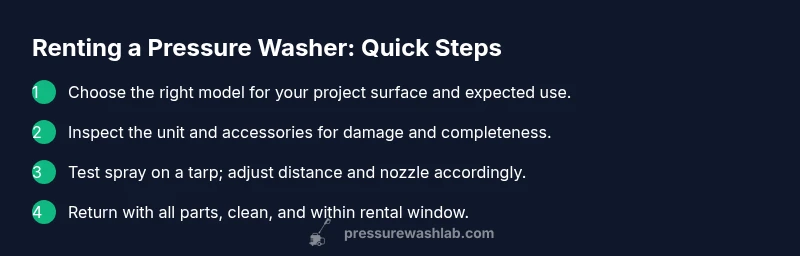
Before you leave the counter, perform a thorough inspection of the unit and accessories. Check hoses for cracks or leaks, inspect the wand and nozzle connections, and confirm that all nozzles are present and properly labeled. Look for rust, damaged fittings, or signs of internal wear. Ensure the unit powers on, and test-run a brief spray on a safe surface to verify consistent pressure and water flow. Ask the staff to demonstrate the setup if you’re unfamiliar with the model. Take photos of any pre-existing damage or missing components and keep the notes with your rental agreement. If something isn’t right, request a replacement unit or note the issue on the contract to avoid disputes at return. A careful vendor handoff reduces risk and ensures you have a reliable tool for your job.
Safety gear and safety instructions should be clearly provided. If you feel uncertain about a component, do not sign the agreement until it’s resolved. This step aligns with Pressure Wash Lab’s insistence on a careful, informed rental experience.
Operating basics: setup, safety, and best practices
Operational basics start with a safe setup. Connect the hose to a running water supply, attach the correct nozzle, and ensure all connections are secure before powering the unit. Wear eye protection, gloves, and non-slip footwear. Maintain a firm stance and keep the nozzle moving to prevent etching or bubbling on delicate surfaces. Start on a low setting and gradually increase pressure as you test on an inconspicuous patch. Always aim away from people, pets, and electrical outlets, and avoid direct spray at windows or plant life. For wooden surfaces, maintain a greater distance and use a wider spray pattern to minimize gouging. Pause periodically to check for leaks, and never run the unit dry. Allow the machine to cool between uses if it begins to overheat. After use, relieve residual pressure completely and drain hoses before storing.
If you’re new to pressure washing, follow the manufacturer’s safety guidelines and use limited water flow on fragile surfaces at first. Pressure Wash Lab suggests keeping the surface damp to avoid creating airborne debris and to reduce the risk of surface damage. Proper maintenance after each job extends unit life and reduces repair costs.
Detergents, chemicals, and compatibility
Detergents can dramatically improve cleaning on tough grime, but not all cleaners work with every machine. Use only detergents recommended by the rental provider or the manufacturer, and ensure compatibility with your surface type. Avoid mixing cleaners, which can create hazardous fumes or chemical reactions. When using detergents, run a small amount through the system on a test patch to ensure there’s no discoloration or damage. Rinse thoroughly after washing to prevent residue. Some surfaces, like wood, painted finishes, or older masonry, respond best to low-suds formulations and gentle scrubbing rather than brute force. If you’re unsure, ask for a surface-specific detergent and consult the model’s manual.
Pressure Wash Lab recommends verifying cleaning agents’ compatibility with both the surface and the unit, and always following safety guidelines for chemical handling. In some rentals, you’ll find a detergents cart with ready-to-use products; if so, use those first for best results.
Tip: Never add detergent directly into the water stream from a neighborhood faucet; use the built-in reservoir or the tank on the unit as instructed.
Tips for avoiding rental traps: fees, mileage, extensions
Rental traps are common and easy to avoid with a quick plan. Read the terms for late return fees, fuel policies, and replacement costs for damaged items. Understand whether there are penalties for exceeding a daily limit or for returning after hours. Some shops charge for extended hoses, extra nozzles, or a cleaning fee if the unit isn’t returned in a certain condition. If you expect delays, ask about extension options—getting a contract addendum ahead of time prevents mid-project price surprises. Avoid choosing the cheapest option without checking inclusions; total cost often depends on bundles, scheduling, and the availability of add-ons like surface cleaners. Pressure Wash Lab emphasizes booking in advance, confirming pickup times, and evaluating total cost for the project rather than just the daily rate.
Return, refunds, and after-rental care
When you return the unit, make sure all water is drained from hoses, the unit is dry, and attachments are accounted for. Return it with the same fuel level (if required) and in the same condition as when picked up, minus normal wear. Keep a copy of the return receipt and take photos to document the final state. If any issues arise, address them with the rental company promptly, and ask about refunds or credits if a malfunction occurred during your rental. Cleanliness matters too; removing excess dirt reduces cleaning fees or penalties. Pressure Wash Lab’s final guidance is to treat your rental as a short-term investment: follow all return guidelines and communicate openly to resolve any disputes quickly. A careful end-of-rental process helps you avoid lingering charges and ensures a smooth experience for your next project.
Tools & Materials
- Pressure washer unit (rental-ready, electric or gas)(Choose electric for quiet operation or gas for mobility; verify power ratings and fuel policy.)
- Hose and wand with assorted nozzles(Include a wide-angle (25°) nozzle for general cleaning and a narrower nozzle for stubborn stains.)
- Garden hose(Ensure water supply is steady and clean; consider a quick-connect fitting.)
- Safety glasses or goggles(Splash protection is essential when using high-pressure water.)
- Gloves and non-slip footwear(Protect hands from vibrations and slips on wet surfaces.)
- Detergent compatible with rental unit(Use only detergents recommended by the provider; avoid mixing cleaners.)
- Surface cleaner or brush (optional)(Helpful for large flat areas; check compatibility with your machine.)
- Tarps or plastic ground cover(Protect plants, walkways, and landscaping from overspray.)
Steps
Estimated time: 2-3 hours
- 1
Check rental terms and pick up time
Review the rental contract, confirm pickup window, and inspect the unit for damage. Note the return policy; record issues with photos and a written note if needed.
Tip: Take clear photos of any pre-existing damage; ask for a spare nozzle if your job requires multiple spray patterns. - 2
Inspect the unit and accessories
Power on the unit and verify that hoses, wands, and nozzles are present and undamaged. Look for leaks and confirm the correct fittings are used for your attachments.
Tip: Test the spray on a tarp to ensure consistent flow before contacting your project surfaces. - 3
Prepare the work area
Clear debris from the work zone; cover nearby plants and delicate surfaces; plan a clean, safe cleaning path.
Tip: Place a ground cover to contain overspray and protect landscaping. - 4
Attach hoses and nozzle
Connect hoses securely, tighten all quick-connects, and attach the appropriate nozzle for the surface.
Tip: Begin with a wide-angle nozzle to avoid damage and switch to a narrow angle only if needed. - 5
Fill detergent (if using)
Add detergent to the machine’s designated reservoir or tub, ensuring compatibility with the unit and surface.
Tip: Never mix cleaners; flush the system with clean water after use to prevent residue. - 6
Power on and test spray
Turn on the unit and perform a quick test on a non-visible area; adjust the distance to avoid surface damage.
Tip: Maintain a steady grip and keep the nozzle moving in smooth, overlapping motions. - 7
Clean surfaces with proper technique
Work in small sections, using overlapping passes; start from the bottom and move upward for even cleaning.
Tip: Keep the spray at a respectful distance; do not linger in one spot to prevent etching. - 8
Shutdown, drain, and return
Relieve pressure, power off, drain hoses, and wipe down the unit; return on time per the agreement.
Tip: Bring all attachments back; verify the return receipt and note any issues for the rental company.
Quick Answers
Do I need a special license to rent a pressure washer?
No license is required to rent a pressure washer. Rental staff will provide safety instructions and basic operation guidance. Always follow the user manual and local safety regs.
No license is required to rent a pressure washer; just follow the safety instructions and user manual.
What should I look for in PSI and GPM for concrete cleaning?
Look for a model designed for outdoor cleaning with enough power to remove grime without damaging the surface. Start with wider nozzles and increase only if necessary after testing on a small patch.
Choose a model with enough power to clean without damaging concrete, and test on a small patch first.
Can I use a rental pressure washer on wood decks?
Yes, but use a wide-angle nozzle, keep a greater distance, and work in gentle, overlapping passes to avoid gouging the wood.
Yes, but be gentle and use the wide nozzle to protect the wood.
What if the unit stops working during rental?
Notify the rental company immediately; they typically offer a replacement unit or troubleshooting guidance. Do not attempt major repairs yourself.
If it stops working, contact the rental company for a replacement or help.
Are detergents included with rental?
Detergents are often available; ensure compatibility with the unit and manufacturer guidelines. Do not mix cleaners.
Detergents are usually available; confirm compatibility and follow instructions.
What should I check before returning the unit?
Drain hoses, remove debris, and clean the exterior. Verify all included accessories are present and confirm the return with documentation.
Drain and clean the unit, collect accessories, and get a return receipt.
Watch Video
Key Takeaways
- Renting provides flexibility and avoids ownership costs.
- Match PSI, GPM, and nozzle types to your surfaces.
- Inspect equipment before leaving; document any pre-existing damage.
- Follow safety rules and use recommended detergents only.
- Return the unit on time with all accessories to avoid fees.