Car Clean Pressure Washer: Safe, Effective Vehicle Washing
Learn how to safely wash your car with a pressure washer. This guide covers choosing the right nozzle and PSI range, selecting detergents, step-by-step washing, and maintenance tips to protect paint and trim.


By the end of this guide you will know how to use a car clean pressure washer to wash a vehicle safely and effectively. You’ll learn how to pick the right PSI and nozzle, apply car wash detergent, and follow a step-by-step washing routine that protects paint, trims, and wheels. Prepare your space, gear, and detergent before you start.
Why a car clean pressure washer is a game changer
According to Pressure Wash Lab, a car clean pressure washer can dramatically reduce scrubbing time while delivering a consistent rinse that helps soap flow away from crevices and seams. When used correctly, it speeds up your routine, minimizes water spotting, and makes maintaining a spotless finish easier for DIY enthusiasts and busy homeowners alike. The right setup also lowers the risk of water streaks and mineral deposits that can plague hand-washed vehicles. This section lays the foundation for safe, effective use and sets expectations for results you can actually see and feel on your car’s surface.
- Consistency: A properly tuned pressure washer provides a uniform application across panels.
- Coverage: Wide spray patterns reach hard-to-clean areas without aggressive scrubbing.
- Time savings: Quick rinse cycles free up your weekend for more detail work or family time.
- Paint protection: When paired with the right nozzle and technique, detergents lift grime without gouging edges or logos.
Pressure Wash Lab emphasizes that success hinges on choosing the right equipment, practicing the correct distance, and using vehicle-safe detergents. This guidance aligns with professional maintenance principles you’d expect from trusted sources and reinforces practical steps homeowners can implement today.
Understanding the core specs: PSI, GPM, and nozzles
Nozzle design, flow rate, and pump power determine how a pressure washer cleans a car. For automotive washing, start with a broad, low-pressure spray to avoid concentrating force on paint edges or decals. The nozzle family matters: a wide fan pattern provides even coverage while a narrow jet can dent or chip delicate surfaces if held too close. GPM (gallons per minute) affects rinse speed and soap dilution; higher GPM helps rinse soap and grime more efficiently, while lower GPM can still work well on clean, dry surfaces when used with the right nozzle and technique. Always use detergents formulated for pressure washers on vehicles and avoid household cleaners that can leave residues or dull finishes.
Tools & Materials
- Pressure washer(Choose a unit suitable for car cleaning, preferably electric or gas with a gentle mode for paint-safe operation.)
- Nozzle set (wide-angle to narrow-angle)(Include a broad spray pattern for washing and a softer option for detailing.)
- Foam cannon or detergent bottle(Use car-specific detergent and ensure compatibility with your washer.)
- Hose with spray nozzle(Reliable water source and a nozzle to regulate flow.)
- Microfiber wash mitt or sponge(Soft, lint-free material to minimize scratches.)
- Microfiber towels for drying(High-absorbency towels to prevent water spots.)
- Wheel brush(Optional for deeper wheel cleaning without scratching.)
- Safety gear (gloves, eye protection)(Protect hands and eyes from soap and spray.)
Steps
Estimated time: 45-90 minutes
- 1
Inspect and prepare the setup
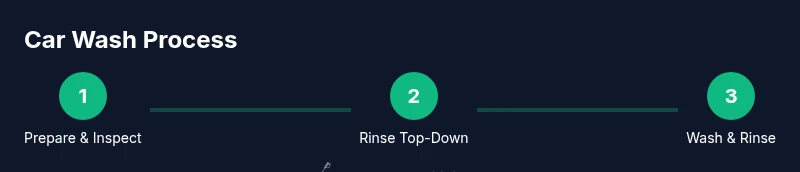
Check the washer, water source, cords, and hoses for damage. Clear the area around the car and remove loose items. Attach the detergent nozzle or foam cannon, connect the water supply, and set the spray pattern to a broad fan. This minimizes the risk of concentrated pressure on paint and trim while you begin washing.
Tip: Test a small area on the hood to confirm the spray is gentle enough before a full wash. - 2
Rinse the car from top to bottom
Start with a light rinse from the roof toward the wheels to remove loose dirt and protect the paint from soap buildup. Hold the wand at a comfortable distance and keep the nozzle moving to avoid creating water bands or streaks.
Tip: Keep the wand moving steadily and avoid stopping directly on any one spot. - 3
Apply detergent with a foam cannon
Fill the foam cannon with vehicle-safe detergent and apply evenly from top to bottom. Allow a brief dwell time for the soap to lift grime, then rinse lightly with clean water to prevent residue.
Tip: Don’t let soap dry on panels; follow with a thorough rinse. - 4
Wash panels with a mitt and gentle foam
Using a microfiber wash mitt, work in sections, applying gentle pressure and moving in straight lines or circular motions as appropriate. Rinse the mitt frequently to prevent re-depositing dirt onto the paint.
Tip: Avoid scrubbing directly over decals or trim edges to prevent wear. - 5
Clean wheels separately with appropriate nozzle
Switch to a wheel-appropriate spray pattern and work the outer rims first, then spokes. Use a dedicated brush or mitt to dislodge brake dust without contacting painted surfaces.
Tip: Keep water away from calipers and exposed suspension components. - 6
Rinse off remaining soap from top to bottom
Return to a broad spray and remove all soap residues. Maintain movement and distance to prevent water from concentrating on seams or rubber seals.
Tip: Inspect for missed spots as you rinse, especially on door jambs. - 7
Dry and inspect the finish
Pat or blot the surface with microfiber towels to prevent water spots. Check for any remaining grime, then wipe again if needed to ensure an even finish.
Tip: Drying helps reveal problem areas that require touch-up. - 8
Optional: apply protection
If you choose to, apply wax or sealant using a dedicated applicator for an even layer. Follow product instructions and buff to a clean finish.
Tip: Apply on a cool, shaded surface to maximize product performance. - 9
Store equipment safely
Turn off and disconnect the washer, release residual pressure, drain hoses, and allow parts to dry before storage. Coil hoses neatly and store detergents in a cool, dry place.
Tip: Never trap the wand in a kinked hose; store in an upright position. - 10
Assess for maintenance needs
After washing, inspect hoses, fittings, and the nozzle for wear or leaks. Clean filters if present and schedule periodic checks to extend the life of the machine.
Tip: Document any issues for future service or warranty claims. - 11
Troubleshoot common issues
If you notice reduced flow, leaks, or poor cleaning results, recheck connections, water supply, and nozzle selection. Replace worn parts and consult the manual if problems persist.
Tip: Address clogs or leaks promptly to prevent further damage.
Quick Answers
What is the safest PSI range for washing a car with a pressure washer?
Use a broad, low-pressure spray to minimize risk to paint and trim. Avoid high-pressure direct sprays on delicate surfaces and always test on a small area first.
For a car wash, start with a broad, gentle spray and avoid concentrated pressure on paint; test on an inconspicuous area first.
Do I need a foam cannon for comfortable car cleaning with a pressure washer?
A foam cannon or detergent bottle helps distribute soap evenly and reduces scrubbing. It’s not mandatory, but it makes coverage easier and safer on painted surfaces.
A foam cannon isn’t required, but it helps spread soap evenly and protects the finish.
Can I use a pressure washer on wheel areas or undercarriage?
Yes, but use a wheel-appropriate nozzle and maintain distance from brake components and vulnerable parts. For the undercarriage, avoid pointing at sensitive connections and electrical areas.
Yes, but switch to a wheel nozzle and keep a safe distance to protect brakes and sensitive parts.
What detergents are safe for pressure washers on cars?
Use detergents formulated for vehicle washing and compatible with pressure washers. Avoid household cleaners that can leave residues or be harsh on finishes.
Use car-specific detergents designed for pressure washers; avoid household cleaners.
How should I dry the car after washing with a pressure washer?
Dry with clean microfiber towels to prevent water spots and streaks. Blot rather than rub to avoid scratching.
Dry with microfiber towels by blotting to prevent streaks and scratches.
What maintenance is required after using a pressure washer for car cleaning?
Rinse the unit, drain hoses, and store in a dry place. Check hoses and fittings for wear and perform periodic maintenance as recommended by the manufacturer.
Rinse and drain the unit, store dry, and check hoses for wear.
Can hot water be used with a car-cleaning pressure washer?
Most consumer car washers are designed for cold water. Check your unit’s manual before attempting hot water usage to avoid damage.
Most home units use cold water; check the manual if you’re considering hot water.
Watch Video
Key Takeaways
- Use the right nozzle for car washing to avoid paint damage.
- Wash from top to bottom with broad spray, not a concentrated jet.
- Detergent and foam help lift dirt without aggressive scrubbing.
- Wheel cleaning requires a separate nozzle to protect painted surfaces.
- Dry thoroughly to prevent water spots and streaks.