Car Soap for Pressure Washer: A Practical Guide
Learn how to choose, dilute, and apply car soap for pressure washers to protect finishes, save time, and avoid damage. Practical tips, step-by-step guidance, and maintenance reminders for homeowners and DIYers.


This guide explains how to safely use car soap with a pressure washer, including selecting the right formula, proper dilution, nozzle choices, and a step-by-step approach that protects the finish while removing dirt efficiently.
Why car soap for pressure washer matters
Using the right car soap for pressure washers is essential to protect your vehicle’s finish while removing dirt efficiently. Automotive formulas are designed to be gentle on clear coats, waxes, and sealants, while still cutting through grime and road film. According to Pressure Wash Lab, choosing a soap specifically formulated for automotive finishes reduces the risk of swirl marks and dulling compared to harsh household detergents. A good car soap also helps suspend dirt so it can be rinsed away more easily, reducing the chance of rubbing dirt into the paint.
Key reasons to choose car-specific soap include lubrication that minimizes micro-scratches, wax and sealant compatibility, foam action for coverage visibility, and safer environmental profiles. Before you start, ensure your vehicle is in a shaded, cool area to prevent soap from drying too quickly. Work in sections from top to bottom and keep the nozzle at a safe distance to avoid painting edges or seals. While many brands offer wax-safe options, always verify the label for compatibility with any ceramic coatings you’ve applied.
How car soaps differ in formulas, lubricity, and safety
Not all car soaps are created equal. The best products balance detergency with lubricity to protect finishes during agitation. Look for pH-balanced formulas and labels that indicate compatibility with wax, sealants, or ceramic coatings. If your car has a recent wax or ceramic coating, choose a soap labeled as safe for coatings to prevent rapid stripping. Biodegradability and easy rinsing are important for home use and for those who care about environmental impact.
When comparing brands, consider dilution guidance, coverage efficiency, residue potential, and packaging. Pressure Wash Lab notes that a well-chosen soap improves cleaning efficiency and preserves the vehicle’s appearance over time. If you have specialty paints or finishes, consult the coating manufacturer’s recommendations before applying any soap. Always perform a patch test on an inconspicuous area to verify there’s no adverse reaction to the soap on your vehicle’s paint, trim, or plastics.
Dilution and application fundamentals
Follow the product label for dilution ratios and contact times. Start with a lighter dilution on mild dirt, then adjust if needed. Do not allow soap to dry on the surface, as drying residue can leave streaks or film. Use a foam cannon or dedicated low-pressure nozzle when applying soap to maximize coverage while minimizing direct spray on edges and seals. Work in sections, coating from the top down, and keep the nozzle moving to avoid pooling.
If dirt is stubborn, let the foam dwell briefly but avoid long dwell times that promote residue. For wheels and wheel wells, pre-rinse those areas with clean water to reduce the amount of scrubbing required during the wash.
Equipment setup and pre-wash prep
Clear the area and remove loose debris before washing. Park in a shaded spot and cool metal surfaces. Ensure your foam cannon or spray bottle is attached and primed according to the manufacturer’s instructions. Attach the soap applicator to your pressure washer and set the machine to a safe, low-to-moderate pressure for soap application. Wear gloves and eye protection if you’re sensitive to soaps or splashes. Verify that your water source is clean and free of debris to avoid clogging filters and reducing performance.
Additionally, test your setup on a small, inconspicuous panel to confirm even coverage before proceeding to the full wash.
Eco-friendly rinsing and disposal considerations
Rinse water and soapy runoff can enter storm drains or waterways in many municipalities, so plan to minimize runoff and use eco-friendly formulas. Rinse the car with a controlled, moderate flow and avoid blasting water directly into soil or plant beds. If possible, collect runoff in a basin for disposal according to local guidelines, and opt for biodegradable soaps that reduce environmental impact. When finished, rinse the car from top to bottom with a clean water stream to remove all soap residues and prevent streaks or water spots.
Maintenance of soap and equipment after use
Rinse and dry your foam cannon, spray tips, and hoses after use to prevent soap buildup and corrosion. Store car soap in a cool, dry place away from sunlight. Inspect microfiber wash mitts and drying towels for wear and wash them promptly to prevent color transfer. Label products and replace worn accessories to maintain wash quality and protect your vehicle’s finish over time. Regularly check hoses and connections for leaks to prevent waste and ensure consistent performance.
Tools & Materials
- Pressure washer(Choose 1800-3200 PSI for car washing; ensure it has cold-water input and a soap-compatible hose)
- Car soap for pressure washer(Look for pH-balanced, wax-safe, biodegradable formulas labeled for automotive finishes)
- Foam cannon or adjustable spray nozzle(Allows even soap application and avoids high direct pressure on paint)
- Soft wash mitt / microfiber wash pad(Use a dedicated mitt; launder after each use to prevent swirls)
- Two buckets with grit guards(One for soap, one for rinse; helps reduce dirt retransfer)
- Drying towels or microfiber drying cloths(Ultra-absorbent towels prevent water spots and streaks)
- Gloves and eye protection(Optional but recommended for chemical sensitivity)
- Hose and water supply(Ensure a steady water flow and clean inlet filtrations)
Steps
Estimated time: 60-90 minutes
- 1
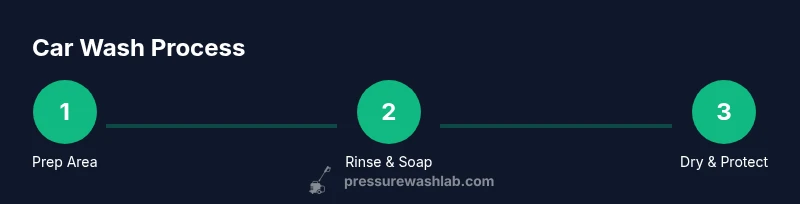
Prepare area and equipment
Set up your washing zone in a shaded area, connect the foam cannon, and confirm the nozzle is appropriate for soap application. Check hoses for leaks and ensure the soap is ready to use. This minimizes interruptions once you start cleaning.
Tip: Test spray on a small area to verify coverage and distance before full wash. - 2
Rinse off loose dirt
Rinse the car from top to bottom with a wide spray to remove loose dirt and debris. Keep the nozzle at a safe distance to avoid forcing dirt into crevices.
Tip: Work from the roof downward and avoid spraying directly at vents and seams. - 3
Apply car soap with foam cannon
Apply an even coat of soap from top to bottom, using a slow, sweeping motion. Maintain a consistent distance to prevent pooling near edges and trims.
Tip: Overlap strokes to ensure complete coverage and avoid missed spots. - 4
Gently scrub stubborn spots
Use a microfiber mitt for persistent grime on the lower panels and wheels. Avoid scrubbing with hard brushes that can scratch clear coats.
Tip: Rinse mitt frequently to prevent transferring dirt back to the paint. - 5
Rinse soap thoroughly
Switch to a cleaner rinse, removing soap from top to bottom. Keep a consistent distance to prevent water from saturating edges and seals.
Tip: Rinse wheel wells last to minimize dirty rinse water on the painted surfaces. - 6
Dry and optional sealant
Pat dry using microfiber towels and apply a wax, sealant, or ceramic coating if desired. Drying prevents water spots and prepares the surface for any protective treatments.
Tip: Work sections and avoid drying in direct sunlight to prevent rapid drying.
Quick Answers
Can I use dish soap in a pressure washer for cars?
Dish soap is not designed for automotive finishes and can strip wax or sealants. Use a car soap formulated for pressure washers. Always check the label for coating compatibility.
Dish soap can harm wax and protective coatings; use car soap designed for pressure washers and follow the label for safety and coating compatibility.
Is it safe to wash a car with high PSI from a pressure washer?
High PSI can damage clear coats, trim, and seals. Use a moderate setting for soap application and rinse, and test on a small area before proceeding.
High PSI can damage paint and seals; start with moderate pressure and test first.
Do I need to foam the entire car?
Foam helps with coverage and dirt suspension, but avoid letting soap dry on surfaces. Apply evenly and work in sections.
Foam helps coverage; don’t let soap dry on the surface—work in sections.
Can I use car soap on a waxed or ceramic-coated car?
Many car soaps are formulated to be safe for waxes and coatings, but always verify the label. If in doubt, perform a patch test first.
Check the label for coating compatibility and test a small area first.
How can I avoid water spots after washing?
Rinse thoroughly and dry promptly with microfiber towels. Avoid leaving soap on the surface and minimize direct sun exposure during drying.
Rinse well, dry quickly with microfiber towels, and avoid sun during drying.
Is shade required for washing a car?
Washing in shade helps prevent soap from drying too fast and reduces streaks. If you must wash in sun, do so in short, controlled passes.
Shade helps prevent streaking; if washing in sun, work in short passes.
Watch Video
Key Takeaways
- Choose car soap for pressure washer formulas to protect finishes
- Follow label guidance for safe dilution and coverage
- Wash from top to bottom with controlled, even motions
- Rinse thoroughly and dry to prevent water spots
- Maintain gear and store products properly